Trump to Iranians: Resume Negotiations or Face Destruction
- US President references “ground campaign to be carried out by other parties” - Washington bets on time and seeks no all-out war - Araghchi travels to Qatar to offer condolences and hold talks As the pace of reciprocal
Translated by Qiyas from الراي — Original source
- US President references “ground campaign to be carried out by other parties”
- Washington bets on time and seeks no all-out war
- Araghchi travels to Qatar to offer condolences and hold talks
As the pace of reciprocal shelling intensifies, both the United States and Iran appear to be turning to the leverage they possess. US President Donald Trump is once again threatening to bomb Iran’s power plants and bridges next week, and mentions “a ground campaign to be carried out by other parties,” should Tehran not return to the negotiating table. Meanwhile, the Islamic Revolutionary Guard Corps (IRGC) has threatened energy corridors in the region by invoking the Houthis’ role in closing the Bab al-Mandab strait, declaring that the region’s energy exports “will either be for everyone or for no one.”
The US President issued a new warning to the Iranians, stating in an interview with Fox News, “Next week will be very bad for them because next week the power plants will be targeted. Next week the bridges will be targeted.”
He added, “We will destroy all their power plants. We will destroy all their bridges unless they return to the negotiating table.”
Commenting on the idea of a ground war, Trump clarified, “I don’t want to do that,” adding, “Sometimes there is a need for a ground campaign, but we have other parties who will carry out the ground campaign on our behalf,” without specifying the identity of these parties.
However, whether the forces are American or belong to another state, deploying them on Iranian coasts—in sufficient numbers to maintain a presence—constitutes a complex and dangerous operation.
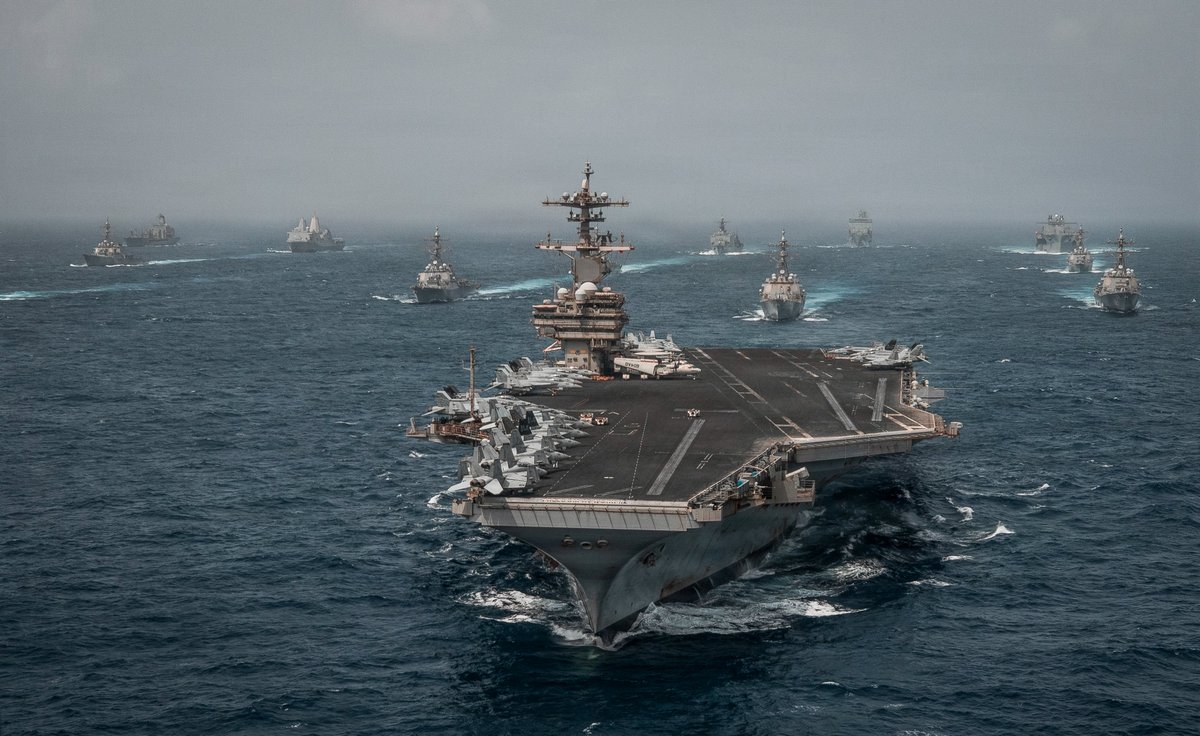
According to the Pentagon, the 11th Marine Expeditionary Unit (11th MEU)—typically comprising more than 2,000 soldiers—is present in the region aboard ships of the Boxer Amphibious Ready Group.
Additionally, the 82nd Airborne Division’s Quick Reaction Force can be deployed within hours to carry out missions such as securing ports or airports.
For its part, The New York Times quoted senior US officials as saying that the primary objective of the new military campaign is to force Tehran to allow freedom of navigation for oil tankers and commercial vessels through the Strait of Hormuz, paving the way for pushing it back to the negotiating table regarding its nuclear program.
Officials acknowledged that this strategy is not without risks, noting that Tehran does not need to close the strait entirely; it is sufficient for it to target a limited number of ships or issue threats to navigation to raise concerns among shipping and insurance companies and disrupt trade flows.
Conversely, officials clarified that Trump has not yet ordered a full-scale war, fearing that doing so might prompt Iran to target energy facilities, which could lead to a sharp rise in oil and gas prices.
On the other hand, Tehran announced that it is no longer bound by the memorandum of understanding, after Washington reimposed a naval blockade on Iranian ports. The IRGC threatened to disrupt other oil and gas export routes serving Washington and its allies if Iranian exports continue to be blocked.
The official IRNA news agency quoted the Guard in a statement saying that the region’s energy exports “will either be for everyone or denied to everyone.”
Analysts say Tehran is hinting that it may resort to its allied Yemeni Houthi group to close the Bab al-Mandab strait leading to the Red Sea, signaling the opening of a new front against Washington and threatening two of the world’s most vital energy arteries.
A Houthi official said on Monday that the group is prepared to close the Bab al-Mandab strait, a move he suggested could push oil prices up to $200 per barrel, according to a report published on the website of Iran’s Press TV.
Meanwhile, Deputy Foreign Minister Kazem Gharibabadi announced that Iran does not currently consider itself bound by any provisions of the memorandum, including arrangements related to the Strait of Hormuz and opening the passage to ships during the 60-day negotiation deadline.
The US military stated on Tuesday night that it struck dozens of military targets near the Strait of Hormuz and Iranian coastal areas in raids lasting seven hours, for the fourth consecutive night.
In response, Tehran announced on Wednesday that new US strikes had targeted the coastal city of Bushehr, which houses the country’s only civilian nuclear power plant.
In Manama, the General Command of the Bahrain Defense Force said in a statement that “air defense systems intercepted and destroyed a number of treacherous Iranian aerial attacks” in the morning, adding that “Iran continues its systematic hostile approach through its heinous attacks targeting civilians.”
The Jordanian army also announced that it had shot down three missiles launched from Iran.
