Lebanese-Israeli Rome Negotiations: A Diplomatic Swim Against the Region's Militarization Current
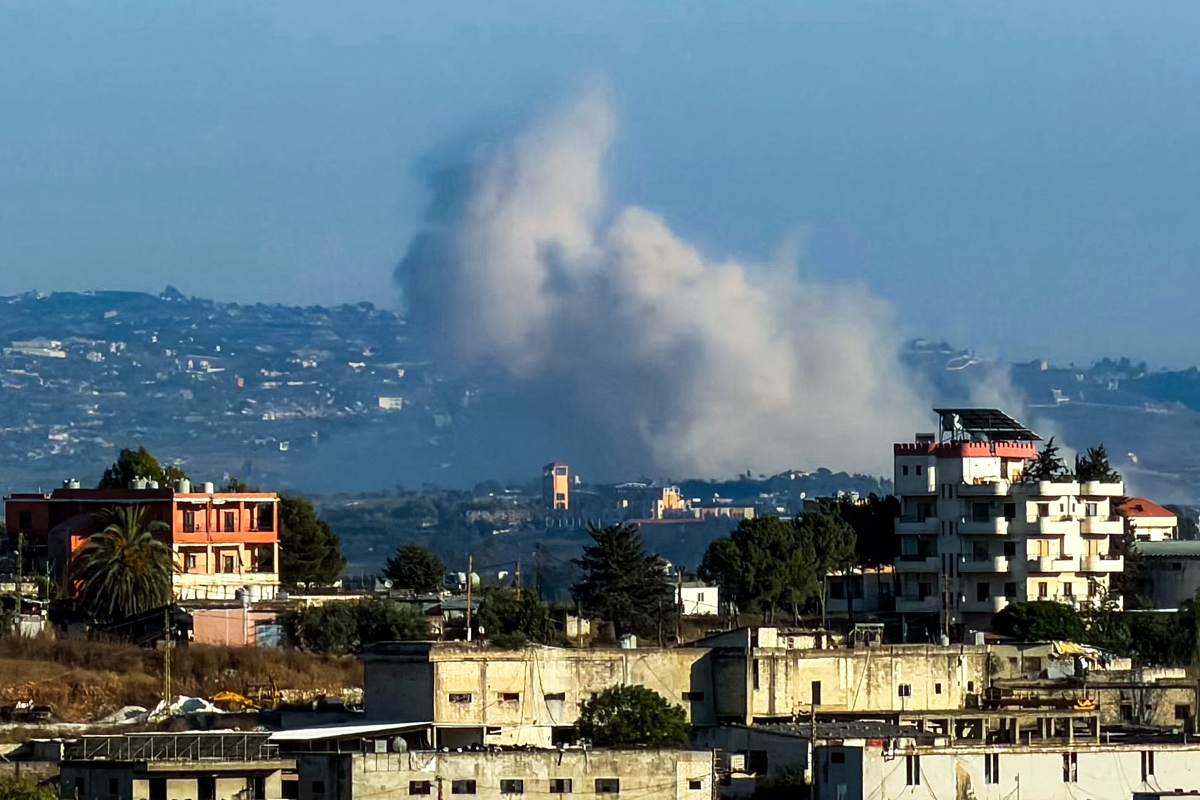
The sixth round of Lebanese-Israeli negotiations, held for the first time outside Washington in Rome, appeared like “swimming against the current” of the escalating regional tensions, with Lebanon having been dragged int
Translated by Qiyas from الراي — Original source
The sixth round of Lebanese-Israeli negotiations, held for the first time outside Washington in Rome, appeared like “swimming against the current” of the escalating regional tensions, with Lebanon having been dragged into the conflict since its initial involvement in the wake of “Al-Aqsa Flood.”
Rome’s talks on their first day served as a test of Washington’s ability to establish a “safe zone” desired by Lebanon to reduce the likelihood of it being drawn into the eye of a potential storm looming over the region. However, this issue is not primarily driven by Lebanese factors, but rather by the dynamics Iran will adopt in moving its regional “assets” across the board during the most dangerous phase of the US-Iran conflict. Tehran faces a choice: will it adopt a strategy of activating all its leverage cards simultaneously, or will it resort to a new “reserve,” such as the Houthis and the Bab al-Mandab, to protect what remains of Hezbollah’s strength or to signal that the group is no longer capable of providing “balanced support” after it was forced, prior to the ceasefire on the Lebanon front, to intervene directly in an attempt to impose equations to freeze the targeting of Beirut’s southern suburbs.
Behind the positive atmosphere that prevailed after the first day of the Rome negotiations—which resumed today on American soil at the US Embassy in the Italian capital and were sponsored by a US team from the State Department—hidden poles emerged at this table, which aims to launch the executive track from the framework agreement signed between Lebanon, Israel, and the United States in Washington on June 26. Specifically, the focus is on determining the areas from which the train of gradual Israeli withdrawal will depart, in exchange for the deployment of the Lebanese Army under US supervision.
Israel treats these areas, which it calls “experimental,” as a test of Lebanon’s seriousness and that of its army, and their ability to fulfill commitments related to removing Hezbollah’s weapons from south of the Litani River. This explains Israel’s insistence that the vanguard of these areas include points and villages located outside the scope of its direct land occupation, thereby reflecting the essence of the framework agreement in linking complete Israeli withdrawal to the dismantling of the party’s military infrastructure throughout the country.
For its part, Lebanon seeks to avoid appearing in a position of submitting to an Israeli test, and wants the areas slated for withdrawal to be “model” examples of the state’s ability to extend its control in parallel with Israel’s withdrawal from areas already occupied not by fire, but by force, without distinction between south and north of the Litani. However, Beirut employs language that leaves room for interpretation regarding the regulator of the Hezbollah weapons issue north of the river, whether it is negotiations with Tel Aviv and their outcomes, or ultimately an internal dialogue.
From this perspective, the US mediator faced the task of reconciling the Lebanese and Israeli approaches, helping to give a push to the executive track of Washington’s negotiation process and consolidating on the ground a separation from the Iran front, diplomatically. This also makes it more difficult for Tehran to take for granted dragging the small country into the mouth of any new explosion, for which Hezbollah would bear primary responsibility toward its environment, while simultaneously solidifying the framework governing a sustainable solution on the Lebanon front, even if Tehran chooses to detonate the “explosive belt” with which it is wrapped, in service of the battle for survival it is waging.
While Israeli Foreign Minister Gideon Sa’ar announced that he “expects that the talks with Lebanon taking place in Rome will help make progress regarding the withdrawal of his forces from two experimental zones in southern Lebanon, and that we are ready to move forward in these two zones,” information, according to Lebanese media, indicated that the Lebanese delegation, led by former Ambassador Simon Karam and including Ambassador to Washington Nada Hamada Ma’awad and President Joseph Aoun’s advisor, Brigadier General Ziad Haddad, presented its conceptual framework, which included clarifications from the army regarding the model zones, its deployment within them, and the mechanism for controlling them, in exchange for the Israeli side presenting its objections and concerns in writing.
According to the information, Aoun provided the delegation with “diplomatic coordinates” conveying that the ultimate goal is to reach an agreement on how to implement the framework formula—specifically, how the Israeli army will withdraw from an occupied model zone while the Lebanese army deploys simultaneously, setting a date for this, delineating a map of withdrawals, and scheduling them temporally, with the United States overseeing the mechanism and verifying its implementation.
According to reports in Beirut citing a source close to the negotiations, the Lebanese delegation is not carrying any new conditions, and the priority lies in consolidating the ceasefire, initiating the Israeli withdrawal, and redeploying the Lebanese army, paving the way for the reconstruction process to begin. It was noted that at the conclusion of the two-day round in Rome, multi-disciplinary committees would be formed to ensure the success of operations in the model zones in the south, with the political committee intervening when necessary.
Sources close to the Lebanese presidency reported that the Israeli delegation’s delay of more than an hour, along with part of the American delegation, prior to the start of the negotiations, caused a postponement in their commencement. For Lebanon, the first step involves recording an Israeli withdrawal from the first inch of Lebanese territory. Other sources told local media that “establishing an executive mechanism for the framework is essential, given its clarity regarding the creation of a long-term security agreement and respecting the sovereignty of both countries, which refutes all previous talk of buffer or economic zones.”
Amid Hezbollah’s escalation in opposing the negotiations with Israel, attacking the framework formula, and accusing Aoun of treason, while insisting that “the agreement will not pass and has already fallen,” a cautious stance emerged from Parliament Speaker Nabih Berri. In response to a question about whether recent developments strengthen the option of linking Lebanon to the Washington track rather than others, he said, “I will not be upset if any track achieves a positive result that falls under the category of stopping the aggression and ending the occupation.” He added, “My friend, let them shut me up with a real achievement, not a hypothetical one... I haven’t seen anything yet.”
He stressed that direct negotiations leading to the “framework formula” have not yet yielded any tangible results beneficial to Lebanon, affirming that he would be the first to welcome any achievement leading to Israeli withdrawal, the return of displaced persons, the release of prisoners, and reconstruction. He remarked, “What ultimately matters to me is eating the grapes, not killing the grapekeeper.”
He pointed out that most of the areas proposed in the conceptual framework for experimental zones are not occupied in the first place, warning that the objective of this proposal might be to entangle the Lebanese army in internal confrontations.
