Ambassador Al-Mutairi: Regional challenges call for broader Arab coordination on human rights
- Regional tensions and Iranian aggression against Arab states have imposed additional challenges
- Deteriorating humanitarian conditions in Gaza, along with crises in Sudan, Libya, Lebanon, and Yemen, are at the top of the agenda
The Ambassador of the Arab Permanent Committee on Human Rights, Talal Al-Mutairi, called for strengthening joint Arab action in the field of human rights to confront humanitarian and rights-related challenges, amid the extremely complex regional circumstances the region is witnessing.
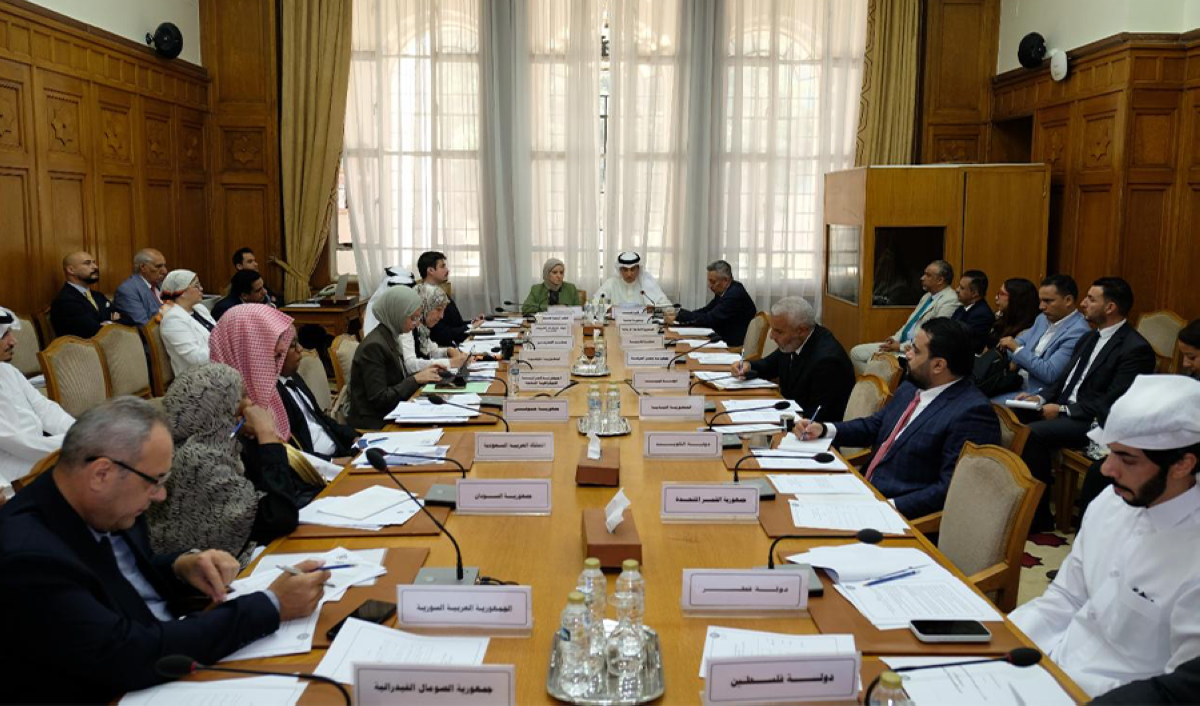
This came in a speech by Ambassador Al-Mutairi during the opening of the 58th session of the Arab Permanent Committee on Human Rights on Monday at the headquarters of the Arab League, presided over by him and attended by representatives of member states and the League’s General Secretariat.
At the beginning of the meeting, Al-Mutairi extended his sincere condolences and sympathies to the delegation of the sister State of Qatar on the passing of the founding Emir, Sheikh Hamad bin Khalifa Al Thani, and then welcomed the participants, including representatives of member states and national human rights institutions with observer status before the Committee.
He stated that the Arab region has witnessed, since the conclusion of the 57th session last February, a series of developments and serious challenges that directly affect the core work and mission of the Committee. Foremost among these is the continued difficult humanitarian situation in the Gaza Strip, amid the fragility of the ceasefire, the ongoing suffering of the population, stalled reconstruction efforts, and the worsening living conditions of Palestinians.
He added that “crises in Sudan, Libya, Lebanon, and Yemen continue to cast a shadow over humanitarian and rights conditions, necessitating sustained and collective Arab attention.” He also pointed to the repercussions of regional tensions linked to Iranian aggression against Arab states and their impact on security and stability in the region, which imposes additional challenges on joint Arab action.
He clarified that this complex regional landscape places a doubled responsibility on the Arab Permanent Committee on Human Rights and underscores the urgent need for Arab solidarity within the framework of the Arab League to confront these challenges with a spirit of solidarity and shared responsibility.
He called for continuing to build on achievements made in the previous period, foremost among them the Arab Strategy for Human Rights and the Arab Plan for Human Rights Education and Awareness, considering them two key tools for consolidating a human rights culture in Arab societies and enhancing the capacities of national mechanisms concerned with this file.
He also urged member states to double their efforts to implement the programs and activities outlined in these two documents, transforming them from a theoretical framework into practical reality that directly impacts the lives of Arab citizens.
He congratulated Arab League Secretary-General Nabil Fahmy on assuming his duties, expressing gratitude and appreciation to former Secretary-General Ahmed Aboul Gheit for the efforts he exerted throughout his tenure.
Ambassador Al-Mutairi noted that his tenure as head of the Arab Permanent Committee on Human Rights is nearing its end, with the selection of a new committee president expected during the upcoming ministerial-level meeting of the Arab League Council. He expressed his pride in the cooperation and joint work achieved during his presidency and wished success to the incoming president and committee members in continuing their duties and strengthening joint Arab action in the field of human rights.
The Committee is scheduled to submit the recommendations issued by the session to the 166th session of the Arab League Council at the ministerial level, to be held in September.
