Loopholes in Argentina boost England's chances
Argentina reached the quarter-finals of the 2026 FIFA World Cup in North America after defeating Switzerland 3-1 in extra time (1-1 after regular time), but the performance displayed by the defending champions revealed v
Translated by Qiyas from الراي — Original source
Argentina reached the quarter-finals of the 2026 FIFA World Cup in North America after defeating Switzerland 3-1 in extra time (1-1 after regular time), but the performance displayed by the defending champions revealed vulnerabilities that could bolster England’s chances of halting Lionel Scaloni’s side on their path to the final.
According to The Athletic, although results remain the most important metric in major tournaments, Argentina, like England, showed signs of fragility, particularly when compared to France and Spain, who appear to be the most convincing teams in the tournament so far.
Captain Lionel Messi remains the decisive factor in the Argentine national team’s success, with the most crucial moments coming from his touches. Julián Álvarez scored the opening goal against Switzerland, before Lautaro Martínez sealed the victory in the final moments.
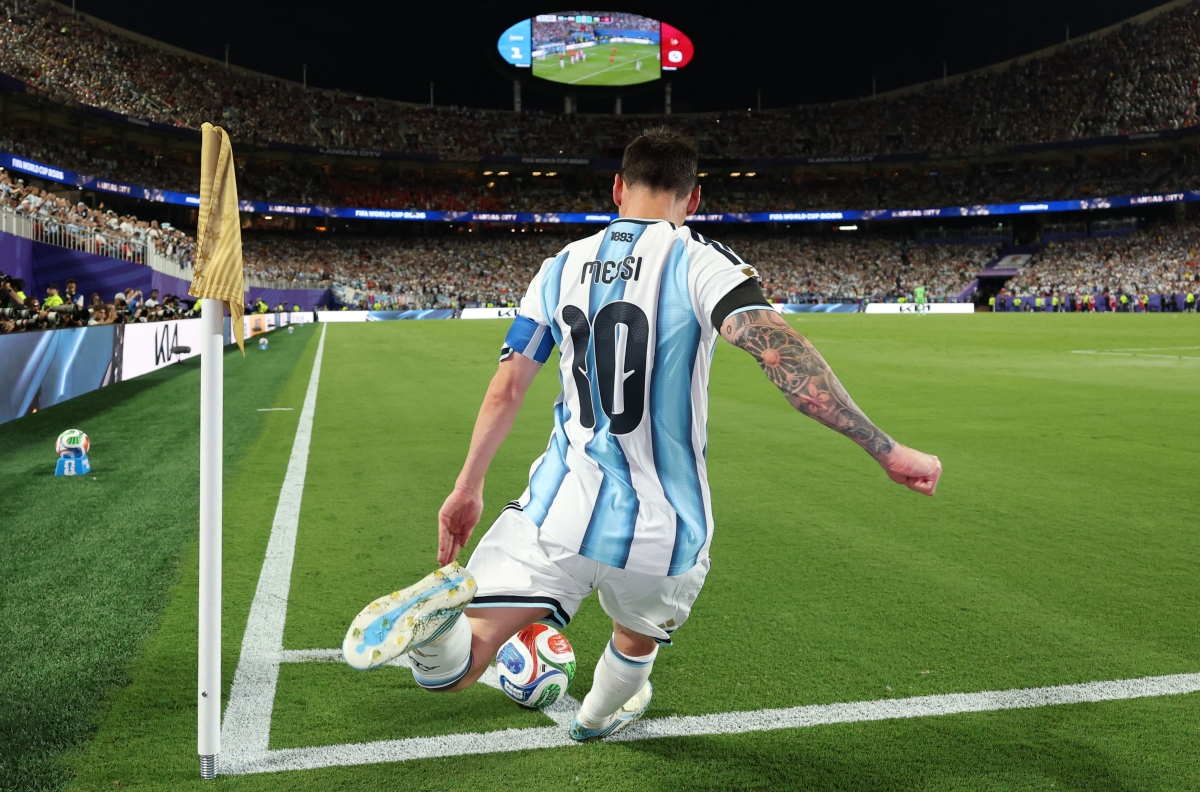
Messi is Argentina’s most potent weapon in set-piece situations, with all six of the team’s goals from corners coming from his precise deliveries, predominantly targeting the near post, whether from the right or left side.
Although the “Tango” side lacks a clear physical advantage, it compensates with determination and the ability to excel in aerial duels, which means England must avoid the defensive errors it committed against Norway in set-piece situations.
The solution lies not only in marking Messi but also in cutting off the supply lines leading to him. The Argentine star touched the ball only 14 times in the attacking third before Breel Embolo’s red card and did not take a single shot, after Switzerland successfully limited Argentina’s control over the game.
With natural wingers absent, Scaloni relies heavily on full-backs, particularly Nicolás Tagliafico, to provide width in attack. However, Switzerland managed to force him backward; he touched the ball in the attacking third only three times during the first 90 minutes, his lowest tally in the tournament.
Argentina’s possession also appeared more disjointed compared to their performance against Egypt in the round of 16, confirming that closing down the flanks and preventing full-backs from advancing significantly reduces the threat posed by the defending champions.
Conversely, the tournament has exposed Argentina’s struggles in dealing with attacks coming from the wings, as Switzerland, Egypt, Cape Verde, and Jordan all scored their goals through crosses or movements on the flanks, making targeting Argentina’s full-backs a promising offensive strategy.
