Tightening Belts in Lebanon as US-Iran Understanding Teeters on the Brink
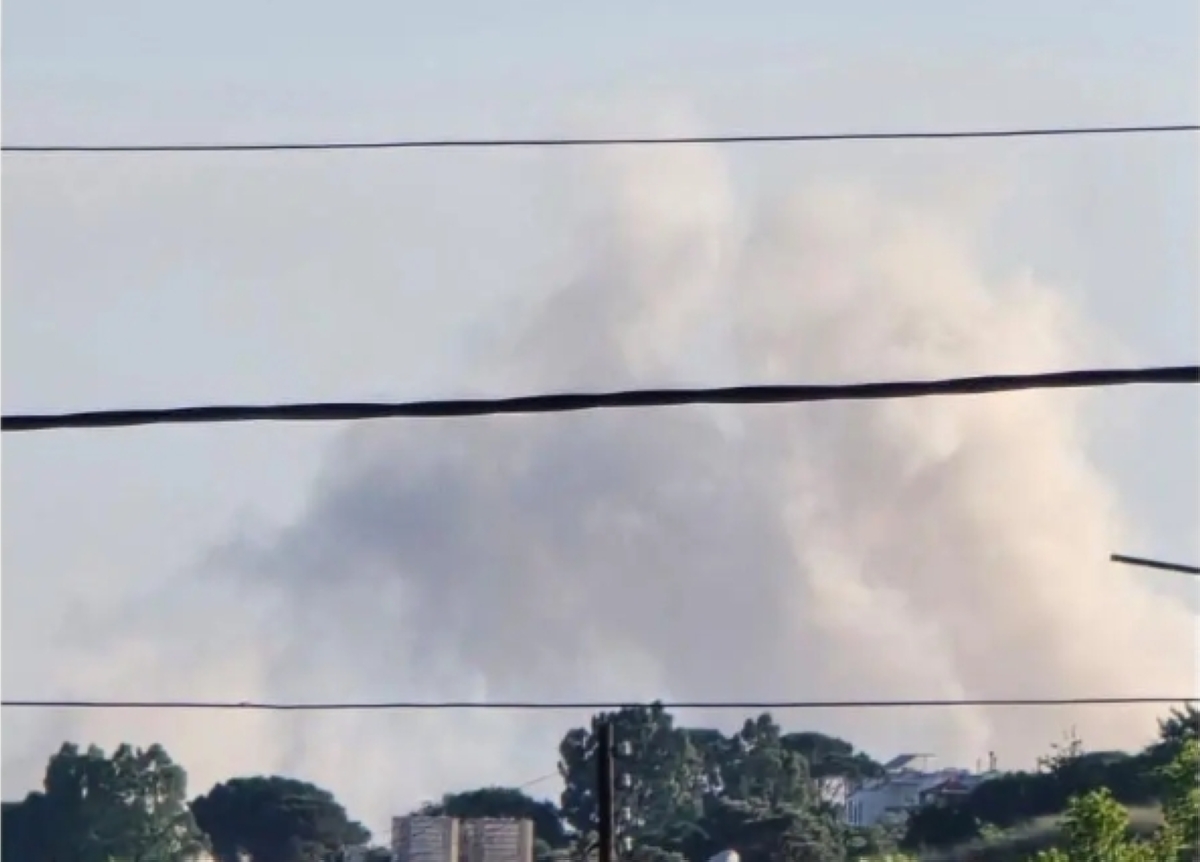
Tensions in the Middle East between Iran and the United States are impacting Lebanon, where negotiations with Israel are underway under US sponsorship amid fears of military escalation.
Translated by Alqyas from Al-Rai — Original source
Aoun: I cannot stand by as a bystander while my country is led to the abyss in service of another nation’s interests.
Lebanon and the region held their breath as the situation once again teetered on the brink of explosion, triggered by Tehran’s efforts to “militarize” and “dominate” the Strait of Hormuz. Washington responded with strikes inside Iran, followed by punitive measures and threats that the “memorandum of understanding with Iran had ended.”
Lebanon is considered the most affected and exposed link to the outcomes of the Iran front. It was drawn into a new war with Israel on March 2, ostensibly “avenging” Supreme Leader Ali Khamenei and supporting the Islamic Republic. However, the dynamics of US-Iran negotiations necessitated pressuring Israel to de-escalate in the “Land of the Cedars” and launch direct Lebanese-Israeli talks in the US capital to sever the links between the two parallel tracks, ultimately leading to the inclusion of a ceasefire in Lebanon as the first item in the US-Iran memorandum of understanding. The new round of talks, scheduled for the 11th, now unfolds in the midst of “hot winds” blowing from the Strait of Hormuz, which appear to be just the tip of an iceberg of deep-seated disagreements that continue to hinder a final agreement.
Amid the drumbeat of President Donald Trump, sounded on the sidelines of the NATO summit in Ankara on Wednesday, with threats to “strike Iran tonight,” alongside hints of resuming a naval blockade and possibly “taking control of Kharg Island,” it was difficult in Beirut to determine the direction of the winds on the Iran front. Has the memorandum of understanding truly ended? Will a full-scale military confrontation resume, or will Washington replace “fire” with an “economic war” that suffocates the Iranian regime? Or is the current situation still about raising the stakes to compel the Islamic Republic to commit to US conditions at the negotiating table?
Amid fears in Beirut that any reopening of the Iran front would mean repeating the March 2 scenario and its aftermath, with Hezbollah drawn into confrontation—and this time with the additional objective of “burning” the Washington-mediated Lebanese-Israeli track, which Israel is waiting for to shed the mask of “restraint” it was forced to adopt under Trump’s pressure—this places the new round of Beirut-Tel Aviv negotiations, scheduled for Rome a week from now, in the crosshairs of:
- A race against developments unfolding on the “main stage,” from which Beirut cannot be insulated due to the “unity of fate” between Hezbollah and Iran.
- Greater challenges in attempting to create a positive breakthrough regarding the implementation of the “Framework Agreement” signed in the US capital 13 days ago. This begins with Israel’s withdrawal from two experimental zones in the south—one occupied and one not—paving the way for the Lebanese Army to enter and clear them of any Hezbollah military infrastructure, with verification under US supervision, as part of a gradual process based on the equation of “withdrawal and disarmament from all of Lebanon.”
While the European Union Aviation Safety Agency (EASA) added Lebanon to the list of airspace areas where airlines are advised to avoid flying (alongside Iranian and Iraqi airspace) “due to tensions,” it was not incidental that a diplomatic source told Agence France-Presse that Beirut, in implementation of the content of the “Framework” signed in Washington, “conditions Israel’s withdrawal from two experimental zones as a prerequisite for participating in the Rome negotiations,” which Italy and Israel announced would be held on the 15th and 16th. Lebanon has not yet announced its official position on these talks.
This condition comes amid reports that Lebanon has returned and agreed to attend the Rome negotiations after its concerns were allayed and it secured the presence and sponsorship of the US side for the round of talks, meaning it will not be bilateral between it and Israel alone, but trilateral with Washington’s sponsorship, and that “the Land of Cedars” will be represented by Ambassador to Washington Nada Mawass and former Ambassador Simon Karam, who led the negotiations in the US capital.
For his part, a Lebanese source told Al-Hadath TV that “there is significant US pressure on Lebanon to go to the Rome negotiation round,” adding that “US-Lebanese negotiations are currently focused on conditions required from Beirut.”
This coincided with statements on the Lebanese file issued by President Donald Trump during his meeting with Syrian President Ahmed al-Sharaa in Ankara, where he reiterated that Syria “can help us with the Hezbollah and Lebanon issue,” before adding in response to a question about “Do you think Israel should withdraw its forces from southern Lebanon? Well, I spoke with Bibi (Benjamin Netanyahu) about that. I think they want that. And I don’t think there is any doubt about that. They want it, and they are in agreement with Lebanon, and they are making agreements with Lebanon, for the very first time ever.”
US Secretary of State Marco Rubio, who handles the Lebanese file directly, completed Trump’s remarks, saying, “Yes, we have an agreement, and that is the goal in the end. Of course, Israel is concerned about its security, but President Trump has done a great job bringing these two countries closer together for the first time. It’s a big deal, for the first time in many years, isn’t it? So we have an agreement between Israel and Lebanon, and yes, they will leave, and I think it will work out very well.”
Trump is preparing to welcome Lebanese President Joseph Aoun on the 21st, after the White House issued an official invitation to him, as announced by the Lebanese Embassy in Washington in a statement that affirmed “this invitation reflects the strength of the partnership between the two countries and provides an opportunity for the two leaders to discuss issues of mutual interest, including bilateral relations, regional security, and continued US support for Lebanon’s sovereignty, stability, territorial integrity, and official institutions.”
The statement noted that “this visit comes after an intensive period of diplomatic efforts undertaken by the Lebanese Embassy in Washington, in close coordination with the Lebanese Presidency and senior officials in the US administration. During this phase, the embassy worked to enhance bilateral dialogue at the highest levels and facilitate the arrangements that led to this official visit.”
The embassy affirmed that it is “coordinating all aspects of Aoun’s visit, in close cooperation with the Presidency, the White House, and the US State Department, to ensure the success of the bilateral meeting.”
Meanwhile, Aoun announced that he expects his upcoming visit to Washington and his meeting with Trump to “bring positives for Lebanon, as it translates the unprecedented US interest in Lebanon, and US support for a path to finding a permanent solution to the series of Israeli wars and attacks on our country, and achieving stability across the entire Middle East region.”
He went on to defend his choice to negotiate with Israel in the face of an escalating campaign by Hezbollah against him, stating, “I chose negotiations because I cannot stand by as a spectator while my homeland is led to the abyss in service of another country’s interests. I had to take a step that could stop the Israeli machinery of destruction and genocide, reduce losses in lives and villages, and ultimately remove the occupation. And that step is negotiations.”
He added, “This step enjoys the support of the majority of Lebanese, including members of the Shia community, which has borne the heaviest cost of the wars in the south. We are continuing with the decision we have taken.”
Earlier, Aoun met with Prime Minister Nawaf Salam, who is preparing to visit Turkey, to discuss the general situation and developments in the south, with an emphasis on the need to consolidate the ceasefire and accelerate the beginning of the Israeli withdrawal from the experimental zones.
The talks also covered the preparations being made by the government to ensure the necessary opening of roads, removal of debris, and rehabilitation of infrastructure to facilitate the return of residents to areas that are currently accessible and to those that will become accessible after the Israeli withdrawal.
