Lebanon: 'Liberation Diplomacy' Embarrasses Israel and Confuses Hezbollah
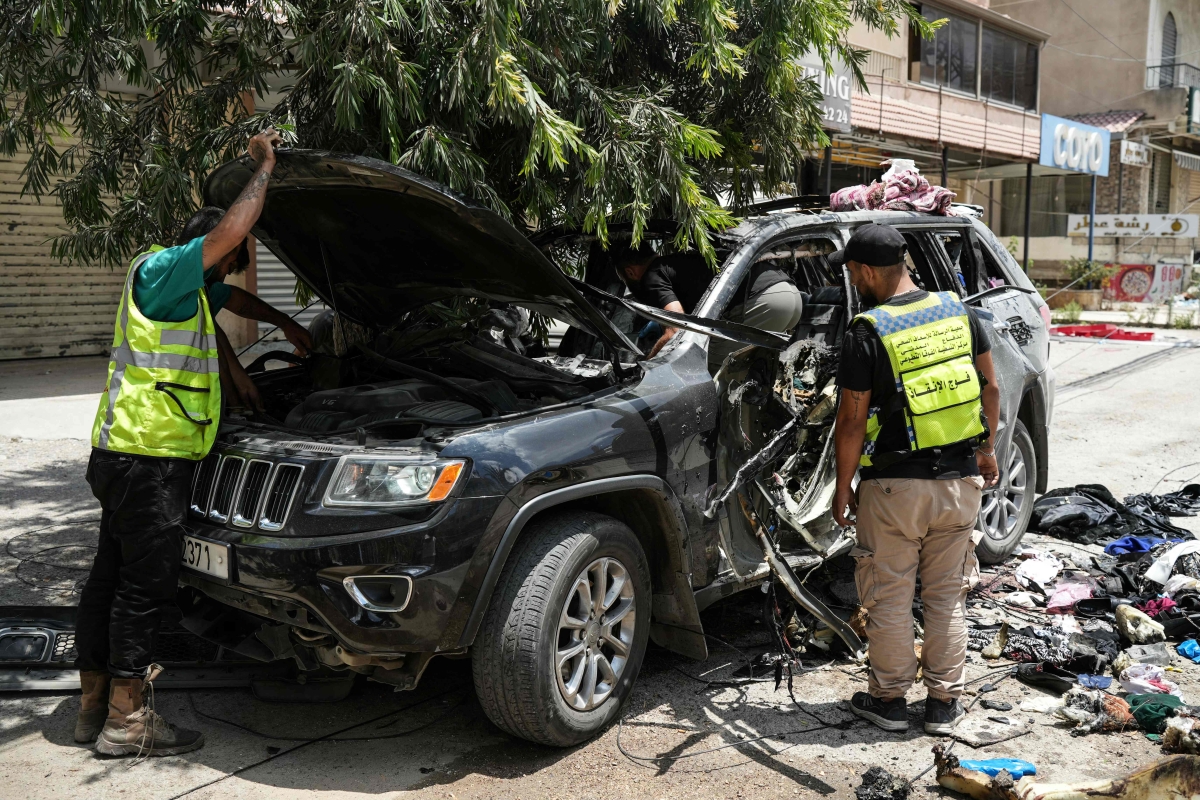
US and Israeli pressures are mounting to implement a trial withdrawal from Lebanon through the military coordination group, amid anticipation of Hezbollah's reaction and a new massacre in Nabatieh.
Translated by Alqyas from Al-Rai — Original source
The United States is intensifying its efforts to create the conditions for launching the pilot phase of the “Framework Agreement” signed between Lebanon and Israel in Washington 11 days ago under US sponsorship. This is happening alongside attempts to establish the committee responsible for overseeing the ceasefire process and verifying the implementation of commitments by Beirut and Tel Aviv, which center on two goals: the gradual withdrawal of the Israeli army—referred to by its operational name as “redeployment outside Lebanese territory”—and the parallel withdrawal of Hezbollah’s weapons.
In this context, Beirut is anticipating a new visit by US Central Command (CENTCOM) commander Brad Cooper, given indications that CENTCOM will chair the “Military Coordination Group for Lebanon (MCG4L),” which includes military representatives from both the Lebanese and Israeli armies. The formation of this group was stipulated in Article Two of the security annex to the trilateral “Framework Agreement” and was previously discussed by US Secretary of State Marco Rubio on the eve of the signing.
While Al Arabiya channel quoted Lebanese sources stating that CENTCOM will present its report on the pilot areas to officials, noting that there is no set date for Israel’s withdrawal from these areas, other information pointed to efforts to expedite the formation of the coordination group to complete the groundwork for overseeing and monitoring implementation, particularly in phases involving the “clearance” of weapons and fighters, “verification” of that clearance, and the “deployment of the Lebanese army.” The aim is to ensure that Hezbollah is prevented from returning to areas “designated” for withdrawal. Reports indicate that the US team acting as the on-ground “supervisor” will be led by US Marine Corps Central Command commander General Joseph Kluverfield, whom Beirut was preparing to receive.
Political circles indicate that there are signs that part of the considerations governing the scheduling of Benjamin Netanyahu’s visit to Washington and his meeting with President Donald Trump are linked to whether Tel Aviv’s administration will initiate the train of pilot withdrawals. Such withdrawals would embarrass Hezbollah by confirming the effectiveness of “liberation diplomacy,” while simultaneously placing the issue of weapon removal north of the Litani River on track by including one town in that area (Western Zouitar) in the “inaugural” pilot zones, alongside two towns south of the river (Froun and Al-Ghandourieh). This would constitute a test for the party, squeezing it into a corner if it insists on obstruction, thereby causing delays in Israel’s exit from occupied territories and subsequently “clashing” again with its desire to evade a withdrawal it reluctantly accepted.
Consequently, anticipation prevails as to whether Hezbollah will accept withdrawal from Zouitar to pave the way for the entry of the Lebanese army, or whether it will elevate its weapons north of the Litani as an “internal issue” to be resolved within a defensive strategy. This would translate its claim that the Lebanese authority that signed the “Framework Agreement” is valid only for the ink it used, thereby keeping this file hostage to the Iranian track, according to Tehran, which conducts its negotiations with Washington on the basis of not relinquishing its leverage, foremost among which is Hezbollah and its arsenal. This approach aims to display an overt behavior closer to the public confiscation of the peace decision and its foundations, after having controlled the decision for war.
While Netanyahu told Fox News that “no date has been set for my meeting with Trump, and I hope to discuss with him advancing the peace track with Lebanon,” Channel 13 reported that the security meeting held on Sunday evening discussed and approved two points regarding the withdrawal of the Israeli army from southern Lebanon, focusing on identifying the areas to be included in the withdrawal and the mechanisms for implementing the step, amid continuous coordination with international entities, particularly the United States.
According to the Israeli Broadcasting Authority, the meeting took place “as Israel and Lebanon, through American mediation, continue to discuss field arrangements, including defining ‘areas free of Hezbollah,’ with the aim of avoiding friction or miscalculation during the implementation of the withdrawal.” It clarified that “communications have begun between officers of the Israeli army and their counterparts in the Lebanese army, under American coordination, with the aim of establishing clear criteria for the meaning of the phrase ‘area free of Hezbollah,’ paving the way for implementing a pilot withdrawal plan from two villages in southern Lebanon.”
For its part, Yedioth Ahronoth reported that Israel is preparing to leave two areas in southern Lebanon and is awaiting an announcement from the Lebanese army that it is ready, as well as approval from CENTCOM to proceed with implementing the “pilot project” stipulated in the framework agreement signed on June 26.
Meanwhile, Lebanese Prime Minister Nawaf Salam received Army Commander Major General Rodolphe Haykal, and they discussed preparations for implementing the framework stemming from Washington negotiations, particularly the beginning of Israel’s withdrawal from experimental areas. President Joseph Aoun stressed “the importance of the Lebanese army’s return along the border, and pressing Israel to withdraw from the areas it occupies in Lebanon, because the continued occupation undermines the legitimacy of the state and prevents the army’s deployment, and hinders the achievement of just and lasting peace.”
During a video call with the “American Task Force for Lebanon,” he said, “The option of negotiation was the only one left after war failed to achieve the goals for which it was launched.” He emphasized that unless Israel withdraws from Lebanese territories, and if Israeli intransigence persists in remaining on these lands, the situation will not serve the objectives set by the United States and Lebanon regarding the restoration of the country’s sovereignty, independence, and institutional strength.
He stressed that “the US administration must pressure for the Israeli withdrawal, as it is the key to any real, tangible, and realistic progress on the peace track in Lebanon, and to ensuring security and stability along Lebanon’s southern border.”
In parallel, the field in the south was marked by a massacre committed by the Israeli army, which resulted in four casualties when a drone targeted a car on the Nabatieh-Fouqa road.
The official National News Agency reported that “Esperanza Gandour, the director of the official Youssef Chmaou School in Nabatieh-Fouqa, was with her mother, a foreign domestic worker, and a Syrian employee, inspecting the family home in Nabatieh-Fouqa. On their return, an enemy drone launched a guided missile strike near the Teachers’ Institute in Nabatieh-Fouqa, causing them all to be martyred instantly.”
In a related context, signs of Israel’s attempt to exploit Lebanese contradictions were no less significant, following Netanyahu’s announcement that “there are Christian villages in Lebanon, some of which have requested to be annexed to Israel because we protect them from Hezbollah extremists who want to kill them, and we do the same for Christians everywhere. It is not only Christians in Lebanon who seek our protection, but also Druze and Sunni Muslims, and a considerable number of Shia Muslims as well.”
After the municipalities of 15 border Christian towns categorically denied statements made by Netanyahu, affirming that the residents of these villages remain steadfast in their loyalty to the Lebanese state and its legitimacy, the Israeli military issued a warning voice message to several of these towns, urging residents to prevent the return of “strangers” to their villages and threatening that “the safety of the population cannot be guaranteed if these warnings are ignored and military operations in southern Lebanon continue.”
Earlier, Speaker of the Parliament Nabih Berri praised the content of statements and positions issued by the heads of municipal councils and spiritual figures in the border villages, particularly the Christian ones, emphasizing that “the stances of the residents and figures of those villages, their resilience, and their attachment to their land and identity reflect the authenticity of their national allegiance, which they will not compromise under any circumstances.” He warned against “the dangers of falling for the lies and falsehoods propagated by Israeli political levels, which harbor sectarian agendas aimed at sowing discord among the residents of border areas.”
