What lies behind Netanyahu’s rush to meet Trump... and what is the risk ahead of the elections?
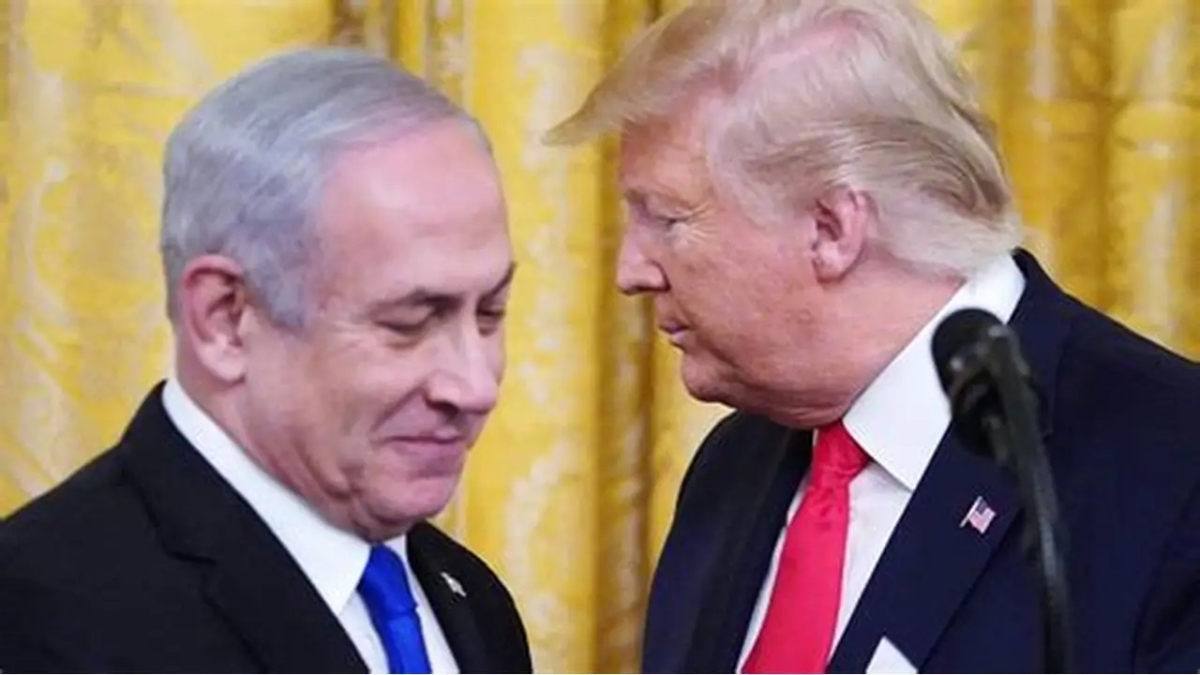
The office of Israeli Prime Minister Benjamin Netanyahu is seeking to arrange a meeting with Donald Trump this week, immediately after the US president returns from the NATO summit in Turkey. However, it is not certain t
Translated by Qiyas from الراي — Original source
The office of Israeli Prime Minister Benjamin Netanyahu is seeking to arrange a meeting with Donald Trump this week, immediately after the US president returns from the NATO summit in Turkey.
However, it is not certain that the meeting will take place at that time. Therefore, Netanyahu’s office is pressing to hold it at the White House as soon as the summit concludes, while also preparing for the possibility of postponing it to next week, according to Ynet, the news website of the newspaper Yedioth Ahronoth.
From rebuilding damaged trust to the Iranian file, and including normalization and the F-35 fighter jet deal with Turkey, these are the main reasons driving Netanyahu to insist on holding the meeting now.
If the meeting takes place, it will be the eighth between the two leaders since Trump’s return to the White House. The last meeting occurred on February 11 inside the White House Situation Room, a gathering that later proved to be pivotal, as it persuaded Netanyahu to convince Trump to agree to a second war against Iran.
During that meeting, Netanyahu presented Trump with plans to overthrow the Iranian regime, but reports indicated that senior officials in the US administration considered them unrealistic and immature.
One of Netanyahu’s key motivations for seeking a quick meeting is to repair the trust that was damaged after the war, as statements within Trump’s circle increasingly claim that most of Netanyahu’s assessments proved to be wrong.
Conversely, Israeli sources insist that the plans presented by Mossad did not call for the overthrow of the regime within days or during the war, but rather in the following months, conditional on the implementation of a series of steps that Israel claims Trump has not carried out, including the use of Kurdish opposition forces to attempt to topple the Islamic Republic.
Another reason is Israel’s desire to present all the intelligence information it possesses to the US administration before resuming negotiations with Tehran regarding a permanent agreement.
Netanyahu had announced at his last press conference that he would send a delegation to Washington to present the Israeli position before the negotiations, which were temporarily postponed until after the funeral of the late Supreme Leader Ali Khamenei, who was killed in the opening strike of Operation “Lion’s Roar.”
Israel believes it is essential that Washington not only reduce the level of uranium enrichment but also insist on its red line of removing all enriched uranium from Iranian territory.
It also seeks to prevent Iran from retaining any right to uranium enrichment, an issue on which Israel believes the United States has backtracked.
- In Gaza: Emphasis on not allowing the reconstruction of the Strip before its disarmament and the dismantling of Hamas.
The report indicates that the United States is preventing Israel from carrying out a large-scale military operation to disarm Hamas, while continuing to maintain contacts with the movement, despite Israel’s conviction that Hamas will not agree to hand over its weapons.
Netanyahu also wants to advance the normalization process with additional Arab countries. He had stated at his press conference that he is working on new agreements following the framework deal with the Lebanese government, and this file is expected to be raised during his meeting with Trump.
The two sides will also discuss the possibility of reaching a new security memorandum of understanding, which is likely to be based on military and technological cooperation rather than traditional US financial aid, with Israel offering its technological capabilities as part of the future security relationship.
On the Syrian file, the United States wishes to resume negotiations between Damascus and Tel Aviv.
Netanyahu is expected to present Israel’s strong objection to supplying Turkey with F-35 fighter jets, amid what Israel describes as Ankara’s hostile behavior, particularly following its recent statements in which it claimed that “Israel has become a problem for the entire international community.”
Earlier, Trump hinted during his meeting with NATO Secretary General Mark Rutte that steps could be taken to allow the sale of fighter jets to Turkey. When asked by a journalist whether he was carrying “a big bag of gifts” for Turkish President Recep Tayyip Erdoğan—referencing Ankara’s request for F110 engines and F-35 fighters—Trump replied: “Yes, I think so. Maybe I’ll do something that will make him very happy.”
According to the report, Netanyahu is taking a political risk, as any public insult he might suffer during his meeting with Trump could negatively impact his electoral campaign.
Nevertheless, the prime minister is betting on the possibility of leveraging Trump’s support in the upcoming elections.
Analysts believe that the last thing Trump would do is support a figure he believes will lose the election. If he becomes convinced that Netanyahu will not win, he may distance himself politically.
However, even if Netanyahu does not receive American electoral support, he considers it essential at least to present Israel’s positions and red lines before beginning negotiations with Iran.
Israel estimates that the chances of reaching a permanent agreement between the United States and Iran remain very slim, and believes that negotiations will ultimately collapse, with a new window potentially opening in November to resume strikes against Iran.
For this reason, Israel deems it necessary to maintain the highest possible level of coordination with the United States in case the negotiations break down.
