Trump Takes the Reins of the "Forced Wedding" with Netanyahu
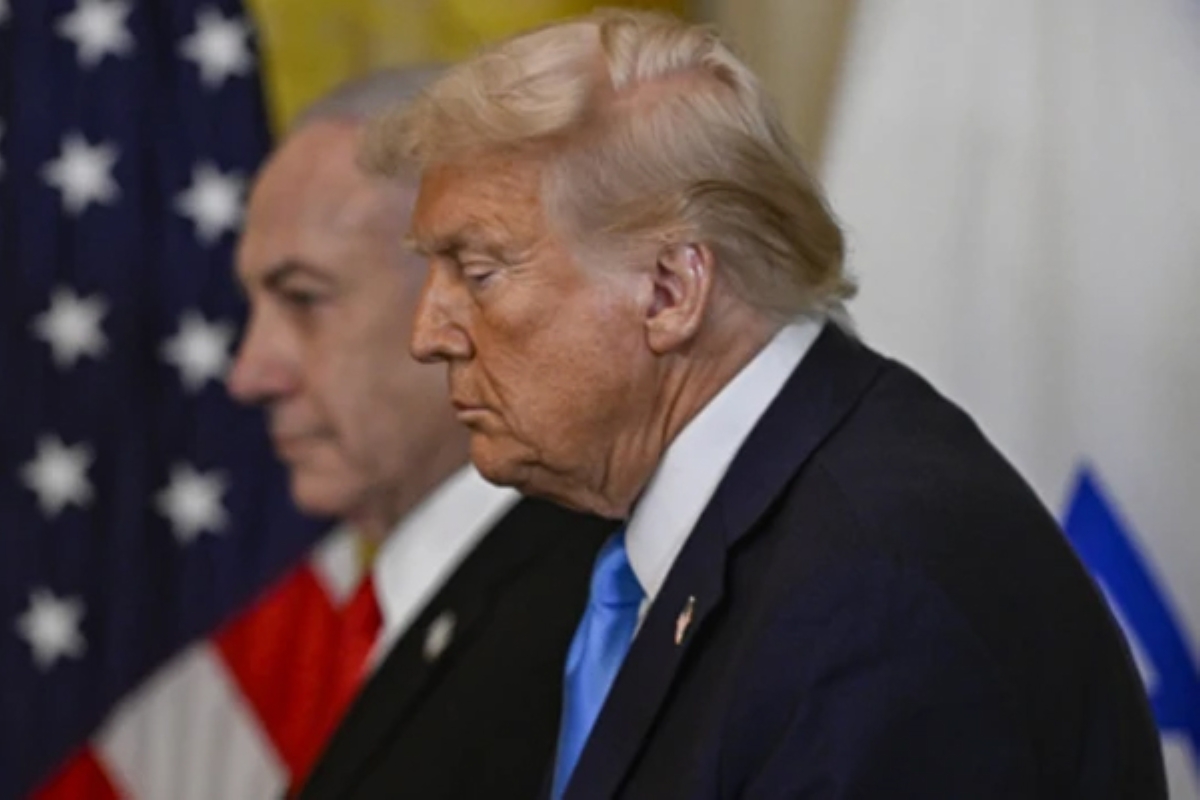
- Netanyahu’s anticipated visit to Washington... Three main scenarios - The Prime Minister insists on maintaining a security zone in the south and views the agreement with Lebanon as “a blow to Hezbollah and Iran” - Comp
Translated by Qiyas from الراي — Original source
- Netanyahu’s anticipated visit to Washington... Three main scenarios
- The Prime Minister insists on maintaining a security zone in the south and views the agreement with Lebanon as “a blow to Hezbollah and Iran”
- Compelled to accept a framework agreement with Iran for a certain period in exchange for receiving a very large package of security and political compensations...
Benjamin Netanyahu, Israel’s most cunning political figure, is preparing to embark on the most perilous diplomatic leg of his career. This is not merely a seventh protocol visit to the White House; it is a “survival confrontation” that will determine whether the Israeli leader remains a key player in the Iran file, or becomes merely a spectator in a play scripted by President Donald Trump with precision.
Within a few weeks, the relationship between the “closest friends” has been turned upside down. Instead of the usual coordination and public harmony, a tone of tension and sharpness has dominated phone calls, and leaders’ statements have turned into coded messages reflecting a hidden struggle over who holds the final decision on the fateful files of the Middle East.
As Netanyahu heads to the White House this time, he carries no promises of victory, but rather a “bag of concessions” that his government may be forced to accept under American pressure, in a scene that can be described as a “forced wedding,” where security coordination remains tight, but political trust crumbles like spiderwebs.
So what awaits Netanyahu in Washington? And why has the relationship shifted from a strategic alliance to a tug-of-war? And who will ultimately prevail: the American logic keen on avoiding war, or the Israeli doctrine that views Iran as an existential threat that tolerates no compromise?
Contrary to the stereotypical image painted by media outlets for decades regarding the “unshakable” US-Israeli alliance, the weeks preceding the visit have revealed a deep rift, almost abyssal, in the relationship between the two countries. What appeared as tactical disagreements over war management quickly turned into an open confrontation, reflecting a fundamental shift in strategic vision between Washington and Tel Aviv.
Struggle for Leadership and Initiative: The blunt American statement, “I call the shots,” served as the shock that woke Netanyahu from his political arrogance. After years of Israeli interference in American politics, Trump is now drawing a clear line, declaring that the initiative will not leave the White House.
This painful statement was not merely a passing whim, but a declaration of war against the “long arm” policy that Israel had practiced for decades.
Mutual Accusations of Intransigence: Israeli sources revealed sharp phone calls between the two men, which included “accusations and insults” unfamiliar to the political public in the relationship between the two countries.
Trump accused Netanyahu of proceeding with military operations in Lebanon despite Washington’s clear desire to de-escalate fronts to facilitate negotiations with Iran, while Netanyahu responded by affirming “Israel’s full right to defend itself,” even if it goes against American will.
The Embarrassing Republican Divide: The public disagreement has placed Republicans in an enviable position. Between their historical support for Netanyahu as a symbol of Israel’s ally, and their absolute loyalty to Trump as the party leader, they found themselves torn between two fires. Some openly called on Netanyahu to move closer to the American president’s position, a scene reflecting the erosion of Israeli influence in Washington.
When Netanyahu sits at the negotiating table in the White House, he will face three fateful files, each containing a time bomb that could detonate the entire relationship:
The Iranian file represents the beating heart of the entire crisis. While Israel views the Washington-led framework agreement with Tehran—which included a memorandum of understanding to reopen the Strait of Hormuz and establish a ceasefire—as a quintessential “political and security disaster,” Washington sees it as a “gateway” to regional stability that could change the rules of the game in the region.
Netanyahu views the current agreement as a “prelude to a future war” and a “strategic victory for Iran” in its struggle with the West.
Israeli officials insist that an agreement without addressing the missile program and support for regional militias is a “flawed deal” that grants Iran international cover to continue its expansionist project.
Trump is focusing on removing all enriched materials and preventing enrichment for decades, while imposing a strict naval blockade on Iran as an additional pressure tool.
Washington aims to secure an agreement “better” than the 2015 deal, but it recognizes that open war no longer serves U.S. interests at a time when the administration is suffering from political and military exhaustion.
Netanyahu is attempting to implement what is known as the “hidden engineering” of U.S. policy toward Iran—a long-standing Israeli strategy aimed at imposing structural constraints on any U.S.-Iranian understandings. However, he is confronting the reality that Iran has previously refused to include the missile program and support for militias in any agreement, placing Israel in a difficult position where its options remain limited between accepting the new reality or risking an open confrontation with Washington.
On the Lebanon front, the picture appears even more complex. Netanyahu insists on maintaining a security zone in southern Lebanon, arguing that Israeli military advances have created a “massive shift” in the field balance and forced Hezbollah to retreat. Washington, however, views the continuation of Israeli operations in Lebanon as a major obstacle to regional peace negotiations, seeking to replace them with international guarantees and UN monitoring mechanisms.
The Buffer Zone: Netanyahu indicated that the agreement with Lebanon represents a “blow to Iran” and Hezbollah, but he affirmed that Israel will maintain the security zone as long as the threat persists. In contrast, Washington wants a permanent ceasefire to enhance the stability of the truce with Iran and pave the way for broader dialogue.
The Hidden Conflict: Israel fears that the U.S. withdrawal of pressure on Lebanon will lead to a realignment of forces in favor of Hezbollah and Iran, undermining the Israeli military gains achieved at a high cost in blood.
It appears that Netanyahu is about to offer what resembles a “historic bargain” in Washington. He is prepared to accept the framework agreement with Iran, but in exchange for a very large package of security and political compensations, including:
U.S. guarantees against allowing Iran to return to high enrichment levels—a point Netanyahu considers a “red line” that cannot be crossed.
In this context, Trump and his vice president, J.D. Vance, indicated that the primary goal is to remove enriched materials and prevent enrichment for decades, signaling that Washington is ready to make significant security concessions in exchange for an Israeli commitment not to obstruct the agreement.
Despite public tensions and declining political influence, Netanyahu still possesses a set of leverage tools that may enable him to turn the tables, or at least secure some gains in the details of the agreement:
Netanyahu confirmed that coordination with the U.S. administration is “daily” and includes full briefings by Vice President J.D. Vance. This close operational coordination, which involves joint strikes and unprecedented intelligence sharing, is the cornerstone of a relationship that neither side can afford to ignore. This dynamic gives Israel a permanent window into U.S. policy and the ability to influence minor tactical decisions, even when strategic visions differ.
Despite his differences with Trump, Netanyahu enjoys strong support from a significant faction of the Republican Party in Congress. This backing could be used to pressure the White House to keep the Iranian file within Israel’s “red lines,” through legislation and political stances that limit the administration’s flexibility in negotiating with Tehran.
Perhaps Netanyahu’s most dangerous card is the threat to act unilaterally against Iran if it crosses the “red line” regarding missiles or the nuclear threshold. This card aims to push Washington to harden its stance, fearing being dragged into a new regional war. Although this option carries significant risks that could lead to a comprehensive military confrontation, Netanyahu considers it the “last card of pressure” that could shift the balance of power in negotiations.
Based on a deep reading of the political and security landscape between Tel Aviv and Washington, three main scenarios can be envisioned for the future of the relationship and the outcome of the Iranian negotiations:
In this scenario, Netanyahu would be forced to accept the framework agreement with Iran, but he would receive a very large package of security and political compensations that would enable him to sell the agreement to his domestic audience as an achievement. This package could include updates to U.S. arms deals, official U.S. recognition of the security zone in Lebanon for a transitional period, and U.S. guarantees preventing Iran from returning to high levels of enrichment.
Post-Scenario: The relationship would remain akin to an “armed truce,” where security coordination is the only artery linking the two sides, while political trust remains fragile and fluctuating, with a continued covert race between U.S. diplomacy and Israeli military options playing out in the shadows.
If Netanyahu feels that the agreement threatens his political survival or Israel’s strategic security, he may resort to intelligence operations or limited strikes against Iranian targets to “burn” the chances of the agreement, in a desperate attempt to drag Washington back into the escalation square. This scenario carries significant risks that could lead to the collapse of negotiations and a wide-scale military escalation in the region.
Post-Scenario: The relationship may witness an unprecedented crisis of trust, with mutual accusations between the two sides over who bears responsibility for the agreement’s failure. The region could turn into an open battlefield between Israel and Iran in the absence of U.S. cover.
If Washington decides to proceed with the agreement without regard for Israeli concerns, the relationship between the two countries may experience a sharp strategic rupture. Some analysts believe this scenario could accelerate the region’s transition from a “military dominance” model to a “conflict management” model involving other regional actors, a shift that Israel strongly resists.
When Netanyahu leaves the White House this time, it will not be like all previous times. He will not carry in his pocket smiling photos with Trump, or promises of overwhelming victories over Iran, or even assurances of an “eternal alliance.” Instead, he will return to Tel Aviv burdened with temporary “survival recipes” and a bag of concessions that may weigh heavily on him politically.
The era of “emotional blackmail” between the two men is over, replaced by a logic of intersecting interests and cold calculations. The relationship between Tel Aviv and Washington remains akin to a “suspension bridge” spanning a chasm of deep disagreements. The real surprise lies not in what the two sides will announce at press conferences, but in the secret clauses and undisclosed agreements they will keep hidden—provisions that could completely reshape the rules of the game in the Middle East.
In the end, the biggest question remains: Is this the end of the era of “Israeli hegemony” over US decision-making in the Middle East, or merely a waypoint in a long-term struggle between Washington and Tel Aviv over who holds the final say on the Iran file? Only the coming days will provide the answer.
