Kabed Road... The Public Works Hole
- A cry for help from citizens to end their suffering awaits the Ministry’s intervention - Citizens: Narrow lanes and frequent diversions cause delays in our daily work and appointments - The spread of potholes, cracks,
Translated by Qiyas from الراي — Original source
- A cry for help from citizens to end their suffering awaits the Ministry’s intervention
- Citizens: Narrow lanes and frequent diversions cause delays in our daily work and appointments
- The spread of potholes, cracks, and uneven asphalt levels increases the likelihood of accidents
- Lack of lighting in parts of the road doubles the danger of driving during nighttime hours
- Residents: Expansion is necessary, with new lanes and more organized entrances and exits
- The road is a vital artery for residents of the area, visitors to Al-Shabra, and owners of farms and horse tracks
- Al-Shalhawi: The slow progress of the project has exhausted residents... Truck queues stretch for hundreds of meters
- Al-Rashidi: The road has become known as the “Road of Death”... Urgent intervention is essential
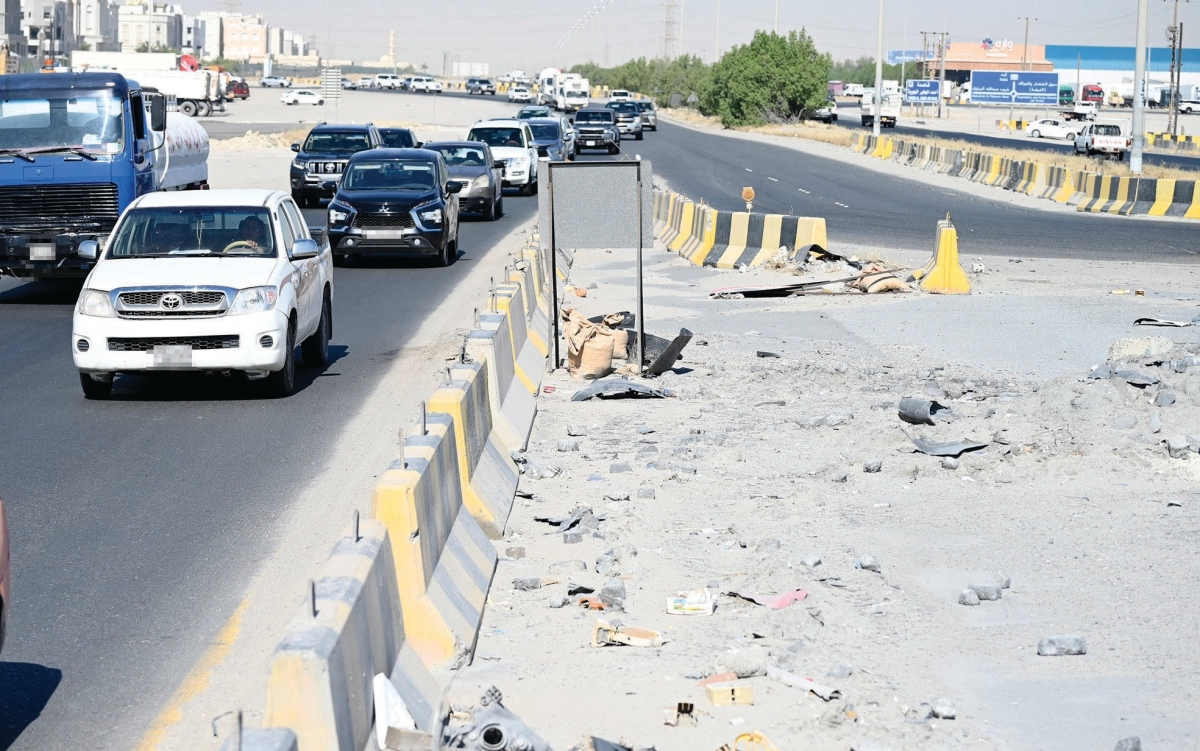
From the Shabra Al-Salibiya roundabout to the western entrance of Abdullah Al-Mubarak, complaints are no longer about temporary traffic congestion, but about a road that cries out daily from the suffering of its users. They endure a daily journey filled with anxiety and waiting, navigating between open excavations and concrete blocks that choke the lanes and force traffic diversions. Their eyes remain fixed on the narrow lane ahead rather than their destination, fearing sudden accidents or new vehicle breakdowns.
The road, which serves vital neighborhoods and sees continuous traffic heading toward Kabd, horse tracks, farms, and Shabra Al-Salibiya (Al-Farida), has become an open dilemma and a symbol of unacceptable suffering for its users. It stands as an open file for relevant authorities to act swiftly and find an urgent solution to end these hardships.
Road users confirmed that their daily commutes, whether in the morning or evening, now take significantly longer than usual due to narrow lanes and frequent diversions that force drivers to stop for extended periods, especially during peak hours. This negatively impacts their work and daily schedules.
They explained that the suffering extends beyond traffic congestion to the poor condition of the road itself, which is riddled with potholes, cracks, and uneven asphalt surfaces. This increases the risk of traffic accidents and causes repeated damage to vehicles due to continuous driving over uneven bumps and scattered excavations along the road.
Fahad Al-Shalhawi, a resident of the Abdullah Al-Mubarak area, stated that delays in developing and modifying the Kabd roundabout and the associated road project have become a source of despair for everyone. Amid severe traffic congestion and long queues of trucks stretching for hundreds of meters, daily confusion for road users has increased.
He added that the area is vital and important, witnessing continuous active movement from both residents and heavy vehicles. This makes it urgent to accelerate the pace of implementing development and infrastructure projects, especially since work on the project is proceeding very slowly and may halt for periods of years without clear solutions.
He pointed out that this situation has become a daily hardship for citizens and residents due to traffic bottlenecks, in addition to the damage inflicted on vehicles caused by the poor road condition, numerous potholes, and untreated bumps.
Several road users noted that concrete blocks placed to organize traffic diversions have significantly narrowed the road, becoming a daily challenge for drivers, especially with the heavy movement of trucks and vehicles heading toward the Kabd area, horse tracks, and farms, as well as vehicles coming from and to western Abdullah Al-Mubarak.
Road users pointed out that the lack of lighting in certain sections of the road increases the danger of driving at night, as visibility becomes limited, especially with ongoing excavations and diversions. This raises the likelihood of accidents and makes driving more difficult, particularly in dusty conditions or during the rainy season.
For their part, residents of the areas served by the road emphasized that it serves as a vital artery connecting several important districts. Thousands of citizens and residents use it daily, along with frequent visitors to the Shabra Al-Sulaybiyah area, which sees heavy traffic from early morning hours. The road is also heavily used by farmers and camel owners, underscoring the need to prioritize it among road network development projects.
Several citizens called on the Ministry of Public Works to expedite the completion of the project and remove temporary diversions. They also demanded comprehensive asphalt paving using high-quality material capable of withstanding heavy traffic, alongside reconfiguring lanes to improve traffic flow and reduce congestion.
They further stressed the importance of widening the road by adding new lanes commensurate with daily traffic volume, and creating more organized entrances and exits to minimize recurring bottlenecks, particularly at intersections leading to the Shabra Al-Sulaybiyah roundabout and the Abdullah Al-Mubarak West entrance.
For his part, Mohammed Al-Rashidi stated that the road has been dubbed a “road of death” by some due to frequent accidents and damage suffered by its users. He emphasized that this situation is unacceptable for Kuwait, which strives for development and infrastructure improvement, especially given the significant urban expansion and growing population density in the area.
He clarified that the persistence of this situation without fundamental solutions highlights the urgent need for intervention by relevant authorities, primarily the Ministry of Public Works, to reassess the project and establish a clear timeline for its completion, while strengthening oversight to prevent further delays.
Al-Rashidi added that such vital projects require more effective management and greater coordination among various entities to ensure completion within specified timeframes, particularly given the heavy reliance on this road as one of the region’s main corridors.
Traffic experts believe that improving the infrastructure of the road leading to the Shabra Al-Sulaybiyah roundabout will positively impact traffic flow throughout the entire area and alleviate pressure on adjacent roads, especially amid the urban expansion in Abdullah Al-Mubarak West and the steady increase in vehicles heading to agricultural areas, the camel racing track, and Jawahir Kabd.
Citizens have called for the completion of the lighting network along the entire stretch of the road and the installation of clear directional and warning signs to ensure user safety and facilitate easier navigation during nighttime hours.
Road users have appealed to the Ministry of Public Works to respond to their demands and accelerate work on the project, thereby putting an end to their daily hardships and restoring the road’s efficiency as one of the most critical axes in the Farwaniya Governorate. They noted that completing the paving, widening, and lighting works will not only reduce congestion but also enhance road safety, protect users’ lives and property, and keep pace with the urban development underway in the country.
