Minister Al-Hajar Launches Biometric Fingerprint Service for Lebanese Passports in Kuwait
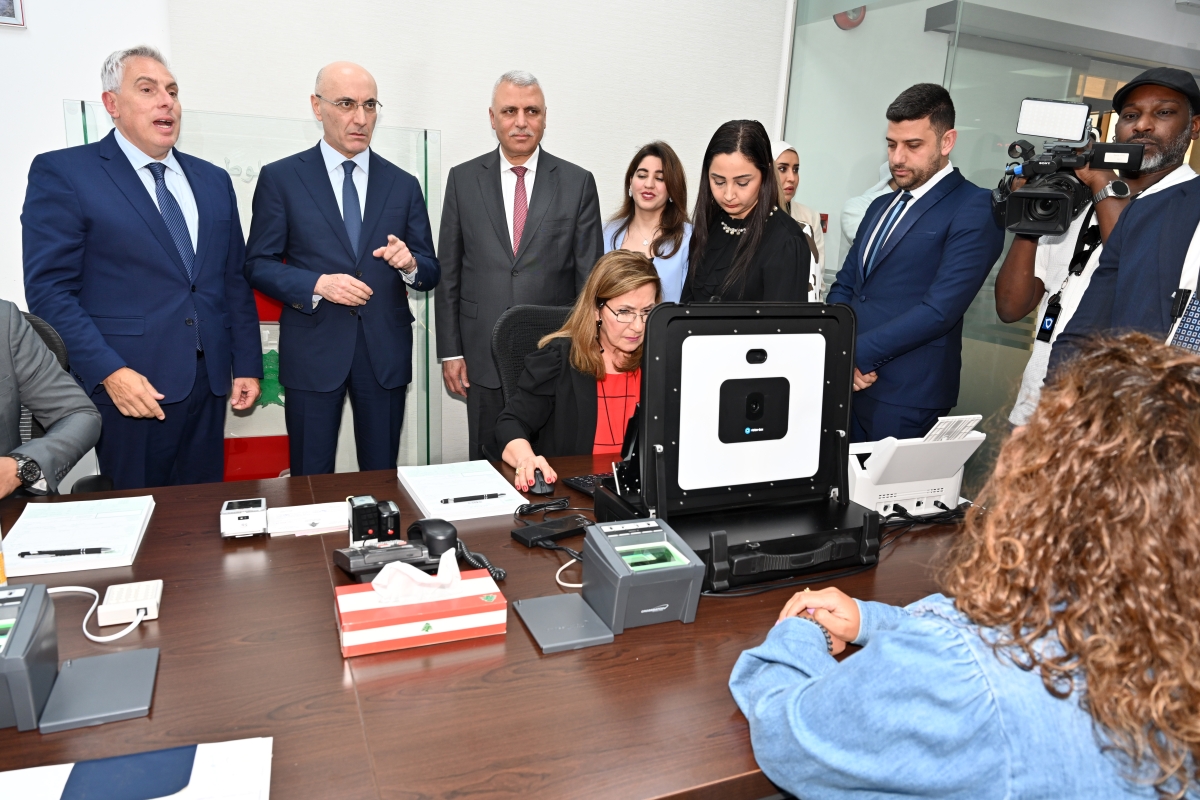
The Lebanese Minister of Interior launched the biometric fingerprint service for passports in Kuwait to facilitate expatriates' transactions.
Translated by Alqyas from Al-Rai — Original source
Lebanese Minister of Interior and Municipalities, Major General Ahmad Al-Hajjar, launched the biometric fingerprint service for Lebanese passports in Kuwait, emphasizing that it is being introduced for the first time outside Lebanon and will be gradually rolled out at Lebanese embassies worldwide in the coming weeks and months.
Speaking on the sidelines of the official launch ceremony on Sunday, Al-Hajjar stated that this initiative represents a significant step toward facilitating administrative procedures for Lebanese abroad.
He added that the Lebanese Embassy in Kuwait, through months of coordination with the Lebanese ministries of Foreign Affairs, Interior, Finance, and Public Security, worked to launch the service for the first time outside Lebanese territory. He confirmed that Public Security provided the equipment and covered all project costs, noting that state institutions collaborated as a unified team to complete the project. Al-Hajjar extended his gratitude to Public Security, the Lebanese Embassy in Kuwait, and the Ministry of Foreign Affairs and Emigrants for their efforts.
He explained that the biometric fingerprints collected in Kuwait are electronically transmitted to the General Directorate of General Security in Beirut for passport issuance, after which the passport is sent to the Lebanese Embassy in Kuwait for delivery to the holder.
Al-Hajjar noted that the old passport will continue to be accepted on a transitional basis, with its use fully discontinued starting October 1, 2026. He pointed out that adopting biometric passports has become a necessity due to technological advancements, and that the new service will spare Lebanese residents abroad the hardship of traveling to Lebanon. It will also facilitate their participation in the upcoming parliamentary and expatriate elections.
He affirmed that coordination with the Kuwaiti side has always been productive, and that Kuwaiti authorities welcomed the project and provided all necessary facilitations for its success.
He further indicated that adopting biometric passports will also facilitate the participation of Lebanese residing abroad in the upcoming parliamentary and expatriate elections by enabling them to hold biometric passports.
For his part, Lebanese Ambassador to Kuwait Gadi Al-Khoury emphasized that launching the biometric fingerprint service at the Lebanese Embassy in Kuwait represents a crucial step in streamlining procedures for members of the community, as they can now issue or renew their passports without needing to travel to Lebanon.
He noted that Kuwait is the first Lebanese diplomatic mission abroad to adopt the biometric service system, reflecting the deep fraternal relations between Kuwait and Lebanon. He confirmed that Kuwait was chosen to launch the project in recognition of its esteemed status among the Lebanese state and people.
Al-Khoury stated that the embassy will begin operating the service on a trial basis without prior appointments, though an appointment system will be adopted if necessary. He added that processing a fingerprint application takes less than ten minutes.
Al-Khoury stressed that biometric fingerprint data is transmitted exclusively to the General Directorate of General Security in Lebanon and is not linked to any other entities. He affirmed that the system adheres to the highest standards of accuracy and security in data storage and processing.
