Does the World Cup lack a decisive element?
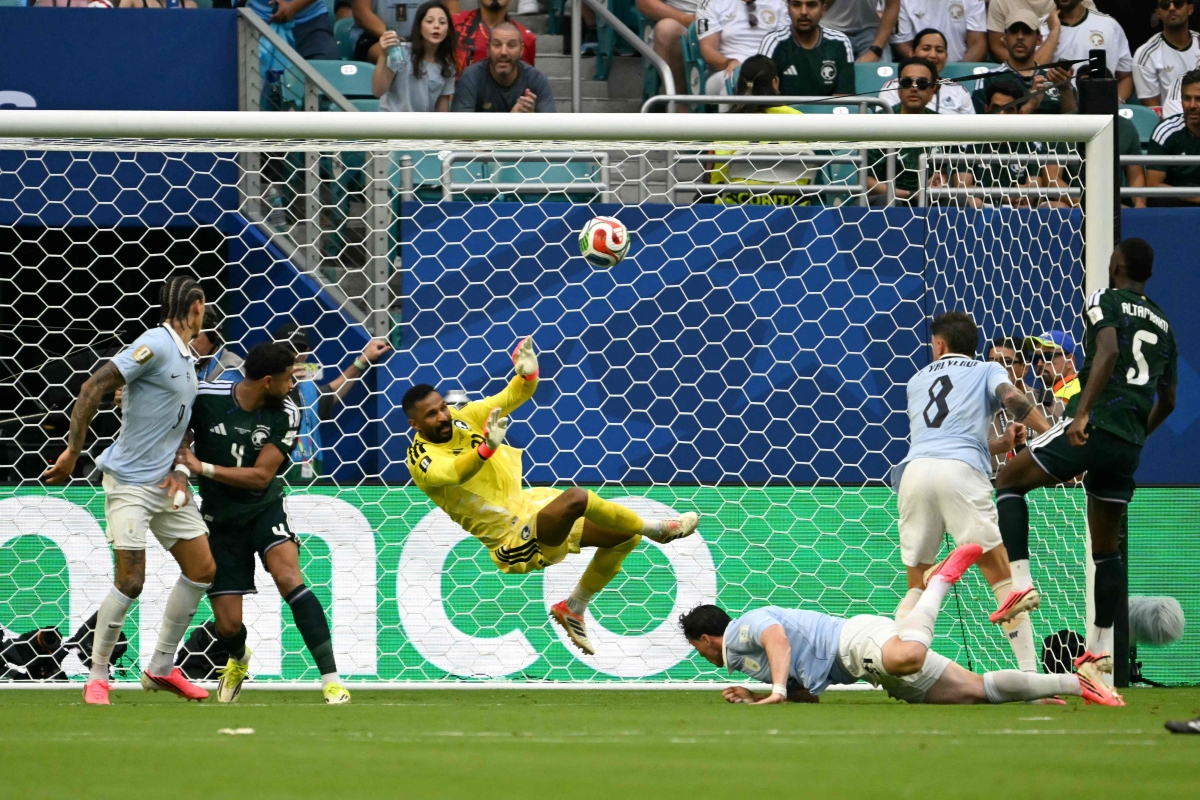
Draws dominated the opening week of the 2026 World Cup, with four matches ending in draws for the first time since 1958.
Translated by Alqyas from Al-Rai — Original source
- For the first time since 1958, four matches end in a draw on a single day
Draws dominated the opening week of the 2026 FIFA World Cup, in an unprecedented phenomenon that has raised questions about the impact of the tournament’s expanded format on the level of competition and excitement.
Yesterday, Monday, all four matches ended in draws: Spain drew goalless with Cape Verde, Belgium drew 1-1 with Egypt, Saudi Arabia drew 1-1 with Uruguay, and the match between Iran and New Zealand ended 2-2.
This marks the first day in World Cup history since June 15, 1958, when four matches on the same day ended without a winner.
Notably, the tournament has recorded eight draws in its first 16 matches, the highest number at this stage in World Cup history. The previous record was seven draws, set in the 1974, 1982, and 1986 editions.
Observers believe that expanding the tournament to 48 national teams may be one reason for the high number of draws, as 32 of the 48 teams qualify for the Round of 32, reducing the pressure associated with opening matches.
According to a specialized football statistics website, accumulating just three points may be sufficient to qualify in many cases, and even three draws could ensure progression with a high probability.
European teams continued their modest start to the tournament, with Belgium becoming the seventh of ten European teams to fail to win their opening match.
So far, only Germany, Scotland, and Sweden have secured victories, against Curaçao, Haiti, and Tunisia, respectively.
Although European teams were ranked higher in eight of the ten matches played, their results did not reflect this advantage, raising questions about the impact of harsh weather conditions in North America.
The Belgium-Egypt match was held in Seattle amid temperatures exceeding 30°C during the afternoon, making it one of the hottest days of the year in the US city.
However, he pointed to another issue related to the pitch, noting that the grass was extremely dry and required more watering, which slowed the ball’s movement and affected the quality of play.
For his part, Switzerland coach Murat Yakin confirmed that missed opportunities were the main reason for his team’s 1-1 draw with Qatar, despite clear attacking dominance.
Europe’s struggles were not the only focus, as all South American teams that have played so far have failed to secure any wins.
In contrast, Asian teams remain unbeaten so far, while several African teams have managed to snatch valuable points from higher-ranked opponents, reflecting growing competitiveness and the increasing difficulty for traditional powerhouses in world football.
Despite the shaky starts of some major teams, the path remains open for them to correct their course, as each team has two group stage matches left before qualification for the knockout rounds is decided.
With the tournament continuing under its new format, the question remains: Has the expansion of the World Cup increased competitiveness among national teams, or has it diminished the importance of opening matches and weakened the decisive element in the group stage?
