Nawaf Al-Saud: Global confidence in Kuwait's reform and investment path
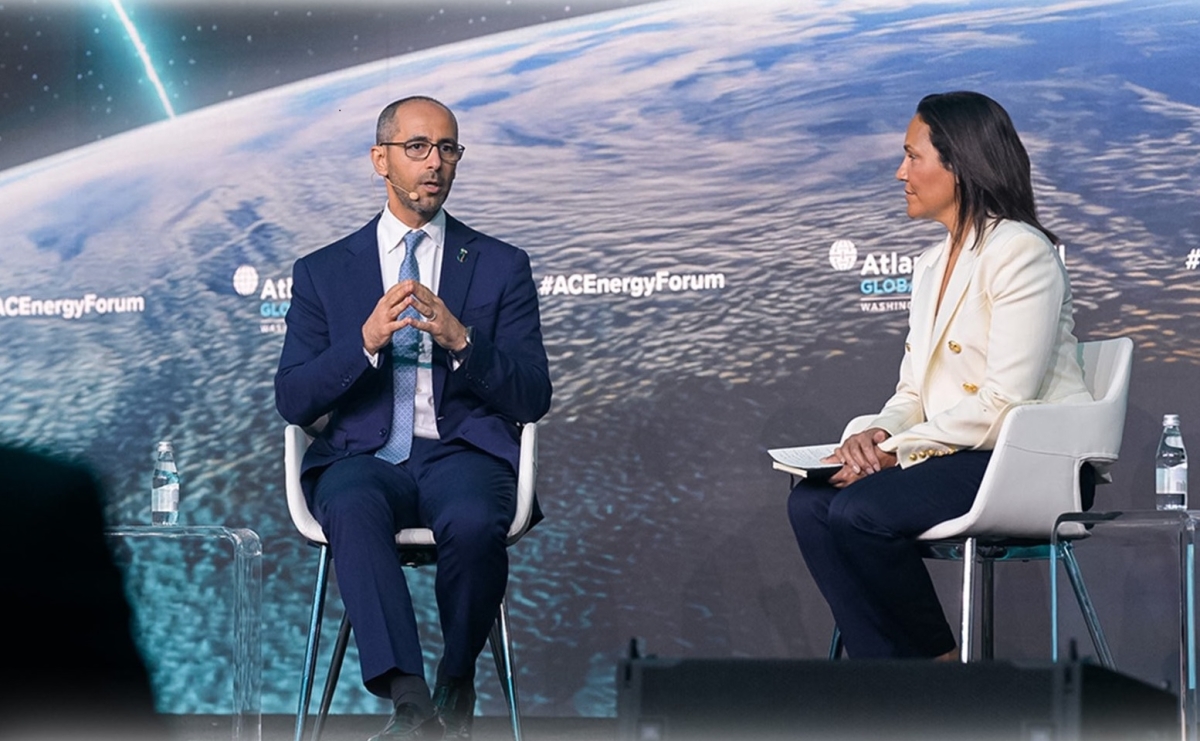
Sheikh Nawaf Al-Saud, Deputy Chairman of Kuwait Petroleum Corporation, affirmed international confidence in the Kuwaiti economy and its reform trajectory, pointing to major investment projects such as Burgan and Seef. He also addressed challenges to navigation security through the Strait of Hormuz.
Translated by Alqyas from Al-Rai — Original source
- Partial alternatives to the “Strait of Hormuz” via pipelines in Saudi Arabia and the UAE, with a capacity of 6 to 8 million barrels per day.
- Proactive measures to redeploy the tanker fleet, deplete strategic reserves, and export volumes before the crisis in the “Strait of Hormuz” escalates.
- Global markets are supported by strategic reserve drawdowns and a temporary drop in demand, not by consumption.
Sheikh Nawaf Al-Saud, Deputy Chairman and CEO of the Kuwait Petroleum Corporation (KPC), stated that the major investment projects being implemented by the corporation reflect a high level of international confidence in the Kuwaiti economy and its reform trajectory. Leading these initiatives are “Pergreen” and “SAIF,” which serve as two fundamental pillars in the strategy to develop the energy sector and attract global investments.
Speaking during a dialogue session at the 10th edition of the World Energy Forum, organized by the Atlantic Council in Washington, D.C., Al-Saud noted that “Pergreen” is one of the largest international investment projects in Kuwait. It aims to lease and sublease export pipelines to global investors. He explained that the project, launched last February, has garnered widespread interest from international investors despite geopolitical challenges, demonstrating strong confidence in Kuwait and a willingness to submit competitive bids even under current conditions.
Al-Saud also addressed “SAIF,” which focuses on developing Kuwait’s offshore fields. He highlighted that Kuwait has entered a new phase of offshore exploration after decades of relying entirely on onshore fields. Initial drilling operations yielded significant positive results, including four major discoveries out of four drilling sites, signaling promising potential for the offshore sector.
In this context, Al-Saud emphasized that these investment developments come at a time when Kuwait and the region face complex security and economic challenges. However, the state has demonstrated a high capacity for adaptation and response.
He clarified that Kuwait has remained a resilient and cohesive nation, recounting the serious historical challenges it has faced, most notably the Iraqi invasion in 1990, attacks by Iran in the 1980s—including targeting Kuwaiti ships—and culminating in what he described as current attacks on oil infrastructure and civilian facilities.
He stated that Kuwait “has not broken under any of these challenges,” and that KPC has adapted to the current exceptional circumstances by reorganizing supply chains and relying on its commercial arm and pre-established strategic storage.
Al-Saud explained that the corporation took proactive measures at the onset of the escalation, including redeploying the tanker fleet to Kuwait, depleting strategic reserves, and exporting the maximum possible volumes through the Strait of Hormuz before the situation worsened. However, the crisis lasting longer than expected has imposed additional challenges requiring replanning.
Al-Saud stressed that any future settlement must be based on two fundamental pillars: respect for state sovereignty and ensuring safe freedom of navigation through the Strait of Hormuz in accordance with international law, particularly the United Nations Convention on the Law of the Sea (UNCLOS). He warned against any alternative definitions of opening the strait that involve restrictions or fees.
Al-Saud pointed to growing international consensus on this principle, noting that he had discussed the file with the U.S. Secretary of Energy and that there is alignment in vision regarding the necessity of ensuring freedom of navigation.
Regarding global energy markets, he stated that the global system is based on interdependence among nations rather than energy independence, affirming that there is no such thing as separate energy security for any single country.
He added that current markets are supported by draws from strategic reserves in the United States, Europe, and China, alongside a temporary decline in demand, emphasizing that this downturn is not a genuine drop but rather a temporary halt, similar to what occurred during the coronavirus pandemic.
Al-Saud pointed out that oil prices at $100 per barrel are not considered high when adjusted for inflation, noting that reliance on strategic reserves offers only a temporary solution, and part of these reserves is not actually recoverable.
Regarding supply, he clarified that daily flows through the Strait of Hormuz amounted to approximately 20 million barrels, while partial alternatives via pipelines in Saudi Arabia and the United Arab Emirates range between 6 to 8 million barrels per day, leaving an unmitigated gap in the global market.
He noted that natural gas flows, particularly from Qatar, were almost entirely affected by navigation disruptions, despite U.S. efforts to offset part of the shortfall.
On the security situation in the Gulf, Al-Saud affirmed that historical experiences, particularly in the 1980s, demonstrated the feasibility of protecting international navigation through international alliances and organized naval intervention, citing the reinsurance of Kuwaiti ships at that time. He explained that there is a growing international trend toward taking practical steps to ensure the security of sea lanes, rather than relying solely on monitoring.
Regarding oil production, he revealed that Kuwait can restore about 80% of halted production in less than a month, thanks to the flexibility of oil reservoirs, although reaching full production capacity may take three to four months, a timeline that applies to most countries in the region.
Concluding the session, Al-Saud expressed his hope that the world next year would witness the consolidation of respect for international law in the Gulf region, the guarantee of freedom of navigation, and international cooperation, thereby enhancing the stability of global energy markets.
He said the ambition is for “a world more committed to international law and broader partnerships between Gulf states and the world.”
