Saudi Political-Economic Lever for Lebanon by Lifting Export Ban
Saudi Arabia announced the lifting of the ban on Lebanese exports following President Aoun's request, a move supporting Lebanon's sovereignty and affecting Hezbollah's equation and negotiations with Israel.
Translated by Alqyas from Al-Rai — Original source
- Lebanese President: Lebanon’s future is in our hands, not in those of Iran or Israel, and we do not accept Tehran dictating to us what we must do.
- Salam: The decision reflects the Kingdom’s confidence in Lebanon and the shared commitment to strengthening economic and trade cooperation.
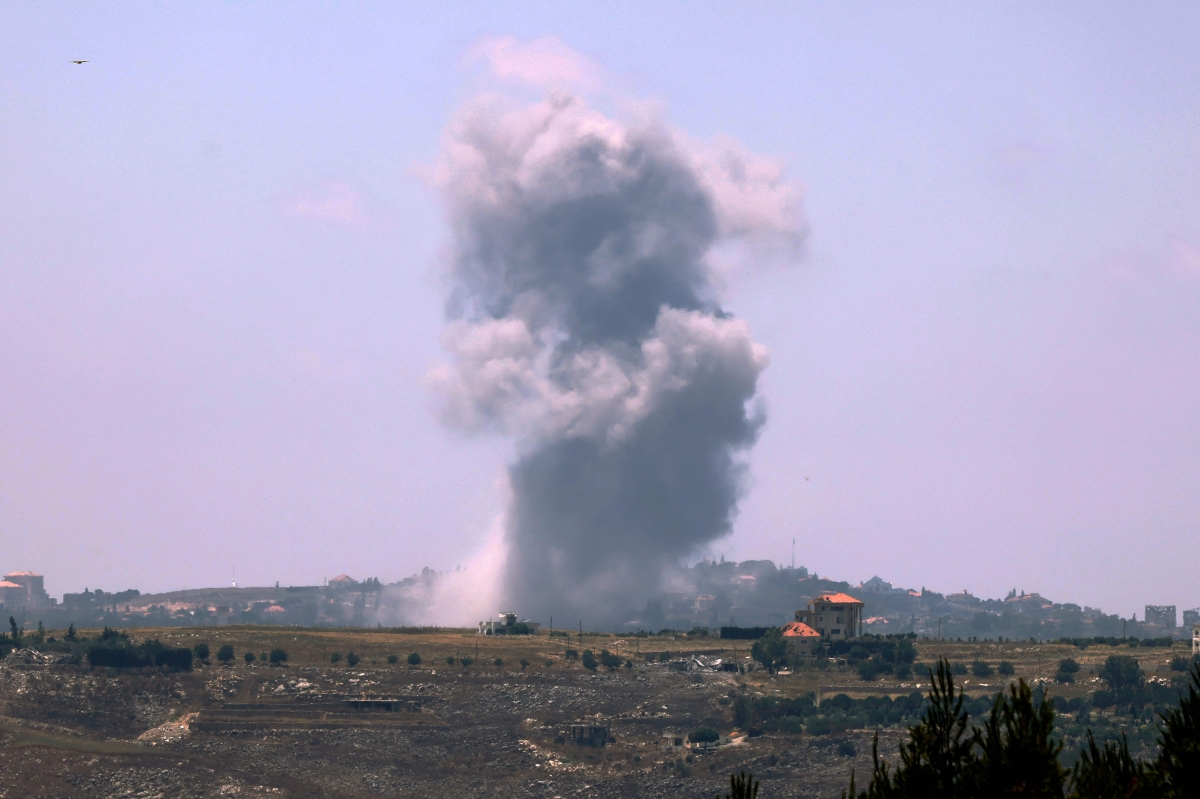
As Tel Aviv intensified its strikes in southern Lebanon, extending into the Bekaa Valley with a field focus on reaching the strategic and commanding hills of Ali al-Taher (located east of the city of Nabatieh), and culminating in the Israeli military’s announcement of operational control over the northern Wadi Salouqi area (the central sector of southern Lebanon) near Wadi al-Hajar, known as the “Merkava graveyard,” political circles were struck by Iran’s neutrality toward Israel thus far regarding “revenge” for Trump’s nightly “daily” shocks. They viewed this as an indication of a desire to avoid pressing the button for a new all-out war that would burn bridges with Washington.
Concurrently, with President Joseph Aoun reaffirming the restoration of “sovereignty” over the strategic positions of the small nation by insisting on continuing the negotiation option and rejecting “withdrawal” from it, the long-awaited thaw in the relationship between the “Land of Cedars” and Saudi Arabia—which reopened its markets to Lebanese exports after nearly five years of prohibition—was interpreted as part of Lebanon’s path to reclaiming its decision-making autonomy and securing its land, sea, and air borders, while easing the grip of “Hezbollah,” which had allowed the state to become a “platform for harming its brothers” through shipments of booby-trapped Captagon.
The Saudi Ministry of Foreign Affairs, in a statement conveying Crown Prince and Prime Minister Mohammed bin Salman’s directive to resume Lebanese exports to the Kingdom at the request of President Aoun and Prime Minister Nawaf Salam, emphasized the supra-economic dimensions of this event, where security and political factors intertwined. The path of restricting weapons to the state, even if not yet fully realized, and Beirut’s slogan “no one negotiates on our behalf,” were portrayed as a “political currency” beginning to yield returns for the “new Lebanon” that extend beyond economics, signaling the Gulf’s return to the “Land of Cedars” following the latter’s return to it since Aoun’s election. There is also a belief that further economic stimulus for the small nation could serve as an additional pressure tool on “Hezbollah” outside the purely security equation.
The Foreign Ministry’s statement noted that Minister Prince Faisal bin Farhan called Salam on Wednesday, conveying Mohammed bin Salman’s directive to resume Lebanese exports to the Kingdom. He clarified that this came “at the request of the Lebanese President and Prime Minister, and in accordance with the positive steps taken by the Lebanese government in rebuilding state institutions, the achievements of specialized teams throughout the past year, and the cooperation demonstrated by the Lebanese side, along with the commitments provided.”
The statement reaffirmed “the Kingdom’s support for Lebanon’s stability, its sovereignty over its entire territory, and the well-being of its brotherly people, and its confidence that the brothers in Lebanon will take all necessary measures to ensure that Lebanon is not used as a platform to harm its brothers.”
In a statement expressing his “deepest gratitude and appreciation” to His Royal Highness Prince Mohammed bin Salman bin Abdulaziz for his decision, Aoun described it as a “sincere reflection of the deep Arab brotherhood uniting the two sister countries” and a manifestation of the “prudent Saudi leadership’s commitment to supporting Lebanon and its people during the recovery and rebuilding phase they are undergoing.” He emphasized that the decision “embodies the Kingdom’s confidence in Lebanon and the shared commitment to enhancing economic and trade cooperation in the interests of both peoples, marking an important step that will bolster the Lebanese economy and open new horizons for Lebanese producers and exporters.”
Following this development, Saudi envoy Prince Yitzhak bin Farhan began a visit to Beirut, which was reported to aim at supporting Lebanon’s legitimate institutions, sovereignty, territorial integrity, and the well-being of its people, as well as its reform process.
It is understood that Prince Yitzhak bin Farhan held an extended meeting with Parliament Speaker Nabih Berri. It also proved difficult to separate the Saudi envoy’s stop in Beirut from Lebanon’s precarious position “between two fires”: Iran, via Hezbollah, which has unilaterally and forcibly cast itself as the alleged “protector” of Lebanon against Israel; and Tel Aviv, which continues to encroach further south on Lebanese territory. This context is intertwined with the multifaceted implications of Washington’s announcement last Wednesday, which increasingly appears to have sparked a covert struggle not merely over the “withdrawal from south of the Litani River” (for both Israel and Hezbollah), but over “sovereignty north of the Litani” and how to ensure the removal of Hezbollah’s weapons from that area. In this regard, Israel’s intense strikes, which refuse to recognize the Litani River as the war’s endpoint, are unfolding against a shifting scenario of “experimental zones”—the tactical term for Tel Aviv’s gradual withdrawal. This has become an Israeli tool to prolong the ceasefire and an Iranian (Hezbollah) justification for keeping the south as a burning front on the “mother front.”
Lebanon is preparing for a new round of negotiations with Israel in Washington during the week beginning on the 22nd. To this end, President Aoun chaired a meeting at Baabda Palace on Thursday, attended by Army Commander General Rodolphe Haykal, the head of the Lebanese negotiating delegation Ambassador Simon Karam, and military officers who are members of the negotiating team. During the meeting, the deliberations of the two negotiation sessions held in Washington on May 20 and June 2-3 with the American and Israeli sides at the Pentagon and the U.S. State Department were evaluated.
Notably, Aoun raised his voice more strongly against Iran, which has pursued “trans-state” positions in Lebanon, as evidenced by the remarks of Quds Force Commander Ismail Qaani, who stated that “Hezbollah will remain on the front line to defend Lebanon and will achieve victory,” and that “Zionists must know that attacking southern Lebanon will not break the will of its people and Hezbollah.”
In an interview with Reuters, Aoun said, “Lebanon’s future is in the hands of the Lebanese, not in the hands of Iran or Israel,” adding, “We do not accept that Iran dictate to us what we must do; we are a sovereign state, and it has no right to speak on our behalf.”
He pointed out, “We do not accept that Lebanon become a battlefield for others’ wars. We are committed to the diplomatic path, as there is no military solution.” He clarified, “We have no choice but to negotiate to end this conflict, and neither do the Israelis.”
He also considered that “if Hezbollah chooses to remain in a state of war, it will harm the society it claims to defend.” Responding to Washington’s hints about the possibility of Syrian intervention to confront Hezbollah, he noted, “President Ahmad al-Sharaa possesses a sense of responsibility and awareness and will not enter Lebanon’s quagmire.”
He affirmed, “We are jointly moving toward a clear goal: ending the state of war in Lebanon. Despite pressures to withdraw from the negotiations, we will not back down and will continue the path until we reach an outcome that serves our country, with Arab, European, and American support alongside us. No one imagines that the negotiations are easy, but they are the only available option in the face of the machinery of destruction, aggression, and killing. I know that the majority of Lebanese stand with our choice.”
He added, “We are calling for an end to the state of hostility with Israel according to the following points, which have become well known: Israeli withdrawal, cessation of attacks, deployment of the Lebanese army, and the return of displaced persons and prisoners. After that, we will consider peace, but we cannot move toward it if these issues are not resolved first. I was clear with President Donald Trump and told him so. The first statement from the U.S. Department of State included a fundamental provision calling for respect for Lebanon’s sovereignty, within its internationally recognized borders. This is the overarching goal we are working toward and following.”
