What Does It Mean to Restrict Weapons of Iran-Aligned Factions to the Iraqi State?
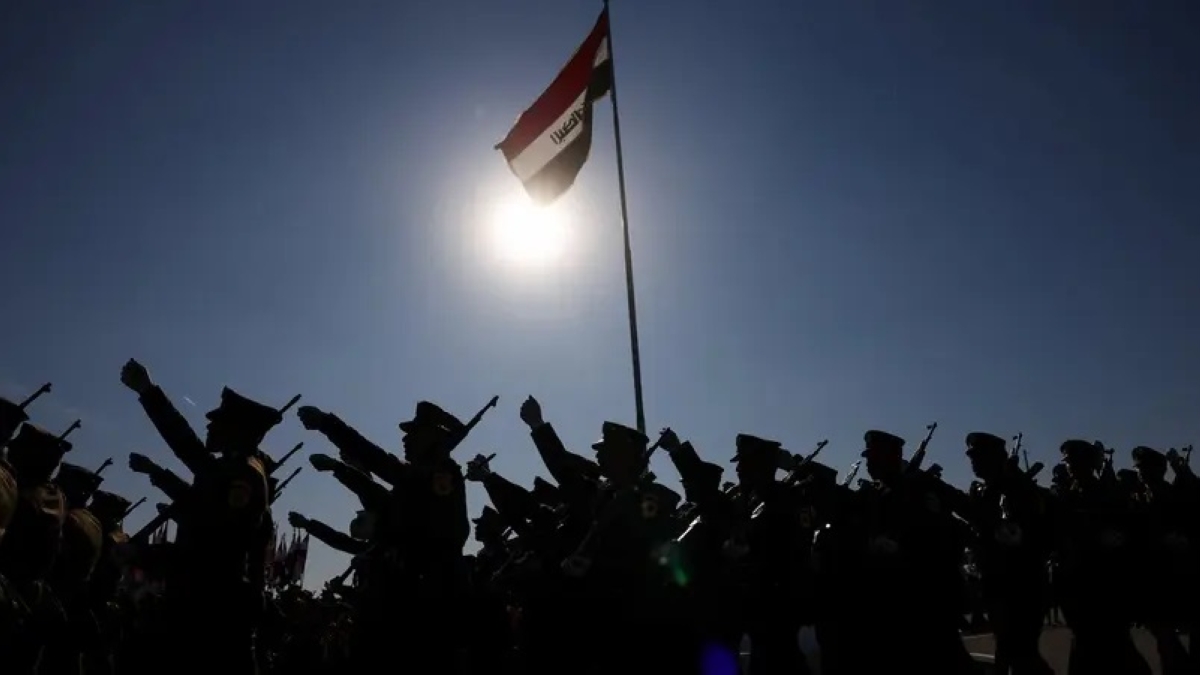
Two Iraqi factions announced the handover of their armed brigades to the state amid US pressure, while other factions reject this.
Translated by Alqyas from Al-Rai — Original source
Two Iraqi factions announced this week that they are handing over control of their armed brigades within the Popular Mobilization Forces (PMF) to the state, reflecting pressure exerted by Washington on Baghdad to curb the weapons of groups close to Tehran.
US Special Envoy to Syria and Iraq Tom Barrack welcomed the step as one that “will contribute to building the state,” alongside the initiative of Prime Minister Ali al-Zaidi, who pledged since assuming office last month to monopolize weapons in the hands of the state.
This development comes as Washington gains political and economic leverage in Iraq, following a decline in Tehran’s regional influence since the outbreak of the war in Gaza between Israel and the Iran-backed Hamas movement in 2023, then Israel’s first war against Iran in 2025, and subsequently the second war launched by the US and Israel in February, whose repercussions have affected Iraq.
The Coordinating Framework, composed of Shia parties close to Tehran, some of which have armed wings designated as “terrorist” by Washington, has affirmed its support for “monopolizing weapons in the hands of the state and severing ties between the PMF and all political, party, and social frameworks.”
The PMF was formed in 2014 from armed groups to fight the Islamic State (ISIS) group, and later became part of the military establishment. However, it also includes brigades affiliated with factions allied to Tehran that operate independently.
This issue has sparked divisions within Iraq, between those who reject discussing it under US pressure and those showing flexibility.
The Asa’ib Ahl al-Haq, led by Qais al-Khazali, who is subject to US sanctions and is one of the leaders of the Framework holding the largest bloc in parliament, has strengthened its political influence by winning 27 seats in the recent parliamentary elections. Sources close to the factions noted its gradual distancing from the Islamic Republic, for instance, by not participating in the recent war.
However, the most influential groups closest to Tehran, including Kata’ib Hezbollah, Harakat al-Nujaba, and Kata’ib Sayyid al-Shuhada, have affirmed their commitment to retaining their weapons. Dozens of their leaders and fighters have been killed in US strikes in recent years.
Practically, this means that “all decisions regarding their brigades in the PMF” will fall under al-Zaidi’s “administrative authority,” according to a source close to the factions.
Iraq affairs analyst Tamer Badawi stated, “For this initiative to prove its seriousness, there must be scrutiny overseen by the government and non-state actors,” otherwise it will remain “part of broader structural problems affecting Iraq’s security sector.”
A second source close to the factions confirmed that Asa’ib Ahl al-Haq “currently considers political work and presence in the government more important than fighting (...). Therefore, it wants to provide assurances to the United States.”
Negotiations are currently underway over nine still-vacant ministerial portfolios in al-Zaidi’s government out of 23, the most prominent being Interior and Defense.
Conversely, factions committed to retaining their weapons have affirmed their refusal to discuss disarmament as long as foreign forces remain in northern Iraq, as part of the US-led international coalition fighting extremists, whose mandate ends in September next year.
What does this mean for relations with Washington and Tehran?
Iraq has long sought to balance its relations between Washington and Tehran, both of which have enjoyed political, economic, and security influence in the country since the US invasion that toppled Saddam Hussein’s regime in 2003.
Following attacks by some factions on US interests during the recent war, Washington suspended cash payments for Iraqi oil revenues, which it had been managing under an agreement dating back to the post-invasion period, as well as security assistance.
A US official said last month that Washington is looking for “concrete measures” from al-Zaidi to distance the factions from state institutions before resuming aid.
For his part, al-Obaidi, who is primarily a businessman and banking figure, is looking for “investments and service projects from American companies,” according to a source close to the framework.
A senior figure in Asa’ib Ahl al-Haq told AFP that Washington wants the militias to hand over “drones and ballistic missiles in particular” because of “their ability to reach its ally Israel,” adding that Asa’ib Ahl al-Haq “supports restricting arms to those that ensure state security, not those that ensure Israel’s security.”
In his view, Iran is “seeking to have its allies gain as much time as possible,” and “will not allow its local allies to be disarmed by force.” It is worth noting that this “does not appear to be an option currently being considered by the Iraqi government.”
