Israel Extends Fire to Mashghara, 'Hezbollah' Targets Israeli Fighter Jet
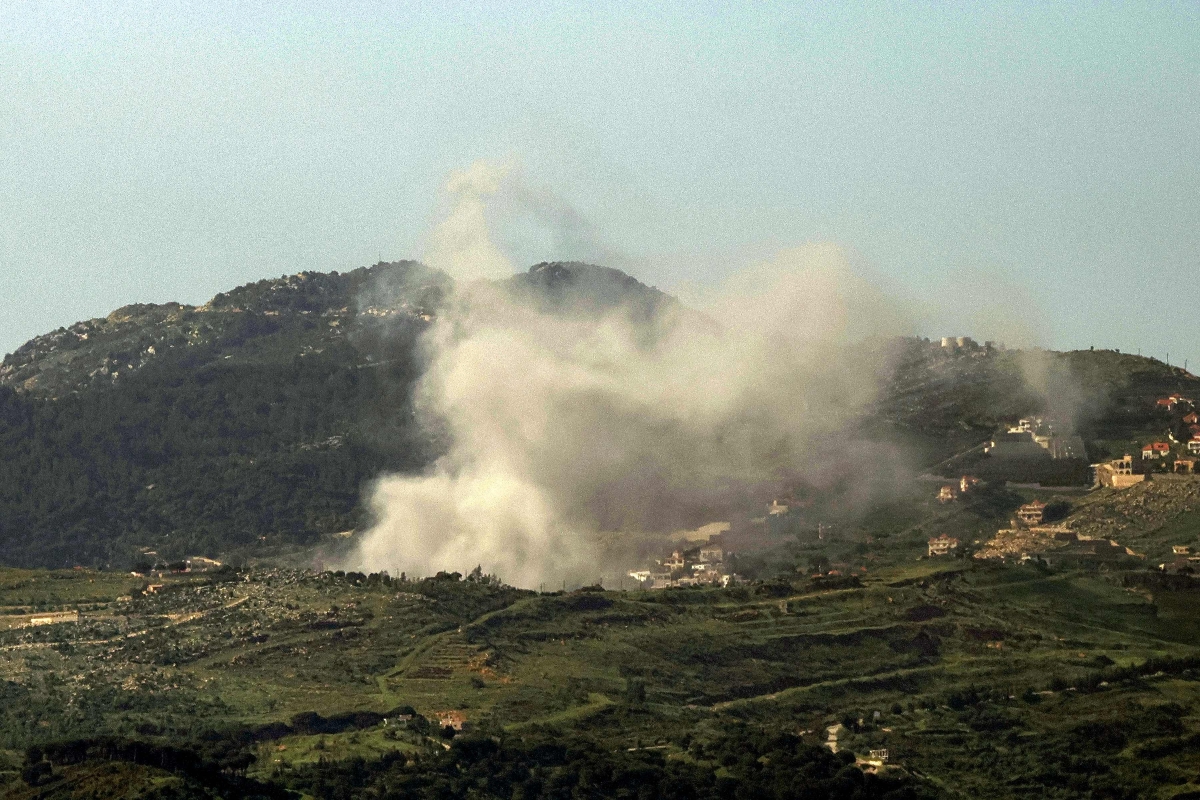
Israel expands its operations in the Bekaa, while Hezbollah launches a missile at a fighter jet.
Translated by Alqyas from Al-Rai — Original source
Amid renewed tension on the Iran front, following President Donald Trump’s rejection of Tehran’s response to his proposal to end the war as “totally unacceptable,” Beirut pressed on with efforts to firmly separate the thorny Lebanese and Iranian tracks through negotiations with Tel Aviv in Washington. These talks are scheduled for two “enhanced and intensive” rounds on Thursday and Friday.
As the wind direction on the Iran front is expected to become clearer after Trump’s visit to China, the image is strengthening that the Lebanese-Israeli negotiations, vigorously pushed by Washington—culminating in the personal participation of the US President in the second round at the ambassadorial level about three weeks ago—have begun to hit the rocky bottom. There are fears that this will not delay the creation of holes that cannot be plugged by prolonging coexistence between the two layers of this track:
- The first layer, “from above,” is political and diplomatic, led by the two negotiating parties under the patronage of the American “godfather,” who established a framework for these negotiations based on Lebanon’s sovereignty over its entire, undiminished territory, and on Israel’s security, anchored in the disarmament of Hezbollah, leading to sustainable peace.
- The second layer, “from below,” is military and security, entirely controlled by the absent party from the Washington table, namely Hezbollah, acting as Tehran’s proxy. This was revealed by its inclusion in its response to the American proposal of a clause stipulating that any agreement must include an immediate ceasefire in Lebanon.
While Prime Minister Nawaf Salam was characterizing the country’s drift toward an unwanted war as “Iran’s and Israel’s war in Lebanon,” amidst Beirut’s attempt to make the securing of a ceasefire a gateway to the Washington negotiations, it became difficult to determine whether the ceasefire was seriously fracturing through Israeli qualitative escalation in the field and Hezbollah’s retaliatory attacks.
This escalation was particularly evident when Israel extended its evacuation alert sash to two towns in the western Bekaa (Mashghara and Qlaya) for the first time, reflecting a move to establish a defensive arc for the “forward defense zone,” which would allow, in the event of resumed war, re-engagement from fortified points enabling deeper penetrations and easier military containment of Hezbollah. The name of Hezbollah emerged again after it launched an air-to-ground missile toward an Israeli fighter jet in southern Lebanon, which the army intercepted, before settlers in Kiryat Shmona received phone calls from Hezbollah demanding they evacuate the settlement.
Channel 12 quoted an Israeli military source as saying, “We are preparing operationally to expand the ground operation in Lebanon in light of Hezbollah’s continuous violations of the ceasefire agreement.” Official Lebanon lacked only the statements of Benjamin Netanyahu, via CBS, that the war with Hezbollah should continue even if the confrontation with Iran ended.
Meanwhile, Beirut was preoccupied with the movements of US Ambassador Michael Issa before his departure to Washington, and finalizing its cards for the negotiations, where the level of Lebanese representation had risen to include former ambassador Simon Karam, alongside the military attaché at the Lebanese Embassy in Washington, General Oliver Hakkah (and Ambassador Nada Hamadeh Mouawad), while the Israeli delegation was joined for the first time by Major General Amichai Levinger, head of the Strategic Division in the IDF.
Visits by Issa to Presidents Joseph Aoun and Nawaf Salam, as well as to Parliament Speaker Nabih Berri, stood out. Berri had previously declared that he would “turn off his engines” regarding the option of direct negotiations, which he rejects, following remarks by the US ambassador urging those who attacked Maronite Patriarch Mar Beshara Peter Rai—among them supporters of the party—to “find another country to live in.”
Aoun emphasized to the ambassador the need to pressure Israel to halt the ceasefire, military operations, house demolitions, and land clearance. Salam conveyed the same position.
Salam stated, “We are seeking to halt hostile operations and are open to discussing a peace agreement within the broader Arab framework. The Lebanese majority supports negotiations to end the war.” He added that Lebanon “did not choose war and was dragged into the confrontation between Iran and the United States on its soil.”
He declared that “the city of Bint Jbeil has become a copy of Gaza, and approximately 68 villages in Lebanon have been occupied, amounting to roughly half of the area south of the Litani River.”
He continued: “We have received complaints from Syria regarding the presence of remnants of the former regime in Lebanon. We are committed to preventing the use of Lebanese territory as a platform for any political or military activity that harms Damascus.”
