WhatsApp Says Goodbye to 'Avatar'
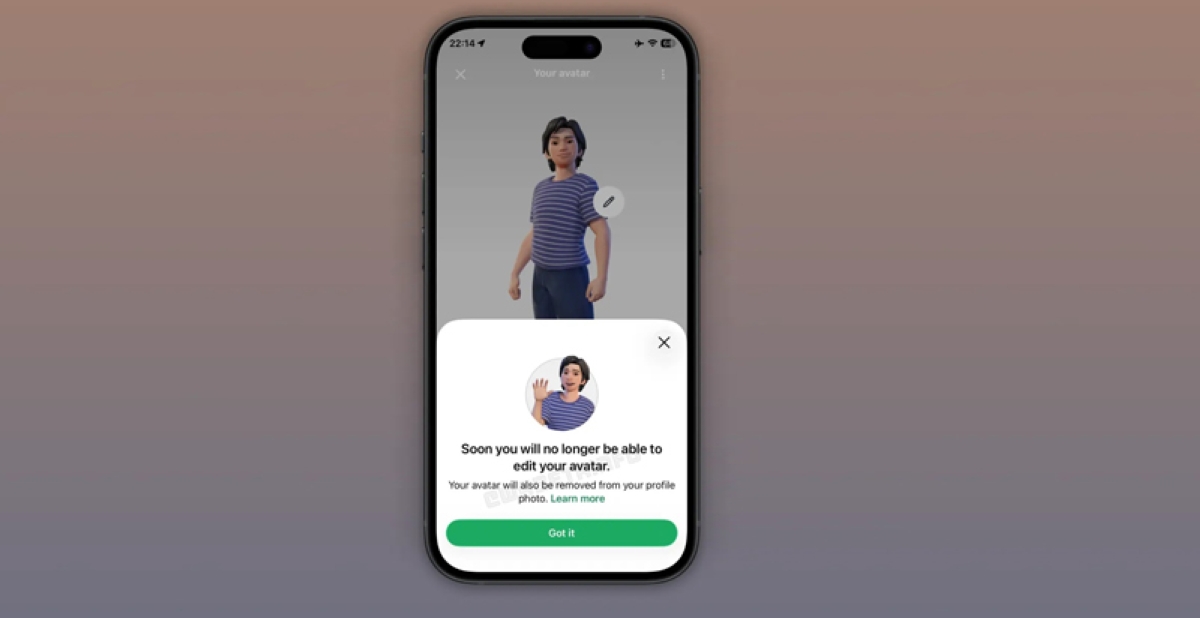
WhatsApp announced the closure of the Avatar feature due to low engagement
Translated by Alqyas from Al-Rai — Original source
US-based Meta announced the shutdown of the Avatar feature on WhatsApp for both Android and iOS, according to an official message published by the company on its Help Center page.
The decision came as a surprise to many, not because the feature was widely used, but quite the opposite: it had spent years in near-total obscurity, like a guest no one bothered to welcome.
WhatsApp introduced the 3D Avatar feature in late 2022, a period when the concept of the “metaverse” dominated Meta’s discourse, filling its statements and public plans.
At the time, the Avatar concept aligned with a broader vision aimed at building a continuous digital identity for users across different platforms, and it appeared that WhatsApp was attempting to infuse itself with a form of visual personal expression it had not historically been known for.
The idea allowed users to create a digital version of themselves with customized features and details. Once the Avatar reached its final form, WhatsApp would automatically generate a pack of 36 custom stickers depicting the Avatar in various poses and emotions, such as laughing, crying, waving, sending hearts, and celebrating. Users could send these stickers directly from the emoji keyboard within any chat.
However, reality proved that the idea failed to attract a loyal audience. The stickers generated by the Avatar remained rarely used in daily conversations.
The company did not provide an explicit explanation for this decision, but logical inference suggests that low user engagement is behind this rollback. Discontinuing the feature relieves the development team from the burden of maintaining a tool that users rarely access. This decision is driven by engineering pragmatism above all else: there is no justification for maintaining a feature that adds no real value to the user’s daily experience.
This move fits into a broader review by Meta of its investments in metaverse projects. The company has gradually scaled back several initiatives linked to that era, when it rebranded itself as “Meta” to herald what it described as the era of virtual reality.
Platforms like Horizon Worlds and devices such as Meta Quest, among others, all reflect a context in which executives tested grand ideas that received only lukewarm responses from users, who—most of them—were seeking fast, reliable text and voice communication rather than a 3D digital identity.
