United States and Israel at a Critical Junction Regarding the War in Lebanon
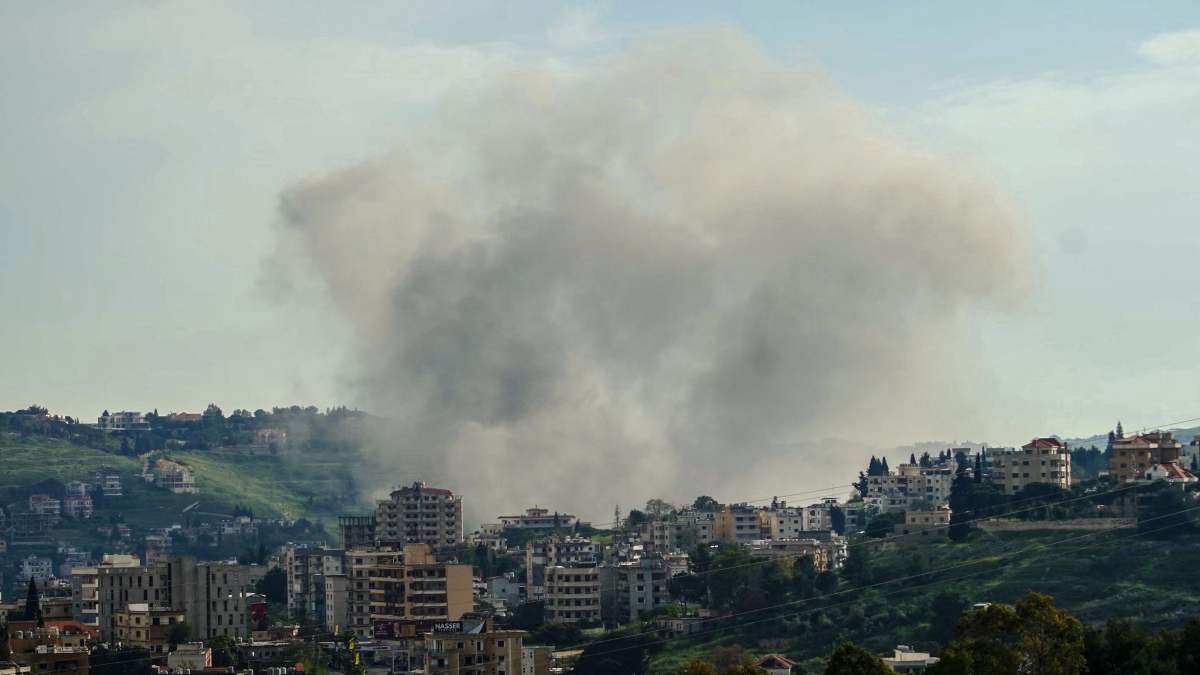
The United States pressures Israel to accept a political settlement in Lebanon
Translated by Alqyas from Al-Rai — Original source
In rapid diplomatic and military developments over the past few days, the US administration and Israel appear to be at a critical juncture regarding the war in Lebanon, while France attempts to reclaim its regional role, and the new Syrian government works to redefine its relations with its neighbors.
As senior Israeli officials warn that continued attacks by Hezbollah are undermining Israeli deterrence, US President Donald Trump seems to be imposing a strict ceiling on military operations, placing Benjamin Netanyahu’s government in a difficult equation: accept a Washington-brokered political track or proceed toward a full-scale war.
US and Israeli reports have revealed an intense Israeli effort to obtain US approval to expand its military operations. According to a report in the Jerusalem Post on April 30, Netanyahu pressed Trump during a phone call to set a time limit for negotiations with Lebanon, not exceeding “two to three weeks,” describing it as a “window of time ending in mid-May.”
The report quoted Israeli officials as saying that Hezbollah’s ongoing attacks against Israeli forces and northern settlements are “eroding the chances of reaching an agreement and undermining deterrence.” The same source noted that Tel Aviv informed Washington that “if negotiations fail to yield tangible results within the required timeframe, Israel will seek approval to proceed with its original plan,” which involves a significant expansion of military operations.
In response, Trump continues to impose strict constraints, emphasizing that Israeli strikes must remain “surgical.” In an interview with Axios, widely reported by news channels, he said, “I told Netanyahu he has to do it more surgically. He can’t demolish buildings. It’s too terrible and makes Israel look bad.”
According to sources in Washington, the White House’s restrictions are not limited to the nature of the strikes but also extend to geographic areas, with the Israeli army being prevented from launching a wide-ranging campaign.
In a notable development, Secretary of State Marco Rubio revealed details of the US plan for the next phase. In statements to Fox News, he said, “This is what we are working to establish: a system that actually works, where trained units within the Lebanese Armed Forces have the training, equipment, and capability to pursue and dismantle Hezbollah elements, so that Israel does not have to do it.”
He added that this plan aims to create “select units” that receive specialized training and are equipped with appropriate tools to confront Hezbollah, while acknowledging that “the Lebanese army lacks the full capabilities to deal with all Hezbollah threats.”
This model recalls the “Dayton Plan” implemented in the West Bank, where Palestinian Authority security forces were tasked with pursuing and disarming members of Hamas.
However, this plan raises serious concerns about the outbreak of civil war in Lebanon. Sources have warned that “creating a special force to pursue and confront Hezbollah will push the country into something worse than civil war. It will lead to division and the collapse of the army.”
For his part, Joshua Landis, a professor at the University of Oklahoma, stated that “Rubio is pushing the Israeli agenda. The policy being pursued in Lebanon seeks only Israeli interests.” He added that “instability in Lebanon is not good for the United States. Civil war will only destabilize Syria and the entire region.”
In a notable move, the US Embassy in Beirut urged Lebanese President Joseph Aoun on April 30 to meet directly with Netanyahu.
In a statement, it noted that “a direct meeting between President Aoun and Prime Minister Netanyahu, facilitated by President Donald Trump, would give Lebanon the opportunity to obtain concrete guarantees regarding full sovereignty, territorial integrity, secure borders, humanitarian aid, and reconstruction.”
However, this call faces sharp divisions within the Lebanese political class. While President Aoun and Prime Minister Nawaf Salam expressed interest in negotiations to establish borders and restore state authority, Speaker of Parliament Nabih Berri, an ally of Hezbollah, opposes normalization and pushes for a non-aggression arrangement only.
Amid intense U.S. diplomatic efforts, President Emmanuel Macron is striving to restore France’s role in Lebanon, but his initiatives appear to be colliding with a wall of U.S. and Israeli rejection.
Observers believe the primary French motivation was the fear that French forces operating under UNIFIL might be forced to leave Lebanon by the end of the year, prompting Paris to seek a role in any future monitoring arrangements. Israel, however, quickly handed the Lebanese file to Ron Dermer, a figure held in low esteem by France.
In this scenario, Trump succeeds in pressuring Israel to accept a political settlement and holds a summit between Aoun and Netanyahu in Washington. The United States offers Lebanon guarantees that include a gradual Israeli withdrawal in exchange for the Lebanese government committing to disarm Hezbollah. However, this path faces significant challenges, including internal divisions and the rejection by Hezbollah and its Shia base of any normalization with Israel.
If negotiations fail within the “time window” set by Israel by mid-May, Tel Aviv may seek green light to expand military operations.
A senior military official stated that Israel would need to fully occupy Lebanon to disarm Hezbollah, suggesting that a full-scale war could be destructive and costly, though not necessarily in the coming months.
This is the scenario warned about by analysts. If Lebanese Army units are tasked with pursuing Hezbollah, it could lead to the collapse of the army and plunge the country into civil war.
Ironically, some observers see this instability as an Israeli objective, as transforming Lebanon into a failed state could facilitate the creation of “Greater Israel,” advocated by some politicians.
Lebanon stands today at a crossroads. U.S. and Israeli pressures are mounting to end Hezbollah’s military presence, but any hasty step in this direction could trigger an internal explosion.
At the same time, France is attempting to regain its regional role but faces U.S.-Israeli marginalization, while Syria is emerging from Iran’s sphere of influence and becoming a potentially decisive player in the border equation and halting smuggling.
The coming weeks, especially as mid-May approaches, will be crucial in determining which of these scenarios will materialize. Either U.S. diplomacy will succeed in imposing a new reality, or war will impose itself on everyone, with potentially dire consequences for Lebanon and the entire region.
