Iran Intensified Arrests and Executions During the War Period
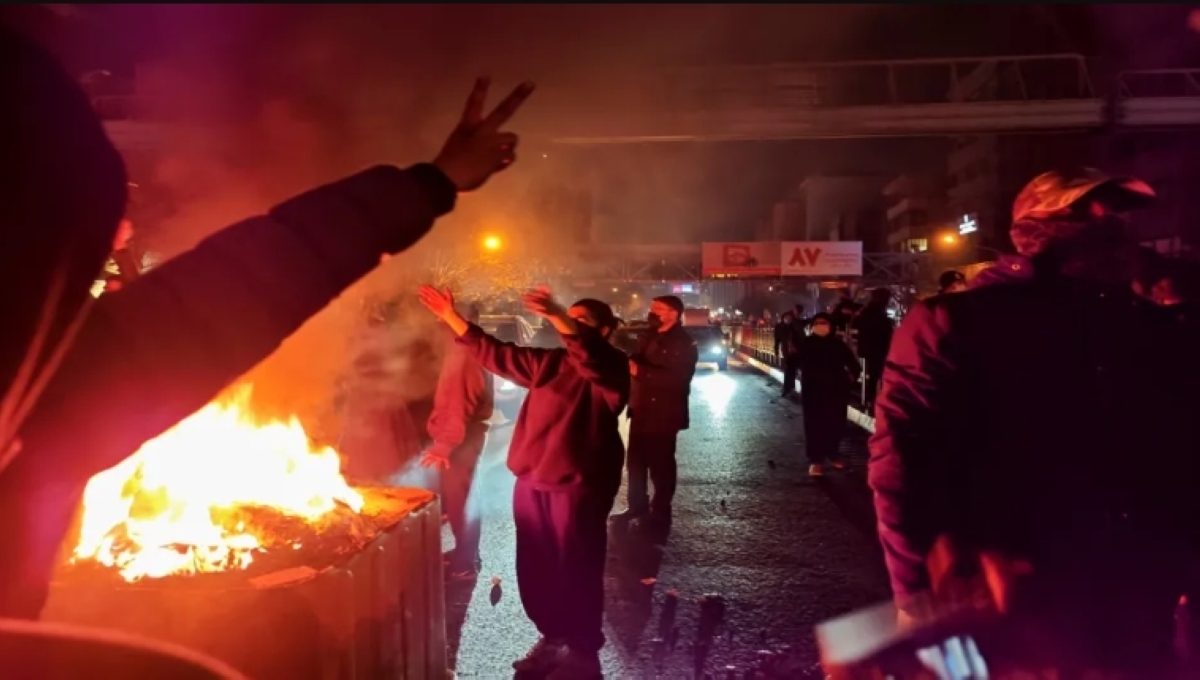
Iran intensified arrests and executions during the ceasefire with Israel and the United States
Translated by Alqyas from Al-Rai — Original source
Iran has intensified its crackdown during the ceasefire with Israel and the United States, carrying out mass arrests and executions, according to activists who urged Washington to place human rights at the core of any talks with Tehran.
Mehdi Amiri Moghaddam, director of Norway-based Iran Human Rights, stated that “the immediate release of all political prisoners detained before or after the outbreak of the war must be a fundamental condition for any agreement with the Islamic Republic.”
The ceasefire, which entered into force on April 8 for two weeks and was extended by US President Donald Trump until further notice, has not translated into a domestic truce in Iran. The organization recorded at least 3,646 detentions since the war began, including at least 767 during the ceasefire period.
Access to the internet remains largely restricted, with NetBlocks, an internet security monitoring organization, recording 53 days of near-total disruption, a first for an entire country.
The judiciary-affiliated website Mizan Online reported that “Mehdi Farid... was hanged after extensive cooperation with the terrorist espionage agency Mossad, following the completion of the case review and approval of the final verdict.”
It was not immediately clear when he was arrested or tried, but the court convicted him of “intelligence cooperation and espionage on behalf of the Zionist entity” under the charge of “corruption on earth,” which carries a death penalty.
On Tuesday, authorities executed an eighth man linked to the January 2026 protests, whose suppression resulted in the deaths of thousands, according to human rights organizations.
Amir Ali Mirjafari was accused of setting fire to the Grand Mosque in Tehran’s Qaleh Khandan neighborhood and working with Israeli intelligence agencies, according to Mizan.
Iran Human Rights warned of a potential escalation in executions, noting that “hundreds of protesters face prosecutions that could lead to death sentences, and death sentences have been issued against at least 30 of them.”
Gholam-Hossein Mohseni-Ejei, head of the judiciary who ordered swift trials for detainees during the protests, warned that those convicted of “cooperation with insurgents” would be “treated without leniency.”
Mizan responded that “Trump has been misled again by false information,” adding that some women “have been released, while others face prosecutions that could result in at most prison sentences.”
Iran Human Rights and the Coalition Against the Death Penalty reported last week that Iran executed at least 48 women in 2025, the highest number in over two decades.
The list of detainees includes more than 100 civil society activists, including prominent lawyer and European Parliament Sakharov Prize laureate Nasrin Sotoudeh, who was arrested on April 2.
Her daughter, Mehrvash Khandan, stated on Instagram on Saturday that her mother had managed to contact her family for the first time since her arrest, noting that she was being held by the Ministry of Intelligence.
Roya Boroumand, co-founder of the US-based Abdorrahman Boroumand Center, said that “the Islamic Republic showed in January that it is not hesitant to kill protesters on a large scale.”
She added that “in this context, silence in the ongoing negotiations regarding the fate of Iranians can only reassure the regime that the political cost of any new crackdown campaign will be low.”
