From Maritime Security to Defense Partnership: 9 Key Milestones in Kuwait-Britain Relations
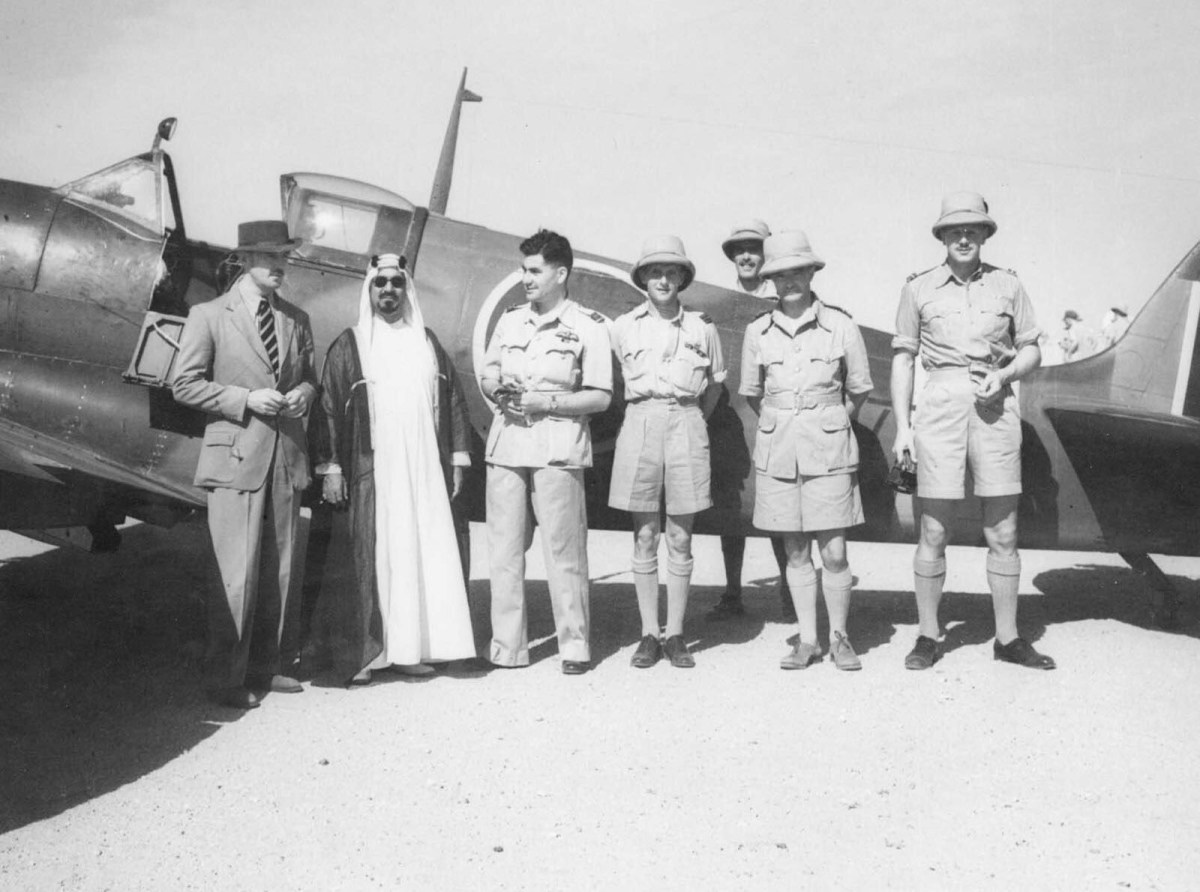
Kuwait's accession to the Maritime Convention in 1841, Britain's support in the battles of Jahra and Al-Raqi, Britain's participation in the liberation of Kuwait in 1991, and its support for Kuwait following the Iranian aggression in 2026.
Translated by Alqyas from Al-Rai — Original source
Since the early days of Kuwaiti-British relations in the 18th century, this bond has been built on a solid foundation of cooperation and understanding, driven by a shared desire to preserve stability in the Arabian Gulf region.
Over the decades, this relationship has transcended the boundaries of traditional diplomatic communication, evolving into a robust strategic partnership, particularly in the security sector. The two countries have jointly faced complex challenges and severe tests, revealing the depth of their interconnection.
Researcher in Kuwaiti-British relations, Issa Abdulrasool Dashti, has documented this journey in his works, highlighting key milestones that contributed to consolidating the contours of security cooperation between the two countries up to the present day.
On January 8, 1820, the British government signed a treaty with the Gulf sheikhdoms to regulate relations among them, ensure stability and maritime security, and protect ships from risks arising from regional conflicts. Kuwait did not join the treaty at that time. However, as tensions escalated between Persia, the Ottoman Empire, and the British Empire—having negative repercussions on maritime navigation and pearl diving activities—Kuwait saw the necessity of joining the Gulf’s maritime security framework.
Accordingly, Kuwait acceded to the Maritime Agreement on April 23, 1841. This step marked the first official agreement between Kuwait and Britain, aimed at enhancing maritime security and combating piracy. The agreement was signed on behalf of the Kuwaiti side by Sheikh Sabah bin Jaber Al Sabah (who later became the fourth ruler of Kuwait), on behalf of his father, Sheikh Jaber bin Abdullah Al Sabah.
The year 1899 stands out as a pivotal moment in the history of Kuwaiti-British relations. It witnessed the reorganization of these relations in a clearer manner, laying the foundations for the nature of interaction between the two countries in subsequent stages through an agreement to consolidate protection and stability.
The most prominent features of the agreement included ensuring Kuwait’s security and stability in the face of external threats, as well as Kuwait’s commitment not to cede, mortgage, or lease any part of its territory to any other state without British approval. It also prohibited the presence of representatives or agents of foreign states within Kuwait without prior consent from the British side.
With the outbreak of World War I, Kuwait’s seventh ruler, Sheikh Mubarak bin Sabah Al Sabah, declared his support for Britain and his stance alongside it. Kuwait subsequently became a strategic base for British military operations in the region.
Sheikh Mubarak also allowed the use of Kuwaiti ports and lands to serve British operations, reflecting the depth of the alliance between the two parties at that stage.
In 1920, Britain provided decisive military and political support to Kuwait during the Battle of Jahra. This support manifested in military pressure through aerial and naval interventions against the forces of the Ikhwan (Ikhwan of the Merciful God), alongside logistical support for Kuwait’s ruler, Sheikh Salem Al Mubarak Al Sabah, based on the 1899 Protection Agreement.
This support contributed to forcing the attackers to retreat and enter a negotiation process.
Accounts indicate that the British Consul in Kuwait, Major Moore, requested the British Political Resident in Iraq, Sir Percy Cox, to send British aircraft to target Ikhwan positions and disperse their forces. Meanwhile, the British Navy secured the coastlines and protected the city of Jahra.
Following this, Britain contributed to addressing regional tensions through the Uqair Conference in 1922, which concluded with the demarcation of borders, despite the resulting loss of parts of Kuwaiti territory.
In 1928, Britain provided direct military and political support to Kuwait during the Al-Raqai battle, with British forces stationed in border areas to secure them and protect Kuwait from Ikhwan attacks. Historical sources document this British military presence, which was part of the obligations under the protection agreement, aimed at ensuring the security stability of the emirate.
The support included participation in military arrangements and border security, as well as providing a deterrent cover that prevented the expansion of attacks. Some British newspapers covered the events of the battle that took place on January 28, 1928, detailing the confrontations, including an account by a British soldier describing the nature of military operations and the coordination between Kuwaiti and British forces.
During the reign of its ruler, Sheikh Ahmad Al-Jaber Al-Sabah, Kuwait provided tangible support to Britain during World War II, contributing to the war effort despite the economic challenges of the time.
Kuwait, along with several Gulf rulers, donated an amount estimated at around 50,000 pounds sterling to the Fighter Aircraft Support Fund. This contribution helped finance the purchase of several Spitfire fighter aircraft for the Royal Air Force.
Some of these aircraft were given names with symbolic significance, such as "Kuwait" and "Al-Jahra," expressing Britain’s appreciation for Kuwaiti support during the war, reflecting the depth of relations between the two sides at that stage.
The year 1961 marked a pivotal milestone in Kuwaiti-British relations, as they transitioned to a new phase following Kuwait’s independence. On June 19, 1961, the independence document was signed at the Bayt Al-Saqer Palace in Kuwait City, ending British protection.
However, this transition was not without challenges. Just six days after Kuwait’s independence, Iraqi Prime Minister Abdul-Karim Qasim announced his claim to annex Kuwait to Iraq.
In response to this threat, Britain swiftly provided military support to Kuwait through Operation Vantage, deploying approximately 5,000 troops to secure the country and deter any potential military action.
British forces continued this role until October 1961, when they were replaced by Arab forces as part of a regional support framework for Kuwait, reflecting Britain’s continued commitment to Kuwait’s security even after the formal end of protection.
The strength of Kuwaiti-British relations was clearly demonstrated during the Iraqi invasion of Kuwait in 1990. Britain was among the first countries to condemn the invasion, with Prime Minister Margaret Thatcher and later John Major expressing a firm stance supporting Kuwaiti legitimacy.
Britain actively participated in the international coalition to liberate Kuwait through Operation Granby, deploying significant military forces and directly contributing to combat operations during Operation Desert Storm in 1991.
The British 1st Armoured Division was part of the coalition aimed at ending the Iraqi occupation and restoring Kuwaiti legitimacy. Approximately 35,000 British troops participated, marking one of the largest British military deployments since World War II, underscoring the extent of Britain’s commitment to Kuwait’s security and stability, within the framework of protecting strategic interests and supporting allies in the region.
Since the first day of the Iranian aggression against Kuwait on February 28, 2026, which resulted from the US-Israeli war on Iran, Britain strongly condemned this aggression. Its position remained steadfast in supporting and backing Kuwait, working to protect and defend it.
Although this conflict is not a British war, Britain has not ignored Iranian actions that threaten the lives of British citizens and the interests of the United Kingdom, and endanger its Gulf allies.
Accordingly, Britain has approved taking specific, limited, and purely defensive measures to protect its allies in the region in response to these destabilizing actions.
Britain has emphasized that its role is confined to the defensive aspect, aiming to safeguard its interests in the region and support the collective defense system of its allies, including Kuwait, while carefully avoiding escalation into a wider war and continuing close cooperation with Gulf states.
These measures include several steps, such as deploying British capabilities and equipment within Kuwait, including a system known as “Rapid Sentry,” designed to protect Kuwaiti airspace through advanced capabilities to counter drones, along with other equipment aimed at countering missile attacks and unmanned aerial vehicles.
The second measure involved the arrival of several Royal Air Force experts, who are working in coordination with Kuwaiti forces to provide advice on airspace management, prevent any clashes between aircraft and air defense systems, and deliver training programs for Kuwaiti pilots, particularly in countering drones.
The third measure is the continued presence of the British military mission in Kuwait for over 34 years, comprising more than 30 personnel working within the Kuwaiti Armed Forces, providing training and consultancy, and contributing to enhancing Kuwait’s defensive capabilities amid the aggression.
These nine milestones reflect a long history of security cooperation between Kuwait and Britain, built on mutual trust and a shared commitment to protecting strategic interests.
Over more than two centuries, this relationship has proven its ability to adapt to changes and endure as one of the most important partnerships in the region, thereby strengthening the security and stability of the Gulf and serving the interests of both friendly peoples.
