Beirut secured international and regional hosting for its ceasefire demand through 'negotiating arm'
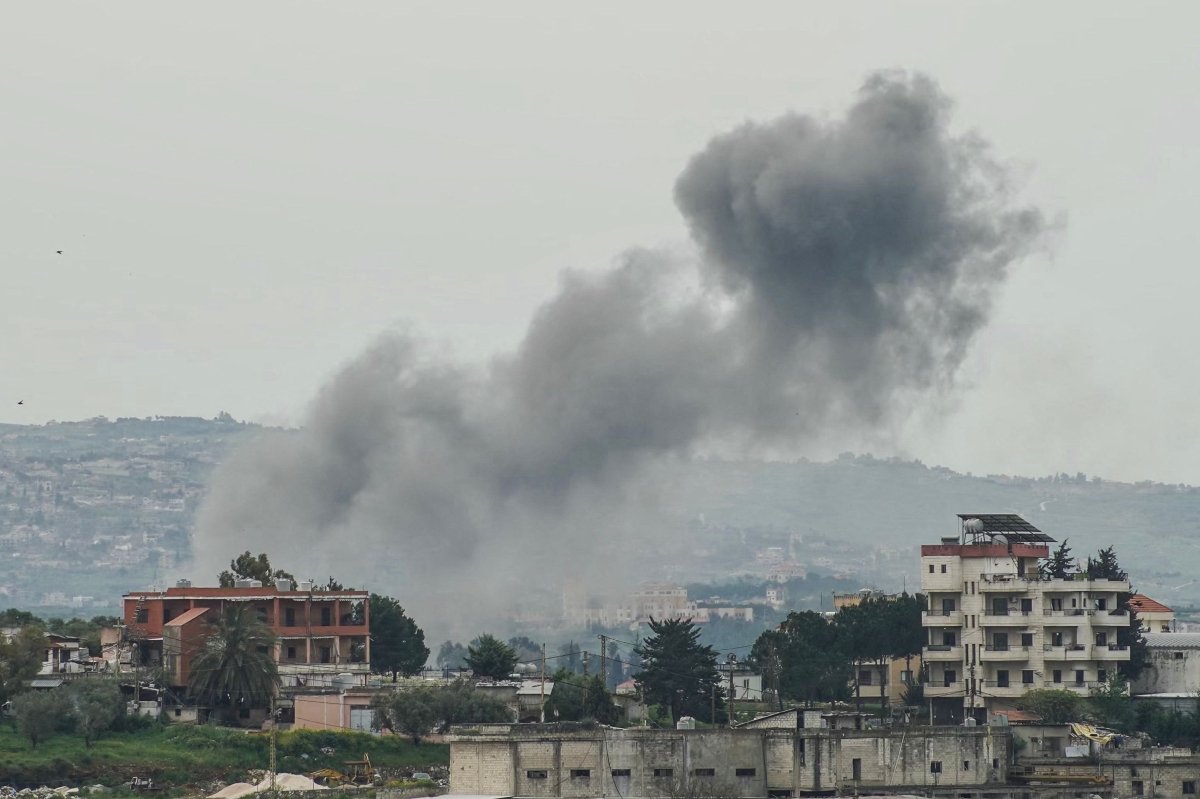
Lebanon calls for a ceasefire on its front with Israel, supported by Saudi Arabia and the United States.
Translated by Alqyas from Al-Rai — Original source
- Aoun: We appreciate the efforts of the Saudi Crown Prince to support regional stability and hope that Lebanon will be an integral part of this effort.
- US pressure on Netanyahu to meet Beirut halfway... and Iran claims “paternity” of the ceasefire.
Against the backdrop of a race against time, with the two-week ceasefire deadline on the Iran front approaching and Washington still refusing to extend it in order to increase pressure on Tehran and bring it to a second round of unconventional “disarmed” negotiations—triggered by Iran’s closure of the Strait of Hormuz—Lebanon has been busy investigating the trajectory that led, in its name, to the brink of the volcano that erupted on March 2, while simultaneously exploring directions that could lead to an imminent temporary ceasefire on its front, benefiting from the momentum of the historic round of direct talks held in Washington between the ambassadors of Beirut and Tel Aviv, personally sponsored by US Secretary of State Marco Rubio, in preparation for launching broader and higher-level negotiations aimed at reaching a permanent solution.
The day after talks between the Israeli ambassador to Washington, Yechiel Laiter, and the Lebanese ambassador, Nada Hamada Maawad, a clear US attempt emerged to push Tel Aviv to take an initiative of good will toward the official Lebanese government, matching its bold step to break what political circles described as the “blockade” imposed by the “Iranian axis” on Beirut, which dictates independent diplomacy and prohibits any direct negotiation with Tel Aviv that would effectively separate the two tracks Tehran treats as “conjoined twins” in war and peace.
The centerpiece of this good-will initiative is a ceasefire, which constitutes Item One in the proposal launched by Lebanese President Joseph Aoun on March 9, in which he reiterated his call for direct negotiations with Israel “to put an end to the renewed Israeli escalation.” Item B includes “expediting the provision of necessary logistical support to the Lebanese armed forces,” and Item C stipulates “that these forces immediately take control of the areas of recent tension, confiscate all weapons from them, and confiscate Hezbollah’s weapons, depots, and warehouses, based on available information and data.”
After the ceasefire demand became the entry point insisted upon by Lebanon to enter broader negotiations, without even publicly crystallizing a shared context, reference framework, or expected “final product” from these talks so far, despite Israel and the United States openly stating that the ultimate goal is a comprehensive peace agreement, Beirut has experienced, since Wednesday afternoon, an atmosphere of intensive efforts to push Tel Aviv to accept a ceasefire on the Lebanese front. It was reported that Riyadh has also entered the fray, urging Washington to ensure a rapid de-escalation, alongside Saudi Arabia’s keenness to surround the “Land of Cedars” with “safety belts” to stabilize its internal situation and avoid any tensions that could carry the risk of toppling the small country from within.
Following rumors that Israel is committed to an ongoing, undisclosed de-escalation since April 9, the day after “Black Wednesday” in Beirut, which aims to temporarily neutralize the Lebanese capital and its southern suburbs from the fighting, information intensified regarding multi-directional pressures on Tel Aviv to proceed with a ceasefire under the “separate track” that Lebanon carved out from Iran’s grasp. Iran had sought to link both fronts to the truce in an attempt to keep Hezbollah and its arsenal as leverage for “give and take” at its negotiation table, specifically regarding the “cessation of support for proxies” clause in the US terms of reference. Meanwhile, the independent track insisted upon by Beirut, forged through facilitative dialogue in Washington, allowed for the imposition of an equation in this clause: “Tehran gives (on the proxy issue) on its track with Washington, while Lebanon takes on its separate track.”
Ahead of the Israeli Cabinet’s smaller ministerial committee meeting on Wednesday night to announce the ceasefire decision regarding Lebanon, signs of a race to claim credit for the initiative emerged, bolstering the likelihood of its announcement. Hezbollah’s deputy secretary-general pre-emptively framed the anticipated achievement as a result of “Iranian and regional efforts that may lead to a ceasefire in Lebanon soon.” This was followed by Iran’s Tasnim News Agency citing an Iranian source stating that “a ceasefire in Lebanon is a positive indicator for Iran’s decision regarding the next round of negotiations with the US.” Concurrently, official Lebanese sources confirmed that the talk of a truce was “the result of Lebanese efforts, the latest of which took place in Tuesday’s meeting in the US capital and the subsequent communications,” adding that “this will be clear in statements that may be issued in this context.”
At the same time, a Lebanese official source told Al Hadath channel that “the ceasefire aims to boost the state’s efforts in negotiations with Israel, and achieving it will be the result of US pressure following the meeting in Washington.” Meanwhile, a prominent stance emerged from President Michel Aoun, who sought to highlight the role of the Kingdom of Saudi Arabia in supporting Lebanon. He issued a notable statement declaring that “the wise and balanced efforts of Saudi Crown Prince Mohammed bin Salman, which have provided an atmosphere conducive to stability in the region, are appreciated and a source of pride for Lebanon. We hope Lebanon will be an integral part of this effort, as the Kingdom of Saudi Arabia, sponsor of the Taif Agreement, is trusted by Lebanese people, regional countries, and the world.”
An Israeli official had previously confirmed to Channel 13 that “Washington wants a ceasefire with Lebanon to strengthen the Lebanese government,” which had been subjected to further “attacks” and accusations by Hezbollah’s leader and the President of the Republic, due to their participation in direct negotiations and the failure to secure even a ceasefire from Tel Aviv, thereby granting the enemy a political achievement image after failing to capture an image of alleged victory in Bint Jbeil.
While CNN quoted an Israeli source stating that “Benjamin Netanyahu realized that unless he acts, President Donald Trump will announce the ceasefire himself,” Channel 12 reported that an Israeli official said “US envoy Steve Witkoff proposed a ceasefire in Lebanon for a week, but Israel insisted on separating the Lebanon and Iran fronts.” The official added that “Washington desires a de-escalation on the Lebanon front to focus on negotiations with Iran, and proposes a temporary ceasefire with Lebanon with a deadline for resuming hostilities, similar to the situation with Iran.”
Israeli broadcasting authorities cited a Tel Aviv source stating that the U.S. administration formally requested Prime Minister Benjamin Netanyahu to consider a temporary ceasefire in Lebanon as a goodwill gesture toward the Lebanese government amid ongoing negotiations. Meanwhile, a senior Israeli source declared that no decision had yet been made and that the matter would be discussed that evening in a cabinet meeting. Concurrently, the Israeli website Kipa reported that a ceasefire was likely to begin that night in Lebanon.
Earlier, the Israeli government had affirmed that its objective in Lebanon was clear: to disarm Hezbollah, which it described as the primary obstacle to peace, while thanking President Trump for his mediation in negotiations with Lebanon. However, Channel 12 reported that the Israeli military is accelerating plans that could be suspended in southern Lebanon. This development helped explain the intensification of attacks in the south—including the announcement of strikes on 200 Hezbollah targets within 24 hours—covering areas such as the city of Sidon and villages in the district, as well as the escalation of shelling in the heart of Bint Jbeil. For Tel Aviv, Bint Jbeil has become a key symbol in the pursuit of a “victory” that would unravel the fragile “spider’s web” entanglement that has haunted Israel since 2000, when Hassan Nasrallah stood in the city’s stadium during the liberation celebrations.
A ceasefire agreement on the Lebanese front, separate from any truce with Iran and potentially extendable, would allow Lebanon to await the outcomes of the decisive diplomatic round on the “main front” on a cooling-off basis. This is particularly relevant given expectations that Hezbollah will adhere to the truce, partly to promote it as a product of Iranian initiative. Moreover, reaching a comprehensive resolution with Iran—both its old and new leadership—would inevitably have positive repercussions on the Lebanese file, Hezbollah’s status, and its arsenal, unless the group attempts to backtrack domestically to extract gains within Lebanon’s political fabric “at the expense of the guardians.” Arab capitals friendly to Beirut are closely monitoring this dynamic through a proactive strategy centered on Parliament Speaker Nabih Berri, recognizing that such behavior would be suicidal.
