Trump does not support granting Iran 20 years to suspend uranium enrichment
Trump announced the likelihood of negotiations returning to Islamabad, while reinforcing sanctions on Iranian ports
Translated by Alqyas from Al-Rai — Original source
Anticipation is mounting for a potential return to the diplomatic track and for Washington and Tehran to resume negotiations, following the conclusion of the highest-level talks between the two countries since 1979 without any progress.
In this context, President Donald Trump told the New York Post that a second round of talks could be held in Pakistan “within the next two days.”
He added in a phone interview with the newspaper’s correspondent in Islamabad, “You need to stay there, really, because something may happen in the next two days, and we are more inclined to go there.”
He had initially stated in a separate call that no further talks would be held in Pakistan, but he contacted the newspaper again minutes later to say that a return to Islamabad was “likely” because Pakistani Army Chief Asim Munir “is doing a great job.”
This comes as US Vice President JD Vance said the first round “made some progress.”
Later, Reuters quoted an official at Iran’s embassy in Islamabad as saying the next round could take place “this week or early next week.”
A senior Pakistani government official stated, “We have been in contact with Iran and received a positive response indicating its openness to a second round of talks.”
A US official told Fox News, “We have all the elements for an agreement with Iran, but it is not yet finalized.”
French President Emmanuel Macron announced that he held phone discussions on Monday with both Trump and Pezeshkian.
He wrote on the X platform: “I called for the resumption of stalled negotiations in Islamabad, clarification of misunderstandings, and avoidance of new chapters of escalation. It is particularly essential that everyone fully respect the ceasefire, including in Lebanon.”
Meanwhile, France and the United Kingdom are organizing a video conference in Paris on Friday for “states not engaged in combat and ready to contribute” to a “multinational, purely defensive mission” in the Strait of Hormuz, according to the Élysée Palace.
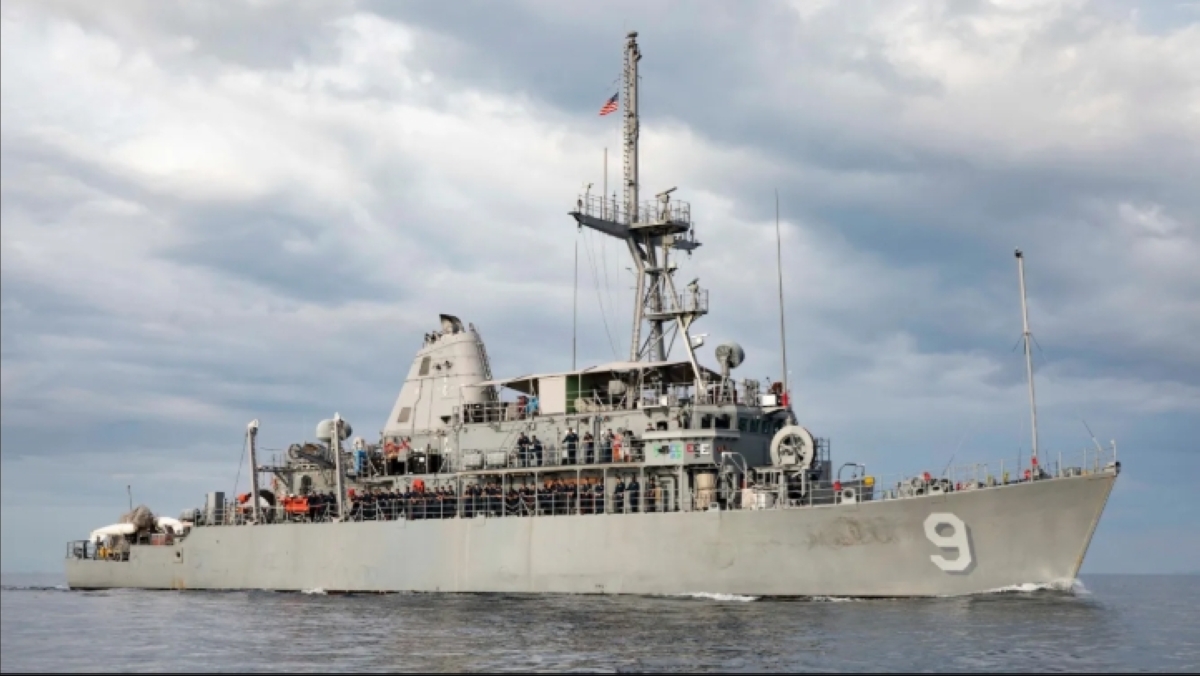
The US website War Zone reported that two US Avenger-class mine countermeasures ships left their deployment locations in Japan heading for the Middle East, a move coinciding with Washington’s announcement of a process to clear the Strait of Hormuz of naval mines and impose a comprehensive blockade on Iranian ports.
As Beijing engages in intensive diplomacy, the Ministry of Foreign Affairs published an initiative featuring four proposals put forward by President Xi Jinping to preserve and enhance peace and stability in the region.
US Central Command (CENTCOM) stated that approximately 10,000 US military personnel, more than 12 warships, and dozens of aircraft are participating in the mission to blockade Iranian ports.
It added in a statement, “We are imposing a blockade on ships of all countries entering or leaving Iranian ports. We support freedom of navigation for ships transiting the Strait of Hormuz to and from non-Iranian ports.”
