Hormuz... Between 'Total Closure' and 'Conditional Opening'
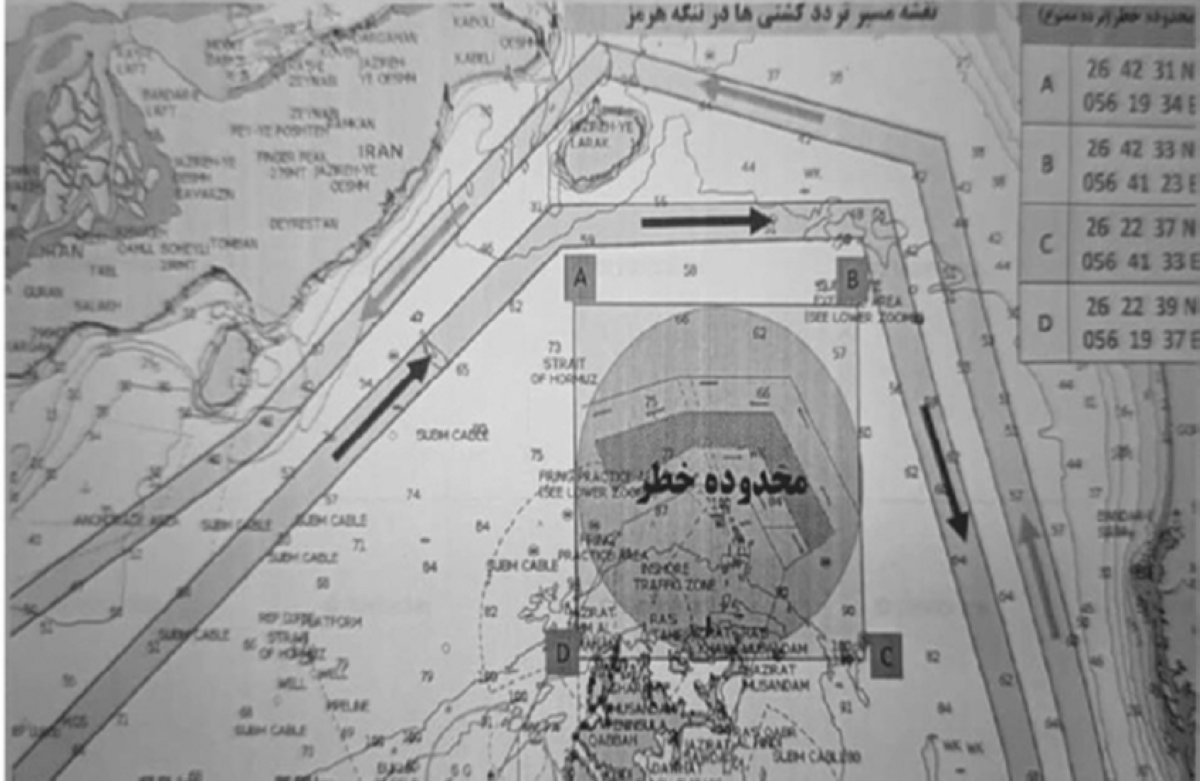
Restrictions imposed on traffic in the Strait of Hormuz on the grounds of Israeli violations
Translated by Alqyas from Al-Rai — Original source
Despite the truce announced between Washington and Tehran, the situation in the Strait of Hormuz remains suspended between “complete closure” and “conditional opening.” Iran continues to control this vital artery through which one-fifth of the world’s oil and liquefied natural gas supplies pass, demanding fees for safe passage—a move that could detonate the “fragile truce” at any moment.
While President Donald Trump has tied the continuation of the truce to the full opening of the strategic passage, Tehran has partially closed it and imposed strict restrictions in response to what it described as “Israeli violations” in Lebanon. This renders the strait a key indicator determining the region’s fate, whether a temporary peace or a return to attacks and counterattacks.
The IRGC Navy published a map of alternative navigation routes in the Strait of Hormuz from the Gulf of Oman northward toward Larak Island, and from the Gulf via the southern part of the island.
The statement read: “We declare to all ships intending to cross the Strait of Hormuz: In consideration of navigational safety principles and protection from potential collision with naval mines, and in coordination with the IRGC Navy forces in the Strait of Hormuz, and until further notice, please use the alternative routes for crossing the Strait of Hormuz as follows and according to the attached map.”
It clarified that this clarification came due to the state of war in the Gulf and the Strait of Hormuz during this period, and the possibility of various types of anti-ship mines being present in the strait’s main congested passage.
The statement continued: “Entry route: From the Gulf of Oman heading north, passing through Larak Island, then continuing toward the Gulf (according to the map). Exit route: From the Gulf, via the southern part of Larak Island, and continuing toward the Gulf of Oman (according to the map).”
The Russian TASS news agency quoted a senior Iranian source as saying that “Iran will not allow more than 15 ships daily to pass through the Strait of Hormuz under the ceasefire agreement.”
For her part, White House spokesperson Karoline Leavitt refused to answer a question regarding “who controls the Strait of Hormuz now?”
Regarding the imposition of fees by Iranians on ships crossing the strait and why the United States would allow it, she affirmed: “This is something we have categorically rejected, and the proposed partnership was an initiative by President Trump.”
US officials believe that Tehran’s insistence on controlling the strait could lead to a resumption of war, as reported by the Wall Street Journal.
In Brussels, the European Union announced that “international law enshrines freedom of navigation, meaning no payments or fees of any kind.”
Italian Prime Minister Giorgia Meloni stated that more than 30 countries are working to ensure freedom of navigation in the Strait of Hormuz.
British Prime Minister Keir Starmer said that Iran must not hold Hormuz hostage and that further efforts must be made to restore navigation through it.
Iran is pressing for further US concessions in a final agreement, including the complete lifting of financial sanctions that crippled its economy and recognition of its control over the strait, an international waterway that was open to all trade before the war.
Iranian officials say they intend to impose rules on passage through the strait, including potential fees for its use, similar to those imposed by countries operating canals through their territories.
CNN reported, citing navigation data, that hundreds of ships remain stranded in the area, waiting for the “green light.” Meanwhile, a senior Iranian official confirmed to Al Jazeera that “the strait will not be reopened until Israeli attacks on Lebanon stop,” adding that the agreement mediated by Pakistan covers the entire region.
