US and Iran Negotiate 'Peace Deal'... Israel Prepares for 'Eternal War'
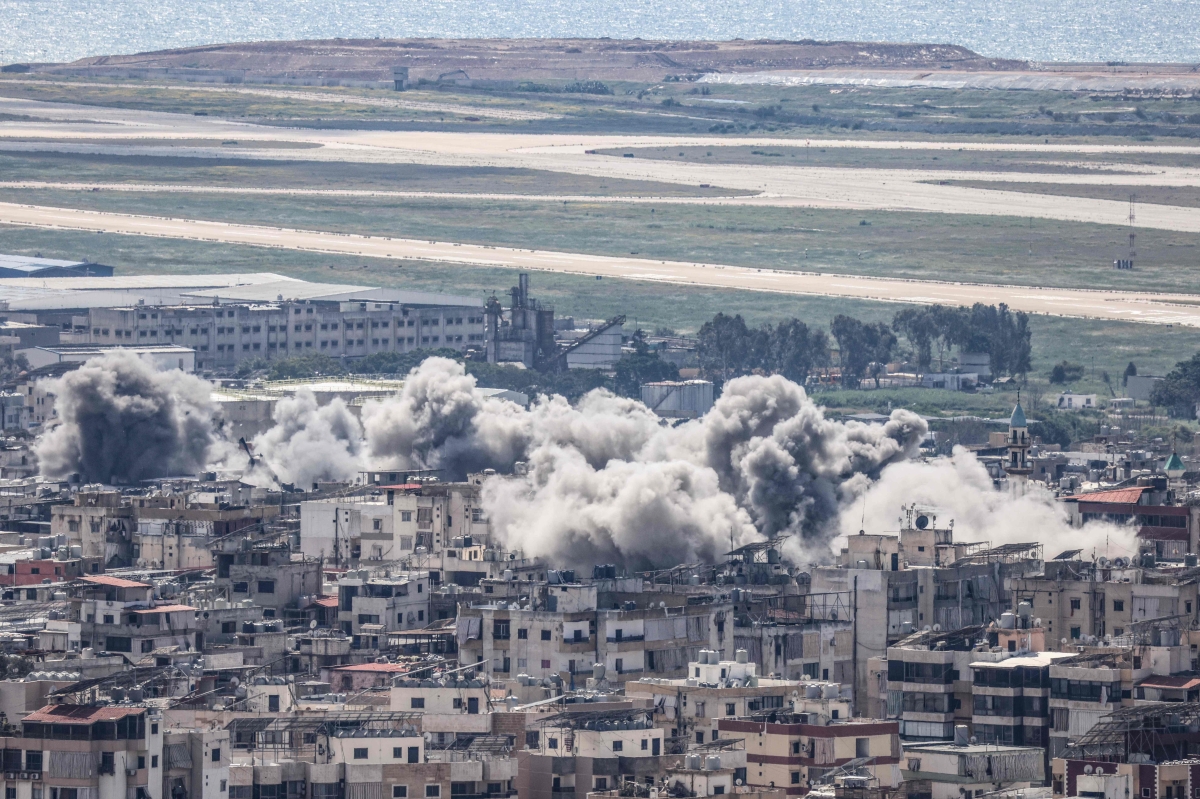
Israel is preparing for an eternal war by establishing buffer zones in neighboring countries.
Translated by Alqyas from Al-Rai — Original source
- New Israeli strategy to weaken, not eliminate, the enemy
- Tel Aviv maintains buffer zones in Lebanon, Gaza, and Syria
- Extremist right-wing leaders seek to annex adjacent territories
As the United States and Iran work to stabilize a ceasefire, Israel continues to seize more territory from neighboring countries in preparation for a protracted conflict in the Middle East.
Six Israeli military and defense officials told Reuters that the creation of “buffer zones” in Gaza, Syria, and now Lebanon reflects a strategic shift for Israel following Hamas’s October 2023 attack, placing the country in a state of near-permanent war.
This approach reveals a reality that officials say has become clearer after two and a half years of conflict: that the Iranian regime, Hezbollah in Lebanon, Hamas in Gaza, and armed factions across the region cannot be completely eradicated.
Nathan Brown of the Carnegie Endowment for International Peace stated, “Israeli leaders have concluded that they are in an eternal war against enemies that must be intimidated, and even dismantled and dispersed.”
The United States and Iran agreed on Wednesday to a temporary halt in fighting while negotiating a permanent end to the war that erupted on February 28. Israel agreed to cease its attacks on Iran but affirmed it would not stop its campaign against Hezbollah.
The group joined the war on March 2 by launching missiles at Israel, which subsequently invaded southern Lebanon to establish a buffer zone extending to the Litani River, an area covering approximately eight percent of Lebanese territory.
Israel ordered hundreds of thousands of residents in the area to evacuate and began destroying homes in Shiite villages it believes Hezbollah uses to store weapons or launch attacks.
A senior military official, who requested anonymity to discuss security matters, said the goal is to “clear” an area extending five to ten kilometers beyond the border to prevent Israeli border towns from coming under Hezbollah’s rocket fire.
He noted that Israeli forces found evidence in some Lebanese villages near the border indicating that roughly 90 percent of homes contained weapons or equipment linked to Hezbollah.
He explained that this means the homes are considered hostile military sites that must be destroyed, adding that many villages in southern Lebanon are located on hilltops, providing direct visibility of Israeli cities or military positions.
Asaf Orion, a retired Israeli major general and former head of the Military Strategy Department, said the use of buffer zones represents a new security doctrine based on the principle that “protecting border settlements cannot be achieved from within the borders themselves.”
Once the buffer zone is enforced against Hezbollah, Israel will have controlled or occupied territory in Lebanon, Syria, the West Bank, and the Gaza Strip, where it still controls more than half of its land following the ceasefire agreement last October.
Under the agreement, Israel is supposed to withdraw completely from Gaza and hand over Hamas’s weapons, but the likelihood of this happening in the near future appears slim.
Israeli Prime Minister Benjamin Netanyahu said in a video message published by his office on March 31, “We have established deep security belts outside our borders.”
He added, “In Gaza – more than half of the Strip’s area. In Syria, from the summit of Mount Hermon to the Yarmouk River. In Lebanon – a wide buffer zone that undermines the risk of any incursion and keeps anti-tank fire away from our settlements.”
A member of the Security Cabinet and two other officials said that the plan to establish a buffer zone in Lebanon has not yet been presented to the Security Cabinet.
The Israeli military referred questions about the buffer zones to Netanyahu’s office, which had not responded to a request for comment as of now.
Israel has long occupied territories beyond its borders, including the occupied West Bank, the Gaza Strip, and the Syrian Golan Heights, which it occupied in the 1967 war before annexing them in 1981.
Hundreds of thousands of Israeli settlers currently live in the West Bank, alongside approximately three million Palestinians who aspire to establish their future state on these lands.
Many Lebanese and Palestinian displaced persons view Israel’s seizure of their lands and destruction of their villages as indicative of further territorial expansion, a trend reinforced by statements from some far-right members of Netanyahu’s government.
Finance Minister Bezalel Smotrich stated in March that Israel should expand its borders to the Litani River. He made similar remarks about Gaza, asserting that Israel should annex the territory and settle it.
However, another Israeli military official, who also requested anonymity to discuss operational planning, said the Litani River would not constitute a new border. Instead, the buffer zone would be monitored by ground forces conducting raids as needed, without necessarily occupying positions along the river.
Defense Minister Israel Katz compared the destruction in southern Lebanon to the scorched-earth policy used against Hamas in Gaza, which led to the evacuation of entire cities.
On March 31, he said, “Houses in villages bordering the frontier, which are effectively Hezbollah positions, will be destroyed, following the Rafah and Khan Younis model in Gaza, to remove the threat to Israeli cities.”
Eran Shamir-Borer, an international law expert at the Israel Democracy Institute, stated that most property destruction is illegal, with exceptions for property used for military purposes.
He added, “Widespread destruction of homes in southern Lebanon without an individual assessment of each case would be illegal.”
Israeli leaders’ preference for a strategy based on establishing buffer zones follows decades of failed attempts to reach long-term peace agreements with the Palestinians, Lebanon, and Syria.
Israeli public opinion is highly skeptical about reaching peace agreements with the Palestinians through negotiation. A 2025 Pew Research Center poll showed that only 21 percent of Israelis believe Israel and a future Palestinian state can coexist peacefully.
A poll by the Tel Aviv University Institute for National Security Studies found that only 26 percent of Israelis believe the ceasefire reached in Gaza in October will lead to calm for many years, with most expecting a rapid resumption of fighting.
Ofer Shelach, director of the research program at the institute, said that a buffer zone in northern Israel would prevent the risk of Hezbollah fighter attacks or ground incursions.
However, he noted that increasing the number of personnel required to monitor fronts in Lebanon, Gaza, Syria, and the West Bank would ultimately place significant pressure on the military.
He added, “It would be better for us to return to international borders and maintain active mobile defenses outside the borders without maintaining positions there.”
