Israeli estimates: 'The day after' the war 'could be the most dangerous moment for the Iranian regime'
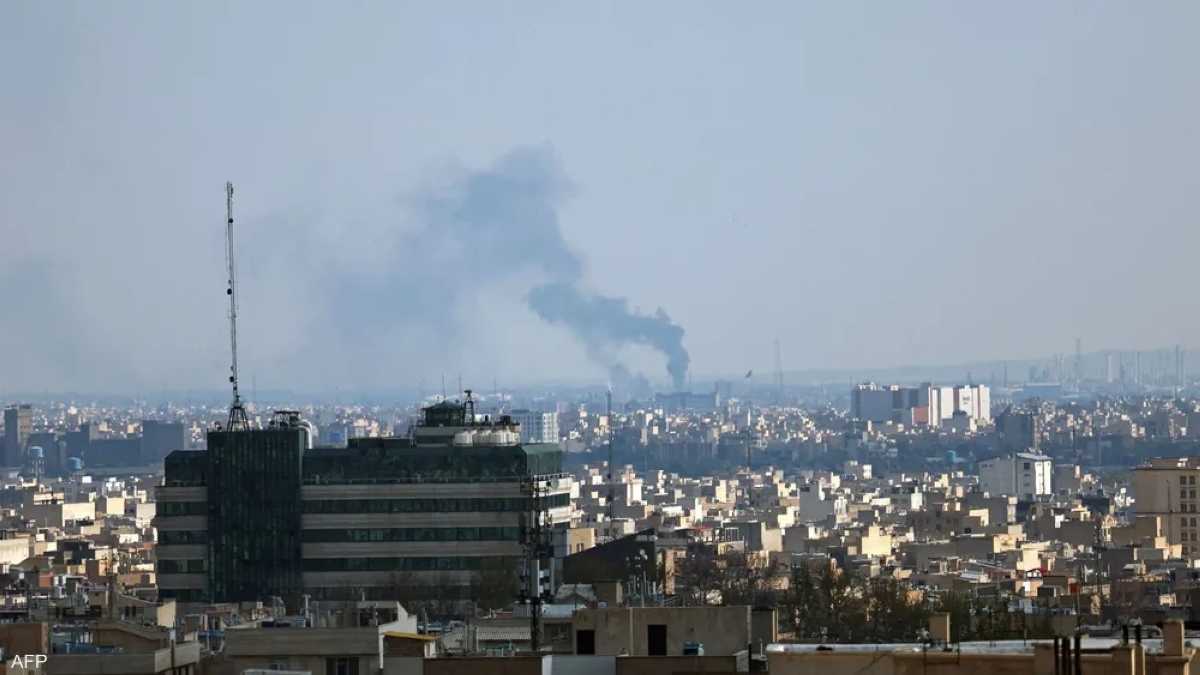
Iranians may face internal unrest amid economic and political deterioration
Translated by Alqyas from Al-Rai — Original source
Israeli estimates suggest that despite the harsh rhetoric and public threats, including those from U.S. President Donald Trump, the expected trajectory is not toward a large-scale ground operation, but rather a gradual escalation in the nature of targets to be struck, according to a report by Israeli analyst Anna Parsky in the newspaper Ma’ariv.
In Israel, it is estimated that the next phase of the confrontation, following the expiration of Trump’s ultimatum by midnight Tuesday-Wednesday GMT, will not necessarily involve a ground invasion or the deployment of troops on the ground. Instead, it will mark a shift toward a harsher retaliation policy: any Iranian attack on Israel, U.S. forces, Gulf states, or freedom of navigation in the Strait of Hormuz will be met with strikes on Iran’s critical infrastructure, primarily its energy facilities.
Israel emphasizes that, so far, energy infrastructure has not been primarily targeted, neither by Israel nor by the United States. However, if Tehran takes further hostile steps after the deadline expires, this could become a turning point.
Over the past few hours, Trump has escalated his rhetoric through a series of threatening statements and posts ahead of the deadline. On his platform, Truth Social, he posted a direct threat, stating: “Tuesday will be the day of Iran’s power plants and bridges. There will be nothing like this! Open the damn strait, you madmen – or else you will live in hell.”
In Israel, these statements are viewed as part of an escalating message indicating that the deadline is approaching and that if Iran does not back down, the price will rise.
According to informed sources, the logic behind this is straightforward: it is not because the United States lacks capability, but because it sees no need for a ground operation. Estimates suggest that if a wave of internal protests erupts in Iran and the Basij forces or regime apparatus attempt to suppress them by force, the Israeli-American response would come from the air.
In other words, a scenario is envisioned combining an internal uprising with an aerial threat umbrella, although it is noted that this scenario may not materialize in the near future.
According to estimates, the internal situation in the Islamic Republic is much worse than it appears on the surface. Israel believes the regime is suffering from deep erosion, both economically and politically, and that this deterioration did not begin with the current conflict; rather, the war has accelerated a pre-existing process of weakening.
Estimates also point to erosion within the regime’s own power apparatus, including a quiet exodus from the ranks of the Islamic Revolutionary Guard Corps and the regular army.
A source told Ma’ariv: “Not everything that is happening is visible, due to communication restrictions, internet blackouts, and the lack of information from inside Iran.”
According to these sources, the media’s failure to highlight these phenomena may help deepen fissures and increase defections.
However, Tel Aviv acknowledges that as long as the war continues, it is difficult to predict the outbreak of widespread protests, as the regime remains capable of mobilizing national sentiments and portraying the conflict as a war against Iran itself, not just against its leadership.
This is compounded by the historical legacy in Iranian-American relations, which allows the regime to stoke anti-U.S. sentiments and gain support, or at least delay criticism.
But according to Israeli estimates, the end of the war could be the most dangerous moment for the regime. It is expected that as Iranians begin to grasp the extent of the destruction and the depth of the crisis, along with the inability to rebuild, widespread internal anger may erupt. The questions will be: Who will rebuild the cities? Who will pay salaries? Who will fund reconstruction? And where will the money come from under continued, and possibly tightened, sanctions?
This is the contradiction facing Tehran: the war is currently delaying the outbreak of a popular uprising, but the day after could ignite it. When the public realizes that there is no horizon for rapid reconstruction and no influx of foreign funds, and that the regime is unable to put the state back on track, anger may turn inward, toward the centers of power.
Israel also believes that the financial factor will be decisive in eroding the regime. According to sources, partial salaries are already being paid in some cases, and there are fears that the regime may soon be unable to pay even that.
In such a scenario, the question becomes not only political but also functional: Who will continue to serve? Who will continue to enforce the regime? And who will remain loyal when the treasury is emptied?
Regarding the Strait of Hormuz, Israel is seeking to send a clear message: if Iran decides to use the strategic maritime corridor as a tool of blackmail, those attempting to “buy quiet” must understand that the United States will not pay the price in the lives of its soldiers. According to what is discussed in closed-door meetings, Washington is not willing to risk its forces to ensure freedom of navigation in exchange for arrangements or payments to Iran.
Israel estimates that communications between Iran and the United States will break down, and that the two sides will fail to reach an agreement. However, it finds it difficult to assess the repercussions of this breakdown on the course of the conflict, and whether Trump will unleash and authorize a broad attack on Iran’s infrastructure, even if it comes at the cost of inflicting significant damage on the living standards of the people.
In any case, the political leadership is closely monitoring these communications. According to an Israeli political source, Trump is focused on ending the conflict, and extending the deadline reflects his efforts to exhaust the diplomatic track.
The source told Haaretz that Israel is also preparing for a scenario in which the Iranian regime agrees to show flexibility and reach a ceasefire. Prime Minister Benjamin Netanyahu recently hinted at his country’s readiness to expand attacks inside Iran, when he took responsibility in a published video for the attack on petrochemical plants, presenting it as part of a move aimed at inflicting fundamental economic damage on the Tehran regime.
