Internal attack on Zarif and Rouhani, calls for their execution... after the 'Agreement Proposal'
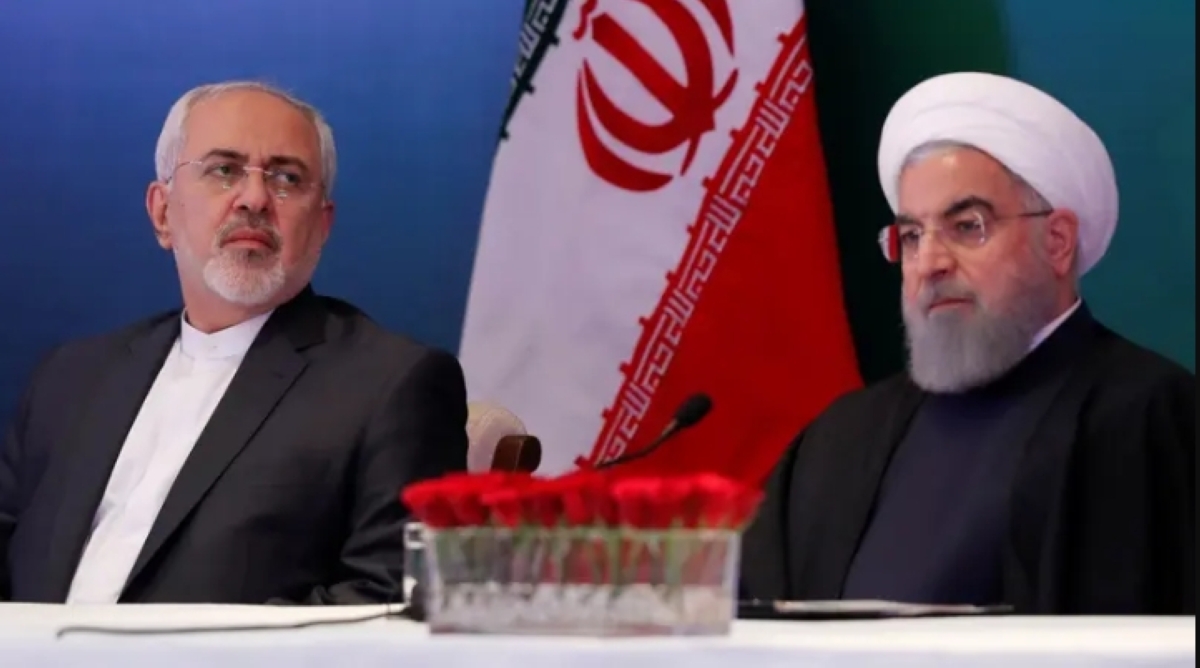
Diplomatic tensions between Iran and the Gulf revealed after Zarif's article calls for a non-aggression pact
Translated by Alqyas from Al-Rai — Original source
- Hamad bin Jassim, responding to Zarif: “You have lost a significant portion of your friends, and trust has eroded.”
An article by former Iranian Foreign Minister Mohammad Javad Zarif in Foreign Affairs magazine drew criticism from Gulf states, which argued that his proposals “ignore one of the most prominent flaws in Iran’s strategy,” namely its targeting of Gulf countries. Domestically, the article faced widespread condemnation, reaching the point where calls for his execution were made.
Anwar Gargash, political advisor to the UAE President, wrote on the X platform on Friday evening, “Reading Mohammad Javad Zarif’s article in Foreign Affairs ignores one of the most prominent flaws in Iran’s strategy: its aggression against its Arab neighbors in the Gulf.”
He added that “thousands of missiles and drones targeting infrastructure, civilians, and even mediators are not a sign of strength; rather, they reflect arrogance and strategic failure,” emphasizing that this approach reveals a deeper crisis in Iran’s methodology.
He continued, “The Arab world has seen this before: destruction marketed as victory,” adding, “Such narratives are no longer convincing.”
In this context, former Qatari Prime Minister Sheikh Hamad bin Jassim said on the X platform, “My friend, Dr. Javad Zarif, I read with interest what you wrote about the ongoing war, and I agree with much of what you mentioned, particularly regarding solutions and how to begin negotiations. Your approach was insightful when you started clarifying the official and popular perspectives in Iran, which, in your view, proudly discuss how to counter the American-Israeli attack.”
He continued, “But let me be frank with you: Yes, you have the right to be proud; this is your country. But is this pride enough to justify the state of affairs in the region? In my view, this war has not been beneficial, nor did the countries of the region endorse it, and it will not be. Instead, it has drawn us all into a more complex and dangerous path. You may believe that you have made progress in some aspects, or perhaps gained temporary tactical advantages, but the price was clear: the loss of a significant portion of your friends in the region, and the erosion of trust built over years. Because the method of response, no matter how strong it may seem, has left deep side effects that will not be easily erased, and it will take a long time to address them, if it is even possible.”
Hamad bin Jassim added, “As for the solution you proposed, I fully agree with it. In fact, I see it as a genuine way out of the current crisis. However, the problem is not with the idea itself, but with the courage to announce and embrace it. This solution requires real political courage from both sides of the conflict. And you, given your experience and position, are fully aware of the complexities of this file, and capable of stating the truth as it is, without embellishment or compromise. Therefore, what you have proposed remains incomplete unless accompanied by a clear and explicit Iranian stance announced to the world.”
He continued, “Let me say it clearly: Calling for a solution is not defeat; it is courage. Continuing on this path, on the other hand, is a drain on everyone without exception. Today, we need a voice like yours to emerge from within Iran to propose solutions to this war, because many of the targets being struck today are based on flawed calculations and assessments that require radical review before the cost of error becomes irreparable.”
Zarif, who served as Iran’s Foreign Minister from 2013 to 2021, stated that with rising costs worldwide and increasing US isolation in its war efforts, Iran should exploit this conflict to conclude a “non-aggression agreement, in which both countries commit to not launching strikes against each other in the future.”
He added, “All these outcomes would allow Iranian officials to focus less on protecting their country from foreign enemies, and more on improving the lives of their people domestically.”
He argued that Iranian diplomats should “seize this disaster as an opportunity to end 47 years of hostility,” noting that “the current conflict, despite its severity, may facilitate reaching such an agreement.”
Zarif called on the current power holders in Iran to leverage what he described as a “state of superiority,” not to continue the war, but to declare victory and pursue an agreement that ends the conflict and prevents a new war from erupting.
Coinciding with the publication of his article, Zarif clarified on the “X” platform that he had hesitated to publish this stance, but stressed his conviction that the war must end under conditions aligned with Iran’s interests.
These remarks were met with angry reactions from figures close to the establishment.
Saeed Hadadian, one of the eulogists for the late Supreme Leader Ali Khamenei, labeled Zarif a “spy” and gave him a three-day deadline to retract his statements, threatening to take action against him if he failed to comply.
Hossein Shariatmadari, editor-in-chief of the “Kayhan” newspaper and appointed by Ali Khamenei, viewed these calls as a “recipe for surrender to Iran’s enemies,” urging the judiciary to intervene.
For his part, former hardline MP Ali Motahari believed that “the time has not yet come to end the war,” adding that diplomatic efforts could continue even amid the conflict, referencing the experience of former Secretary of the Supreme National Security Council Ali Larijani.
Larijani played a pivotal role in managing the country’s affairs when the war broke out, before he was targeted and killed in a strike inside his home in Tehran.
Zarif is seen as being close to the faction associated with former President Hassan Rouhani. His presence had been limited since the war began about five weeks ago, before he recently returned to activity on social media.
Rouhani had called on Wednesday for immediate political and economic reforms, arguing that enduring under current conditions requires fundamental changes in the country’s management.
He emphasized that “preserving the country requires implementing basic and immediate policy reforms,” stressing that popular support is the cornerstone of any stability and that clear demands and discontent within society must be addressed seriously.
He added that ending the war in a manner that “safeguards national interests” should be accompanied by policy shifts that bolster domestic confidence and open the door to economic and investment activity.
In a related development, reports indicated that hardline factions had escalated their rhetoric, displaying banners during the war targeting both Rouhani and Zarif.
According to these reports, the banners accused the two men of “treason” and included calls for the judicial authorities to prosecute them and hand down death sentences.
