Israel Expects 'Major Internal Earthquake in Iran'... on the 'Day After' the War
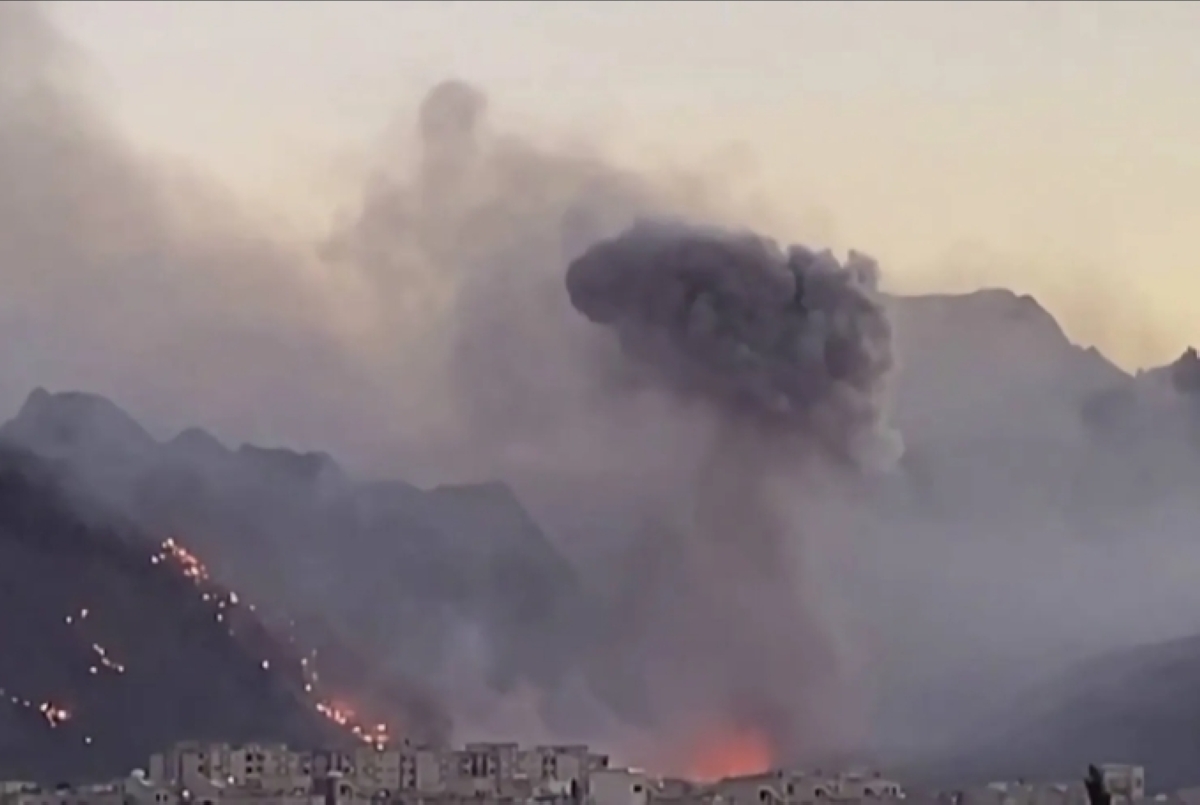
Israel discusses gradual pressure on Iran without a full-scale explosion.
Translated by Alqyas from Al-Rai — Original source
Estimates within the Israeli security establishment rule out a major popular uprising as long as the war continues, either out of fear or because such protests might be viewed as “treason.”
However, in the “day after,” if the war ends, sources in Tel Aviv believe the likelihood of a significant internal upheaval will increase substantially, according to a report published by the newspaper Ma’ariv.
According to these assessments, this is also why the security establishment is closely monitoring minority groups such as Kurds and Baloch, who are seen as potential catalysts for a broader domestic explosion.
The Kurdish issue has also been raised. In this context, quiet criticism of Washington is being heard in Israel. According to sources, preparations had been made to arm and prepare the Kurds for potential action, but the United States placed a “veto” on this, among other reasons related to Turkish sensitivities and strong opposition from President Recep Tayyip Erdogan, who viewed this move as a direct threat to Turkey.
In Israel, disappointment was recorded over this American prohibition, alongside an understanding that the broader move against Iran is being coordinated closely with President Donald Trump.
Regarding Trump’s next step, Israeli assessments suggest the US president is approaching a decisive point. On one hand, he still seeks to reach an agreement; on the other, he recognizes that the window of opportunity is narrowing.
Israel believes that if no breakthrough occurs, the United States may consider a limited ground operation, though not necessarily in Kharg Island, which is highly sensitive and could ignite the entire Gulf region.
According to these assessments, hardline elements in Iran may hope for such a move, believing it would allow Tehran to ignite the Gulf, strike energy routes, and expand the confrontation.
Conversely, the option seen as more likely by Israeli sources is a move in the Strait of Hormuz, framed as a guarantee of freedom of navigation, and possibly involving Gulf states symbolically.
According to discussions, there is consideration of limited and symbolic involvement of Gulf forces, aimed at emphasizing that the step is defensive, intended to lift economic strangulation rather than constitute an attack on Iran with the goal of occupation.
The logic, according to Israeli assessment, is that if Iran were to actually close the maritime bottleneck in the region, reopening it could be presented as defense of the global economy and freedom of navigation.
Another possibility raised is a focused American operation in the nuclear field, particularly an attempt to remove uranium. However, according to some assessments, this scenario is less likely because even if implemented, it would not resolve the broader strategic problem between Washington and Tehran.
In other words, even if this option is under consideration, Israel is not convinced that Americans view it as a genuine solution.
In this context, Israel is seeking to move to an additional phase of pressure on Iran: targeted strikes on national infrastructure such as electricity, water, gas, power plants, desalination plants, and others. However, at this stage, it faces an American veto.
There is significant concern in Washington that such targeting could trigger an Iranian response against oil and energy facilities in Gulf states, potentially leading to a wide regional escalation.
According to Israeli sources, this is currently the main point of disagreement: Israel wants to gradually expand pressure, while the United States fears that shifting from striking military-industrial targets to civilian-national infrastructure could create a dangerous cascading effect.
However, according to these sources, both Washington and Tel Aviv are seeking a middle ground: avoiding “burning the club,” but also not settling for objectives whose effectiveness erodes over time.
Behind the scenes, there is also an assessment that the primary target set from which the war began is nearing depletion, or at least has reached a stage where each additional strike yields diminishing returns.
Therefore, Washington and Tel Aviv are exploring, through joint dialogue, the possibility of carrying out gradual and calculated strikes: a small power plant, a secondary facility, and internal infrastructure, in a manner that signals that each day without progress in negotiations could end with a new strike, and another.
According to Israeli sources, this is the core of the current disagreement: how to increase pressure on the Tehran regime to push it toward an agreement without triggering a full-scale explosion for Iran and the entire region.
