Lebanon's front ignites on land... Political tension smolders
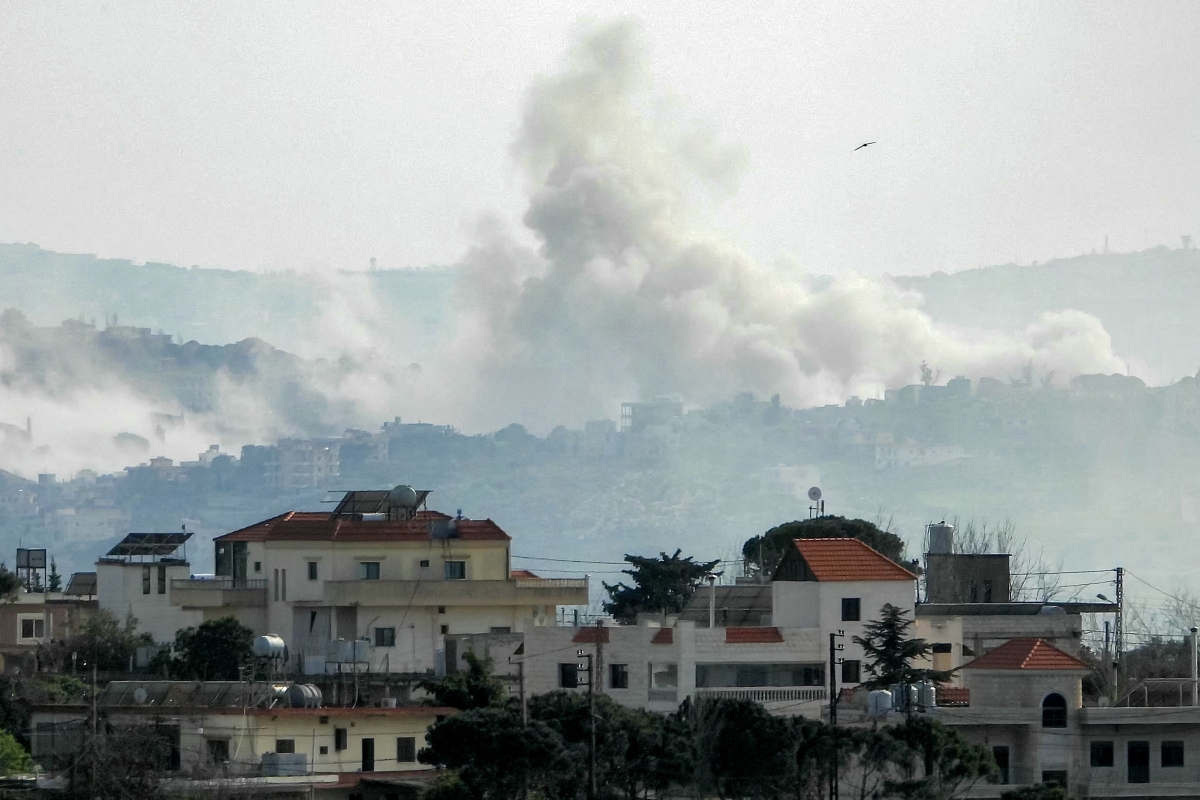
Tensions between Israel and Hezbollah in southern Lebanon are escalating, with military incursions and coordination between attacks and Iranian measures, alongside Lebanese diplomatic reactions to the expulsion of the Iranian ambassador.
Translated by Alqyas from Al-Rai — Original source
Amid the latest extension of the war with Iran until April 6, according to the second window opened by US President Donald Trump to complete negotiations “under fire” and with energy facilities exempted from “destruction” at this stage, the pace of the escalation between Israel and Hezbollah has accelerated to more heated levels, linked to the approach of Tehran’s “master battle” at its most dangerous juncture, as well as Tel Aviv’s gradual abandonment of any gray-area cover for its military intentions toward the group, opting instead for “open cards” through incursions southward that reached between 6 and 8 kilometers in some sectors, culminating in strikes that targeted the media body and “signed” them with images and words, claiming they were against a Hezbollah intelligence and propaganda system “hidden” under the guise of “journalists.”
At a time when the war with Iran signals that it “remains and expands” with each new time frame Trump realistically grants to continue it “in rounds,” and perhaps to prepare conditions for a strike he believes could be “decisive,” and amid the Houthis’ joining the “ring of fire” ignited by Tehran under the banner of support, starting from Lebanon through to their announcement that their support also covers this front—thereby signaling, according to Hezbollah’s opponents, that it too now needs support—the southern field, in particular, witnessed a hotter pace of confrontations and incursions, coinciding with further use of Tel Aviv’s “military fangs,” which spared neither journalists, medics, civilians, nor Lebanese army personnel, alongside Hezbollah attacks on Israel that appeared coordinated and synchronized with the requirements of Iran’s management of its war and the calibrated use of its missiles.
While the most significant expression of what awaits the Lebanon front came from Israeli Chief of Staff Eyal Zamir, who announced during a field tour in southern Lebanon, accompanied by the Northern Command commander, the 91st Division commander, and the 769th Brigade commander, that “we have additional plans to continue the campaign” against Hezbollah and “we will continue working and remain here as long as necessary to achieve a major strike and eliminate the threat in the north,” official Lebanon appeared before a series of dilemmas, a triple combination of:
First, the serious military repercussions of the confrontation into which the Land of Cedars was thrust “forcibly,” warning that exiting it could come at great costs in any negotiations, however delayed they may be—negotiations whose launch is hindered by the intersection of Israel and Hezbollah, given that no voice currently rises above the voice of war.
Hezbollah refuses a ceasefire before Iran’s war stops, thereby granting it negotiating margins on its front and handing over the “keys” to the Lebanon front (and consequently Hezbollah’s arsenal) on the table within the framework of “front unity,” diplomatically under Tehran’s sole command rather than the Lebanese state.
Israel is seeking further seizure of Lebanese territory, and perhaps even swallowing up the area south of the Litani River, thereby placing Beirut in the crosshairs of a harsh bargain between regaining land—perhaps not all of it—and accepting political conditions for a settlement that may amount to no less than a peace agreement. This explains Tel Aviv’s insistence on intensifying its ground operations, which are currently concentrated along the perimeter or inside towns of the second line, such as Dabaa in the western sector and its surroundings. This could enable the Israeli army to reach the city of Bint Jbeil (central/western sector) in parallel with advances toward Al-Bayada, Al-Mansouri, and Shama (which overlook the city of Sidon). In the eastern sector, the deepest incursion has reached nearly 8 kilometers, touching the closest point separating the border from the Litani River. This accounts for the fierce battles near and inside towns that have fallen, such as Al-Qantara, Al-Tayyiba, and Deir Sarian, following the entry of Khayyam.
Secondly, there are political repercussions expanding in scope against the backdrop of strong internal rejection of Hezbollah’s unilateral decision to wage war. This opposition has taken a clear shape through the meeting held on Saturday in Maarab (the headquarters of Samir Geagea, leader of the Lebanese Forces party), which included representatives of most opposition forces to Hezbollah. The meeting also addressed the “roadmap” presented for the critical moment and the day after.
Among the key provisions of the Maarab meeting’s declaration were: “Demanding that the government pursue a domestic and international legal process to document the damages caused by the war launched by Hezbollah under direct Iranian direction and management”; “Demanding full compensation from Iran”; and the resolve to “call for the establishment of a special court—national, international, or mixed—to prosecute Hezbollah officials responsible for dragging Lebanon into war and using its territory against the state’s will.” The declaration further asserted that “the state’s reassertion of its authority and monopoly on force is not a path to civil war, but the sole condition to prevent it.” It also refuted the erroneous claim that “the state cannot impose its sovereignty through its own forces,” stating that “it can, through a cabinet decision, enlist international forces based on Article 12 of Resolution 1701 and Chapter VII of the UN Charter, to protect Lebanon from remaining a prey to those who violate its territory.”
The third pillar of Lebanon’s official dilemmas lies in the continuous diplomatic tremors surrounding Beirut’s step to expel Iranian Ambassador Mohammad Reza Sheibani, who has been granted a departure deadline to this day. This development sparked a political crisis, manifested in the boycott by ministers from Hezbollah and Amal Movement of the government session on Thursday. Simultaneously, the Shia duo demanded that the newly appointed ambassador (who has not yet presented his credentials officially) not leave Lebanon.
This boycott occurred amid rising tensions, further fueled by the issue of displacement caused by landmines, which the state is attempting to clear by intensifying the deployment of the army and security forces in administrative Beirut, particularly to avoid any tensions, especially after movements in support of the Iranian ambassador and harsh statements from Hezbollah leaders against the “suspicious and reckless decision” to expel Sheibani. This came after they had previously threatened a “new May 7” (2008) scenario in response to the government’s ban on Hezbollah’s military activities. Consequently, the prospect of Shia ministers’ withdrawal appeared open to developments starting from today: whether Iran will respond to Lebanon’s step and withdraw its appointed ambassador, or whether it will yield to pressure from the Shia duo, defy the decision, and treat it as if it never happened. In such a case, its representative would remain without official status or diplomatic immunity, and the Lebanese state would deal with him within the embassy premises as if he “did not exist.”
In this context, Al-Athar noted the impact of the announced contact between Iranian Foreign Minister Abbas Araghchi and Lebanese Parliament Speaker Nabih Berri, which undoubtedly focused primarily on the Shihani crisis, given Shihani’s long experience and his status as an “extraordinary ambassador.”
The Iranian Foreign Ministry stated that the call addressed “the repercussions of the US-Zionist military aggression against Iran, as well as the wide-ranging attacks by the occupation entity on Lebanon.” Araghchi provided “an explanation of the latest developments related to the US-Zionist aggression against Iran and the legitimate and firm responses of the Iranian Armed Forces,” while praising “the principled positions of the Lebanese Parliament Speaker in supporting Lebanese national unity.” He reiterated Tehran’s principled support for “the sovereignty and territorial integrity of Lebanon” and emphasized that “strengthening internal cohesion to confront external plots against the interests of Lebanese society is a necessity of the current sensitive circumstances.”
For his part, Berri provided “an explanation of the latest developments related to Zionist entity attacks on Lebanon and the repercussions of these aggressive acts,” considering that the entity’s objective is to destroy Lebanon’s infrastructure in order to force Lebanese citizens to leave their areas.
Meanwhile, the field witnessed intensified military clashes and fierce confrontations, which did not obscure serious developments, including:
Israel claimed responsibility for the operation, stating that its target was Shihani, whom its army described as “a terrorist operative in the ‘Radwan Force’ affiliated with Hezbollah.” He had spent years operating undercover as a journalist within the “Al-Manar” network and was an element within the intelligence unit of the Radwan Force. He “systematically worked to expose the positions of Israel Defense Forces (IDF) troops operating in southern Lebanon and along the border line, and maintained continuous contact with other terrorist elements, particularly within the Radwan Force and Hezbollah in general.”
This targeting was met with official condemnations, led by President Joseph Aoun, who stated that “the Israeli aggression once again violates the most basic rules of international law, international humanitarian law, and the laws of war by targeting journalists, who are ultimately civilians performing their professional duties. This is a blatant crime that violates all customs and treaties granting journalists international protection during wars, in accordance with the 1949 Geneva Conventions and their protocols, provided they do not directly participate in hostilities.” He called on “all international bodies to take action to stop what is happening on our land.”
- Israel militarily targeted a resident of Deir el-Zahrani town, named Muhammad Mufid Tafili, whom the Lebanese Army mourned. This occurred alongside the shooting of two civilians (a father and his son) inside a car in the Al-Aynat neighborhood between Ramish and Dabbl (an area with a predominantly Christian population) as they were on their way to bring aid to the town, whose residents refuse to leave.
- The Israeli army continued targeting medical personnel, with the latest incident involving five members of the Islamic Message Scouts Association who were killed while performing their duties during an airstrike on the town of Zoutar. This comes as Lebanese Health Minister Rakan Nasser al-Din announced that the number of casualties in the health sector since March 2 has reached 51, while the overall casualty toll in Lebanon has risen to 1,189 dead and 3,427 injured.
