Trump: Iran is 'Begging' to Reach an Agreement
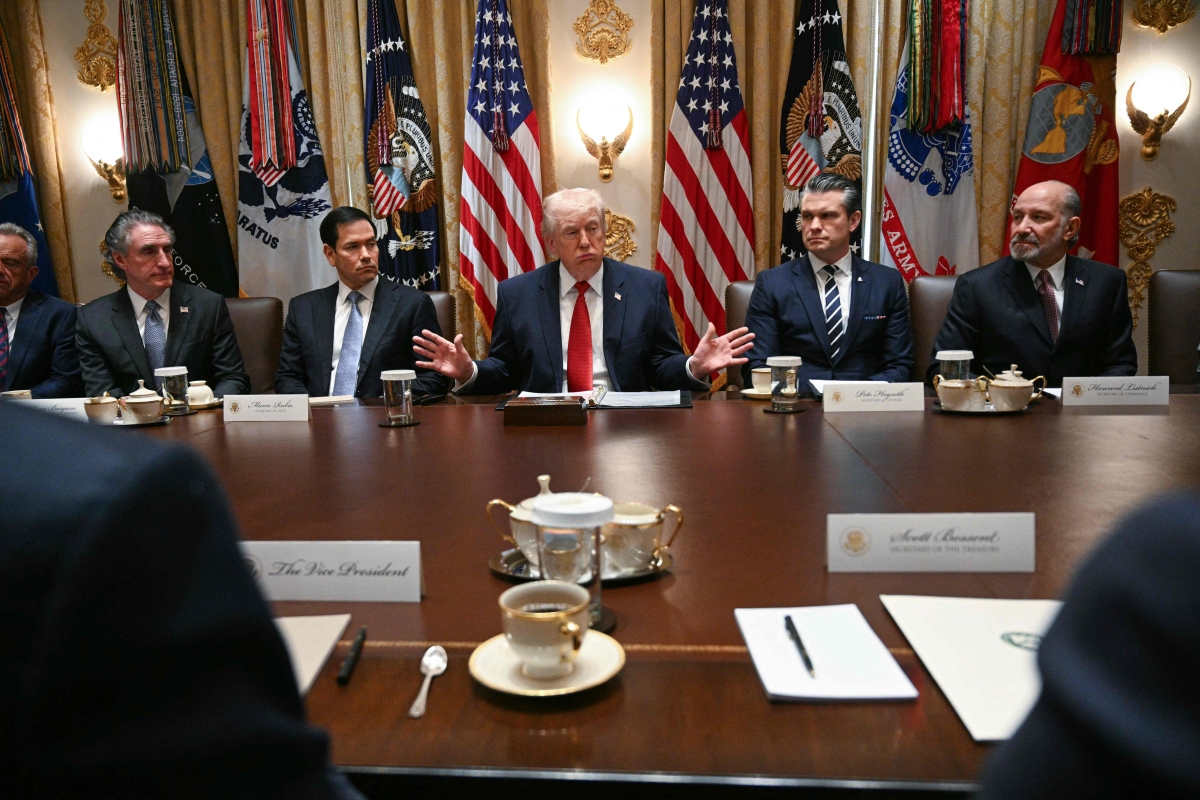
Trump points to Iranian collusion in negotiations despite tensions with Israel.
Translated by Alqyas from Al-Rai — Original source
- Trump: Taking control of Iran’s oil is “an option on the table”
- I am not sure I want to reach an agreement with Tehran
- Iranian negotiators fear they would be “killed by their own people”
- Tehran has submitted its response to the US proposal… “one-sided”
- Israel assassinates commander of the IRGC Navy
US President Donald Trump stated that Tehran is “begging for an agreement, not me,” but he is not certain about his own desire to reach a deal with Iran.
Following Tehran’s announcement that it has “no intention to negotiate” at present, and its characterization of the US proposal to end the war as “one-sided,” Islamabad confirmed the existence of “indirect negotiations,” while military operations continued into their twenty-seventh day. Israel announced the assassination of Ali Reza Tankesiri, commander of the IRGC Navy, in an airstrike.
Trump wrote on his social media platform, Truth Social, that Iranian negotiators are acting in a “strange and contradictory” manner, stating that they are “begging” to reach an agreement that “should have been done four weeks ago,” adding that this is “what they should be doing since they have been militarily decimated.”
He added, “It would be better for them to get serious soon, before it’s too late, because when that happens, there will be no going back, and the situation will not be good.”
During a White House government meeting, Trump said, “They now have a chance, Iran has a chance, to permanently abandon their nuclear ambitions and enter a new path. We will see if they want that. If they don’t, we are their worst nightmare. At the same time, we will continue to bomb them.”
He hinted that the agreement might ultimately fail to succeed.
Speaking about the prospects of reaching a deal, he said, “I don’t know if we will be able to do that. I don’t know if we are ready to do that.”
Regarding whether he is seeking control over Iran’s oil, Trump declared, “It is an option on the table,” noting that the US performance regarding Venezuela’s reserves had been “very good.”
The US President considered Iran’s allowance of ten oil tankers to pass through the strategic Strait of Hormuz as a “gift” to demonstrate its seriousness in negotiations to end the war.
He affirmed that his country would not allow Iran to impose fees on ships transiting the Strait of Hormuz, pointing out that this is “already happening.”
He continued, saying US fighter jets “do whatever they want in Iranian skies,” and that Iranians “cannot shoot down our planes,” adding that “(the late Supreme Leader Ayatollah Ali) Khamenei should have been prevented from blowing up the world, and we did that.”
Regarding the nuclear file, he said that Iran was four weeks away from possessing a nuclear weapon had it not been for US strikes, emphasizing that “Iran must permanently abandon its nuclear ambitions.”
The US President affirmed that Iran had attacked Gulf states and sought control over the Middle East, noting that Gulf states had chosen neutrality “yet Iran launched attacks against them.”
On Wednesday evening, the US President told an audience of Republican members of Congress at a dinner that Iranian leaders “are negotiating, by the way, and are eager to reach an agreement, but they are afraid to disclose this for fear that their people will kill them. They are also afraid that we will kill them.”
He reiterated his assertion that Iran is being “decimated,” despite Tehran still effectively controlling the vital Strait of Hormuz, which serves as a major route for oil transport.
For his part, US envoy Steve Witkoff stated that the United States had sent Iran “a list of 15 items” to serve as the basis for negotiations to end the conflict, adding that there are signs that Tehran is interested in reaching an agreement.
During a meeting at the White House, he added that talks could succeed if Iranians realize there are no good alternatives, a realization that Tehran may be beginning to reach.
He further stated that the Iranian navy is “leaderless,” and that Iran has “no nuclear weapons and no navy,” noting that the president has taken firm action against Iran and that U.S. forces have destroyed its air defense systems, emphasizing that Iran is suffering significant daily losses.
In Islamabad, Pakistani Foreign Minister Ishaq Dar confirmed that “indirect talks are underway between the United States and Iran via messages conveyed through Pakistan.”
Writing on the “X” platform, he said that speculation about “peace talks” is “unnecessary.”
He clarified, “In this context, the United States has presented a 15-point proposal being discussed by Iran. Additionally, allied countries such as Turkey and Egypt, among others, are supporting this initiative.”
Earlier, Iranian Foreign Minister Abbas Araghchi had stated that “we have no intention of negotiating,” adding that the Islamic Republic’s policy is “to continue resistance.”
He continued, “Messages are sometimes conveyed... but this can never be considered dialogue or negotiations.”
Concurrently, a senior Iranian official told Reuters that Iran’s initial response, conveyed to Pakistan, was that the U.S. proposal to end the war is “unilateral and unjust,” adding that it is still possible to find a way forward if realism prevails in Washington.
The official said the proposal “underwent detailed review on Wednesday evening by senior Iranian officials and the representative of the Supreme Leader (Mojtaba Khamenei).”
He added, “In short, the proposal calls on Iran to give up its ability to defend itself in exchange for an ambiguous plan to lift sanctions,” noting that the proposal lacks the minimum requirements for success.
He affirmed that “there is currently no agreement on negotiations, and no plan for talks appears realistic at this stage,” while Turkey and Pakistan are attempting to help “find common ground and narrow differences.”
In Jerusalem, Prime Minister Benjamin Netanyahu said that Israel “has eliminated the commander of the Islamic Revolutionary Guard Corps’ navy,” describing him as “his hands are stained with much blood,” and noting that he had led the operation to close the Strait of Hormuz.
Meanwhile, Israel came under a fresh barrage of Iranian missiles and drones, with six people suffering minor injuries from a missile strike on the Arab town of Kafr Qasim (central).
