Foreign Ministry on the Front Line of Defense... Regionally and Internationally
Foreign Ministry Provides Strong Diplomatic Defense Against Iranian Attacks
Translated by Alqyas from Al-Rai — Original source
Amid escalating regional tensions following the outbreak of the US-Israeli war on Iran, and the subsequent Iranian attacks targeting Kuwait and Gulf Cooperation Council (GCC) countries, the Kuwaiti Ministry of Foreign Affairs emerged as one of the most critical lines of diplomatic defense. Through broad and coordinated actions at the Gulf, Arab, and international levels, it worked to safeguard the country’s sovereignty, rally international support, and contain the crisis’s repercussions.
From the first moments of the attack on February 28, Kuwaiti diplomacy, under the guidance of the political leadership, led intensive efforts characterized by speed and effectiveness. These efforts combined legal action, political communication, and consular and humanitarian work, reflecting the state’s readiness and the strength of its international presence.
In this regard, the Kuwaiti Ministry of Foreign Affairs summoned the Iranian Ambassador to the country twice to deliver strongly worded protest notes. It also issued an official warning to Iraq, through the recall of the Chargé d’Affaires, regarding the use of Iraqi territory to launch attacks on Kuwait.
As the attacks occurred, the Ministry of Foreign Affairs issued strongly worded condemnation statements, firmly rejecting the Iranian assaults on Kuwaiti territory and airspace, and deeming them a blatant violation of the UN Charter and international law.
In a decisive diplomatic move, the Ministry summoned the Iranian Ambassador and handed him an official protest note, affirming Kuwait’s inherent right to self-defense under Article 51 of the UN Charter. The note emphasized the rejection of attacks on civilian facilities, particularly Kuwait International Airport.
Subsequently, Kuwaiti diplomacy moved to consolidate a unified Gulf position. The Minister of Foreign Affairs, Sheikh Jaraah Al-Jaber, held a series of calls with his counterparts in GCC countries, all of which affirmed condemnation of the Iranian aggression and full Gulf solidarity among member states.
Coordination extended to Arab countries through communications with the foreign ministers of Jordan, Egypt, and Syria, as well as contact with the Arab League. This contributed to strengthening an Arab position supportive of Kuwait’s sovereignty and rejecting any violation of its security.
Support also came from Asian and international countries, including India and Canada, clearly demonstrating international consensus rejecting the Iranian attacks and supporting Kuwait’s right to protect its sovereignty.
In a pivotal legal step, Kuwait, through the Ministry of Foreign Affairs, sent identical letters to the United Nations and the President of the UN Security Council. These letters documented the details of the Iranian attacks and the resulting human and material losses. Kuwait called on the international community to take a clear stance to halt these violations. This effort was later crowned by the adoption of UN Security Council Resolution 2817, which condemned the Iranian attacks and called for their immediate cessation—a diplomatic achievement reflecting the effectiveness of Kuwait’s actions.
Kuwait’s diplomatic escalation did not stop there. The Ministry continued its efforts by summoning the Iranian Ambassador for a second time on March 9, delivering a new protest note against the continuation of the attacks.
It also issued an official warning to Iraq, through the recall of the Chargé d’Affaires, regarding the use of its territory to launch attacks on Kuwait, emphasizing that such actions constitute a serious violation of international law.
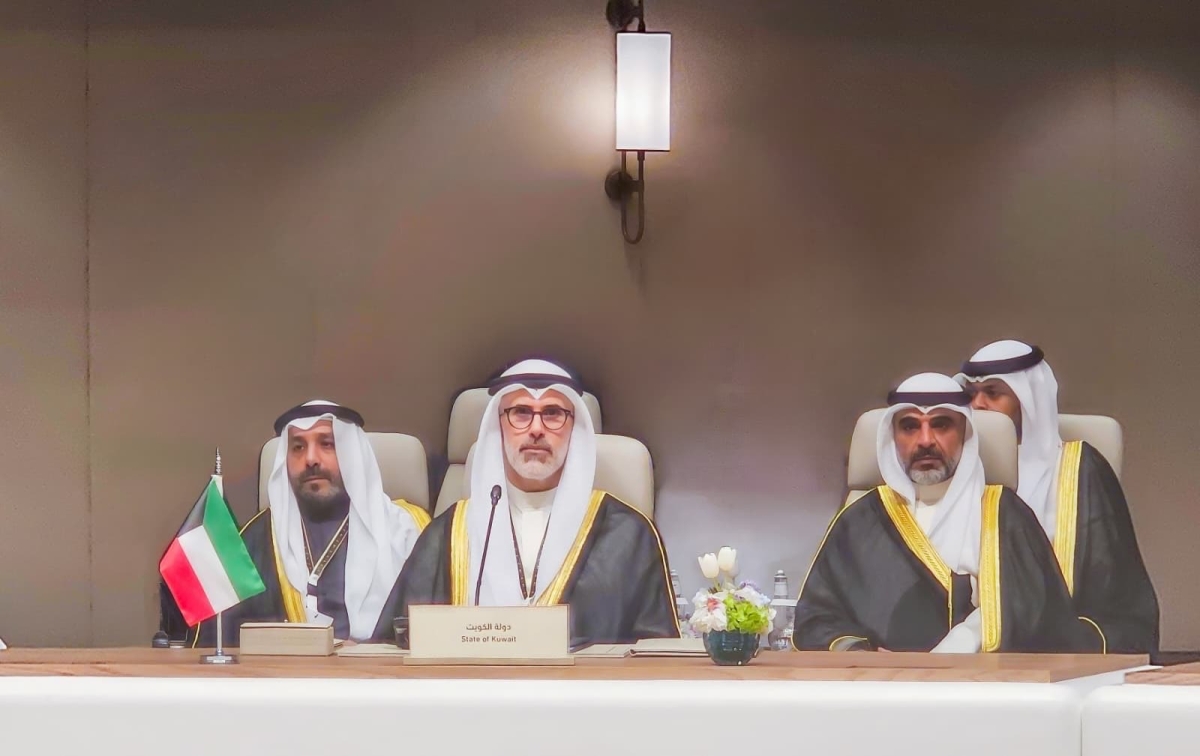
Kuwait also actively participated in regional meetings, most notably the Consultative Ministerial Meeting in Riyadh, attended by foreign ministers of Arab and Islamic countries. The Kuwaiti delegation was led by Minister Jaraah Al-Jaber Al-Ahmad Al-Sabah.
The meeting affirmed condemnation of the Iranian attacks and the necessity of enhancing joint coordination to protect regional security, a step that strengthened Kuwait’s political presence in managing the crisis.
In parallel with political initiatives, the Kuwaiti Ministry of Foreign Affairs intensified its consular efforts, calling on citizens abroad to exercise caution and activating emergency hotlines to coordinate with diplomatic missions.
It also participated in a joint committee to secure the return of citizens from abroad through land and air crossings, in coordination with several government entities, a move that reflected institutional integration in crisis management.
During the first three weeks of the crisis, the Kuwaiti Ministry of Foreign Affairs demonstrated a high capacity for swift and balanced action, combining diplomatic firmness with political openness, as well as legal and humanitarian efforts.
These efforts successfully achieved significant gains, most notably mobilizing broad international support, consolidating a unified Gulf and Arab position, and internationalizing the issue through the United Nations, thereby enhancing the protection of Kuwait’s sovereignty and affirming its active presence on the international stage under the most difficult circumstances.
