'Al-Watani': Global Economy Heading Toward Stagflation... If Energy Shock Persists
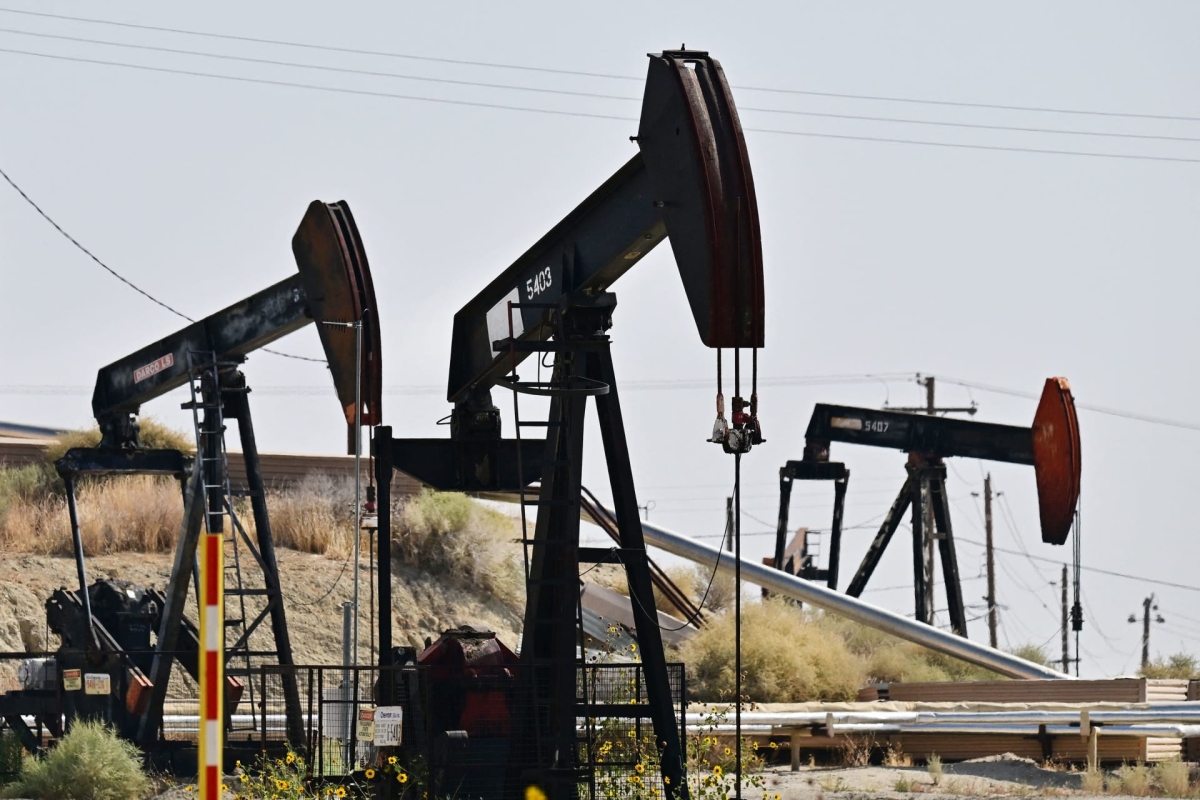
The global economy is expected to face stagflation due to energy price shocks, with impacts on monetary policy in the US, China, and Japan.
Translated by Alqyas from Al-Rai — Original source
While National Bank of Kuwait (NBK) has predicted that the global economy could face stagflation if the current energy price shock persists, government bond yields have surged sharply since the outbreak of military conflict in the Middle East on February 28, reflecting higher inflation expectations. It is evident that the energy price shock is further complicating the monetary policy mandate of central banks worldwide.
The NBK report asked: How long will this military conflict last? It noted that predicting this with a high degree of certainty is difficult. However, regardless of military developments and whether war objectives are achieved, several key factors warrant monitoring. The longer oil prices remain elevated, the greater the economic pressures and the likelihood that President Trump will halt the war, particularly as the U.S. midterm elections approach in November next year.
The report highlighted the affordability of living costs in the United States: rising inflation, especially higher gasoline prices (which significantly influence inflation expectations), will exacerbate cost-of-living challenges. Additionally, the sharp decline in the stock market and rising government bond yields, linked to oil prices, will add further economic pressure, alongside simultaneous negative impacts on growth. Finally, President Trump has an important scheduled visit to China at the end of March, which we believe is another factor that could influence the timing of the war’s end.
The report forecast that the U.S. economy will remain resilient, supported by continued strong household spending, booming technology and artificial intelligence investments, increased public sector spending, and prior monetary easing. The labor market remains weak, with slowing job creation (an average monthly increase of no more than 6,000 jobs over the past three months), but declining layoff rates keep the unemployment rate (4.4%) at relatively low levels. Nevertheless, inflation concerns, which have not genuinely subsided, have resurfaced due to rising global energy prices, threatening to keep inflation (the latest core PCE reading at 3%) well above the Federal Reserve’s 2% target in 2026.
Current futures markets indicate only one interest rate cut of 25 basis points in 2026. The United States relies to a limited extent on Gulf oil, with imports at their lowest levels in decades, while domestic production is near record highs. Meanwhile, the Supreme Court’s annulment of tariffs imposed under the International Emergency Economic Powers Act (IEEPA) will not alter the broader picture, given President Trump’s determination to rebuild the tariff wall through other legal means, meaning average tariff levels will remain close to pre-court-decision levels. However, reconstructing this tariff wall will be a complex and lengthy process, with heightened uncertainty during the transition period. The report noted that Jerome Powell’s term ending in May next year signals that the Federal Reserve faces a difficult period amid repeated U.S. administration attempts to influence monetary policy. It further suggested that Kevin Warsh’s nomination for Fed chairmanship could exacerbate these challenges, given his previous harsh criticism of the institution, his prior mandate to cut interest rates significantly, his pledges to bring about a “change in approach,” and the clear divergence of some of his monetary views from those of other members of the Federal Open Market Committee.
The Eurozone ended 2025 with a quarterly growth rate of 0.2% in the fourth quarter, raising annual growth to 1.4%, compared to around 0.9% in 2024, outperforming previous expectations. Prior to the current energy price shock, economic activity was stable, with an improvement in industrial production (the Purchasing Managers’ Index stood at 50.8 in February, the highest since 2022). Inflation remained at or near the target level since early 2025 (latest reading: 1.9%), but is expected to rise due to higher energy prices, the significant relative weight of energy (9%) in the consumer basket, and indirect effects on other goods and services. Notably, in 2022, the energy shock pushed inflation above 10%.
Regarding energy dependence, European imports of Gulf oil are limited, but imports of liquefied natural gas (LNG) from Qatar and the UAE account for approximately 12%-14% of total LNG imports.
The report noted that the Japanese economy ended the year with relatively weak performance, posting quarterly growth of 0.3% in the fourth quarter, below expectations, which placed 2025 annual growth at 1.2%. In January, the Bank of Japan raised its forecast for fiscal year 2026 (ending March 2027) growth to 1%, up from 0.7%. Growth may receive an additional boost from Prime Minister Takaichi’s ambitious fiscal agenda, which includes suspending the consumption tax hike and increasing government spending. Optimism rose following the ruling party’s historic victory in the early parliamentary elections in February, with the composite Purchasing Managers’ Index reaching a 33-month high of 53.9.
The report indicated that the Chinese economy grew by 4.5% year-on-year in the final quarter of the year, the slowest growth rate in three years; however, full-year 2025 growth reached 5%, meeting the government’s target.
The People’s Bank of China kept interest rates unchanged in February, holding steady since May 2025.
Authorities set a growth target of 4.5%-5% for 2026, the lowest since 1991. Nevertheless, given ongoing challenges and the continuous decline in population, achieving this growth remains highly positive in our view.
1. Rise in gasoline prices
2. Sharp decline in the stock market
3. Increase in government bond yields
4. Trump’s visit to China at the end of March
