Hassan Asiri: Technical Institutes... Match Medical Colleges in Outputs
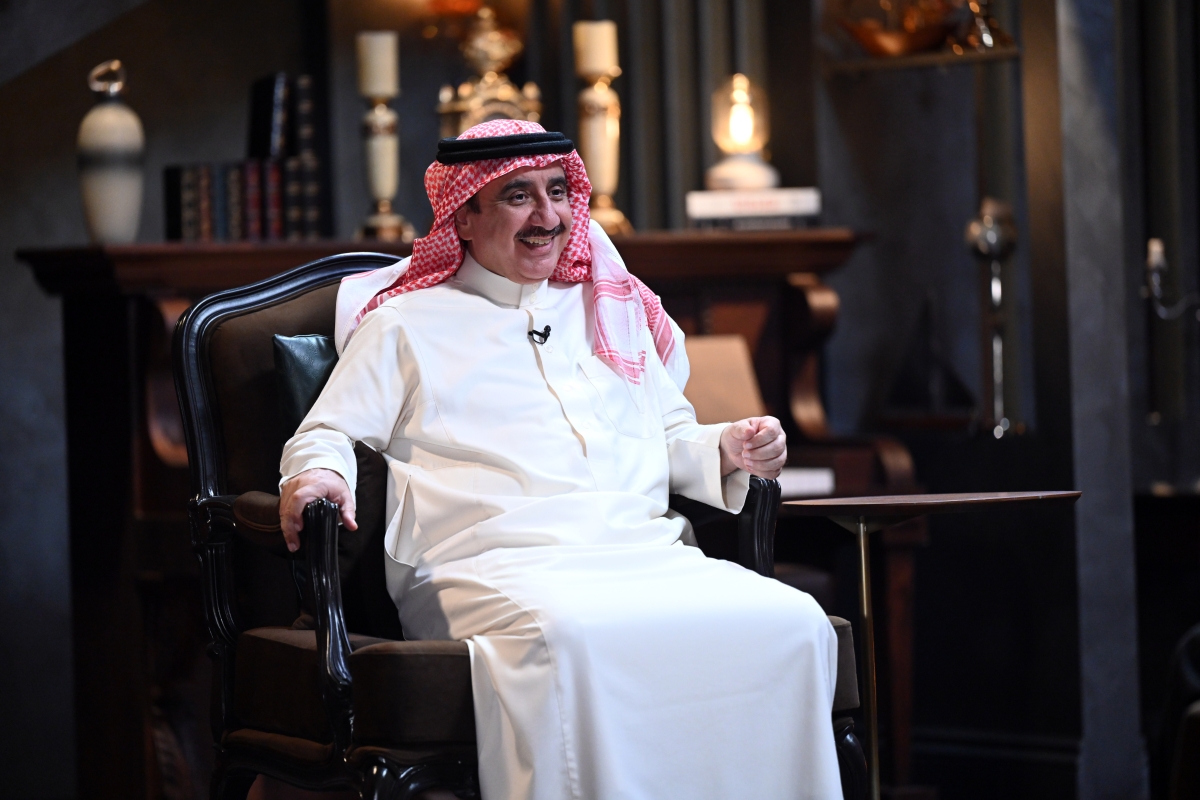
Hassan Asiri discusses Kuwaiti drama and its future in the Gulf, highlighting the role of artificial intelligence and the need to establish technical institutes in Saudi Arabia.
Translated by Alqyas from Al-Rai — Original source
- I grew up watching Kuwaiti dramas... and I share a special emotional bond with this country.
- Kuwaiti drama is profound, important, and inspiring to all drama in the Gulf countries.
- Kuwait is strongly present at major artistic forums... and has achieved advanced and significant positions in several festivals.
- When countries turn to their culture and arts, they gain greater value... and this is what happened in Crown Prince Mohammed bin Salman’s vision.
- The youth base in Saudi Arabia is large... but it lacks what Kuwait has had for many years.
- Reaching a state of artistic unity in Saudi drama like that achieved by Egyptians is not an easy task.
- The audience may wish to see Abdulhussain Abdulredha in a work produced using artificial intelligence... and if his heirs agree, it will be possible for him to participate artistically in this way.
- Turki Al Sheikh is distinguished by his ability to make those around him feel close and familiar... and he is the driving force behind a clear project in the fields of entertainment, culture, and arts.
Saudi artist and producer Hassan Asiri was a guest on the program "Masrah Al-Hayat" (Theater of Life), presented by the program’s editor-in-chief, media personality Ali Al-Alayani, on Al-Rai Television and the "ROD" platform throughout the holy month of Ramadan.
Asiri shed light on several milestones related to his artistic career and production experience, while also touching upon the state of Gulf and Saudi drama, the role of artificial intelligence in the future of the artistic industry, as well as personal and human insights from his life.
At the beginning of the episode, Al-Alayani praised Asiri’s career, saying, “From the darkness of beginnings and the passion for founding, the story of a pioneer who accepted nothing less than the summit was woven. He is the captain who navigated local production toward broader horizons. We consult memory and envision the future with artist and producer Hassan Asiri.”
The dialogue began with a question to Asiri about his continuous efforts to counter the attacks on Kuwaiti drama and defend it, especially in light of the circulating phrase “Who is coming to us with this mess?”
Asiri replied, “I grew up on Kuwaiti drama, and I share a special emotional bond with this country. I believe the phrase ‘Who is coming to us with this mess?’ is often said in jest and does not reflect reality at all.”
He added, “In fact, Kuwaiti drama is profound, important, and inspiring to all drama in the Gulf countries, and it is based on a rich and ancient history. Since 1963, Kuwait has paid great attention to drama and arts in general, establishing many institutes to consolidate this industry.”
He pointed out that Kuwait is strongly present at major artistic forums held occasionally in many countries, and has achieved advanced and significant positions in several festivals in Turkey, Tunisia, Jordan, Morocco, and others, adding, “But it may need exceptional support and an internal gesture from those responsible for producing this industry, recognizing Kuwaiti drama as a primary and main driver in Arab drama.”
Regarding whether there has been a decline in Kuwaiti drama, Asiri commented, “Like other markets, the artistic market goes through different stages, and it may sometimes experience periods of decline before recovering. We have seen something similar in the Kingdom of Saudi Arabia over the last ten years; there are markets that lose their momentum at times and regain it often. The extent of decline or impact cannot be measured literally, and in any case, the fundamental pillar for building talent—writers, directors, and creators—remains strong and present in Kuwait.”
Regarding the concerns of the profession, both its tragic and comedic aspects, as well as the cinematic movement and the significant changes and openness witnessed in the Kingdom of Saudi Arabia under the vision launched by Crown Prince Mohammed bin Salman, Al-Asiri believes that his generation, as well as those that preceded it, are experiencing an exceptional situation in the current phase. He stated: “We are living in a completely different phase, and we pray for him. The change is large and rapid. We may lose some things due to this speed, but we are moving with notable force through all the natural joints that any industry needs.”
Al-Asiri illustrated this by saying: “Regarding Saudi sports, I remember that in 1988, people were ashamed to go to sports clubs because they were not considered a major priority at the time. However, when countries turn to their culture and arts, they gain greater value. This is what happened under Prince Mohammed’s vision, as the change he brought about was historical, fundamental, and exceptional.”
When asked if the future promises the emergence of new talents, particularly regarding the female element, he replied: “Among young men and women, the impact is clearly visible and strong in the field of arts. However, among older generations, there is still a crisis in Saudi Arabia concerning the scarcity of older actresses. Here, we, as production companies, must have greater faith in the capabilities of the youth.”
He pointed out that he has produced several works featuring young talents, such as “Thanawiyat Naseem” and “Tarad,” as well as the series “Khyoot Al-Ma’azib,” which was completed in collaboration with project owner and artist Ibrahim Al-Hasawi.
He explained that the youth base in Saudi Arabia is large, but it lacks what Kuwait has had for many years, such as performing arts institutes. He added, “We need these institutes as soon as possible, and the arts must be treated like medical colleges.”
When asked why he has not personally established art institutes, Al-Asiri clarified: “My primary responsibility is production. These specializations are deep and have specific authorities overseeing them.”
He also considered “MBC Academy” to represent a very important step, noting that its outputs are of high quality and that it currently serves as the largest lifeline for the Saudi drama and cinema industry. It has provided numerous scholarships in various specializations, each according to the field and the language mastered by the student.
He clarified that artist Lama Al-Kanaani is one of these outputs. She participated for the first time as an actress with them in the series “Tarad,” and then delivered the impactful character “Aziza” in the series “Shari’ Al-A’ash,” alongside artists Abdullah Mutab, Abdulrahman bin Nafe, and Alaa Salem, as well as a large number of sound engineers, camera assistants, and other specialists.
Al-Asiri mentioned that “Al-Sadf” company, which he owns, includes a large drama studio designed by professional set decorators from Egypt. These professionals trained a large group of Saudi young men and women, which contributed to the formation of specialized teams within the company in fields such as set design and others.
He noted that this studio represents a successful model of cooperation between “Al-Sadf” company and the Academy, which supports a project titled “On-the-Job Training.” He explained that in every drama production the company undertakes, there are no fewer than 25 trainees working in various professional fields. They have come to realize that these professions have a promising future, like other professions such as doctors, police officers, and Sharia graduates.
Al-Alwani went on to discuss some of the grievances expressed by residents of the South, North, East, and West regions of Saudi Arabia toward drama producers. These complaints stem from a lack of sufficient familiarity with the dialects, costumes, and cultures of each region, resulting in artistic ambiguity and the presentation of an image that does not accurately reflect the lives of people living in those areas.
In this context, Asiri clarified that working within a large team of approximately 400 people is a difficult and complex process, especially when this system comprises multiple departments and workshops in a country where dramatic and theatrical arts are still in their nascent stages.
He added that achieving a level of artistic unity, such as that attained by Egyptians, is not easy, as their works vary between Sa’idi (Upper Egyptian), Port Saidi, and “Modern” (Cairene) dramas.
He emphasized that Saudi drama is following the same path and will eventually reach this level of cohesion, noting the existence of works focusing on the Eastern Region and others dedicated to the Western Region, which was originally a primary driver of Saudi drama.
Asiri pointed out that such productions require extensive preparation and planning before implementation, particularly given the diversity and differences in cultures from one region to another within the Kingdom.
Regarding his experience in entering the field of artistic production in Egypt, Asiri confirmed that production there is challenging. He explained that in the past, when conditions were more difficult, Saudis turned to production in three countries: Jordan, Syria, and Egypt, which possessed a clear and professional market. He noted that he began producing there in 1995, and among the notable works he participated in producing were the series “King Farouk” and “Ish Ish,” which received a positive response last year. The latter starred actress Mai Omar, whom he expressed optimism about; consequently, he produced the series “The Lady Mona Lisa” for her this year, in addition to producing the series “And We Forget What Was” starring Yasmin Abdel Aziz.
As for his obsession with reaching the Egyptian audience, whether as an artist, producer, or broadcaster who faced criticism for his prank show “Broadcast” presented in Egypt, Asiri clarified that the foundation of culture and arts lies in experimentation.
He mentioned that the idea for “Broadcast” came from colleagues Mohamed Abdel Wahab and Tarek Fahmy, who presented it to him, leading him to decide to undertake the experiment, especially since it was inspired by the Kuwaiti work “Hailuhum Baynahum,” which Egyptians later re-produced under the same name.
He explained that the idea appealed to him due to its simplicity and reliance on provocative discussions. However, it did not receive significant acceptance in the Gulf region, while it garnered positive reactions in other Arab countries, particularly in Morocco and Tunisia. He denied having a special obsession with the Egyptian market, affirming that he is present there because it is a large and influential artistic market.
In another context, Asiri spoke about establishing a dedicated artificial intelligence department within his company, considering this step significant because renewing bloodlines and ideas is essential for continuing to face challenges and developing what is lacking in drama. He noted that artificial intelligence represents the future of many areas of life.
He explained that this technology has three main features: first, its ability to recreate a specific time and present it as it was; second, its assistance to professional writers in developing their texts and ideas; and third, which is the most concerning, the possibility of producing a complete work based on the writer’s idea and the director’s vision. When asked whether this means actors will be left without work in the future, he replied, “Human elements will remain valuable,” clarifying that audiences might, for example, want to watch the late artist Abdulhussan Abdulredha in a production created using artificial intelligence. If his heirs agree to this, it would be possible for him to appear artistically in this manner.
He also revealed that he will present a special episode about the artist Mohammed Abdu as part of a series to be broadcast next year. The episode will cover a phase in the life of the “Artist of the Arabs” when he used to sing in London and dreamed of singing in Saudi Arabia, a dream that was later fulfilled.
In a more personal aspect of the interview, the door to Assiri’s home was metaphorically opened as he spoke from the heart about his mother, who remained attached to her roots and environment. He explained that he does not consider it fair for a son to take his mother from her home to live with him; rather, it is better for him to go and live with her, despite the mutual love in both scenarios.
He mentioned that he once tried to persuade her to move and live with him in Jeddah, but she responded by asking, “Would you accept if your heart were removed from your chest?” He noted that silence fell at that moment, and he had no reply.
Regarding his three daughters, he clarified that the eldest is Majdoline, the middle one is Ghada, and the youngest is Sajja. They work in fields completely unrelated to the artistic production industry and have no desire to enter it. He explained that two of them work in the financial sector, while the youngest is studying law.
The Saudi producer and artist did not hide his previous withdrawal from social media platforms, citing what he described as an organized campaign aimed at defaming and demonizing him as an artist and producer.
He affirmed that he knows the person behind this campaign, emphasizing that its danger lies in its continuous repetition, which leads people to believe it is normal.
He stressed that he is at peace with himself and stands today in a balanced position between those who love him and those who do not.
He added that the campaign effectively ended when he discovered the “TikTok” platform, which provided him with significant psychological support, bringing his number of followers there to 1.8 million.
During the “Photo Album” segment, a picture of Saudi Crown Prince Mohammed bin Salman was shown first. Assiri expressed his great appreciation for him, confirming that he prays for his long life in every prayer, and added, “The truth is, he changed us.”
In the next picture, which showed advisor Turki Al al-Sheikh, Assiri said that “Abu Nasser” is distinguished by his ability to make those around him feel close and familiar. He described him as someone with a clear project in the fields of entertainment, culture, and arts, moving in harmony with the media, and affirmed that he is an exceptional and distinctive figure. A picture of Assiri with the team of the famous comedy series “Tash Ma Tash” was also shown. Assiri considered this work an important milestone in the careers of many Saudi art stars, revealing an upcoming artistic collaboration with the artist Nasser Al-Qasabi. He explained that this project carries an important and profound character, and that work on it is proceeding calmly, taking sufficient time to “cook” before seeing the light of day.
In a picture of the artist Faiz Al-Maliki, Assiri extended a greeting, saying, “Wishing you all the best every year,” noting that he is an important artist with a strong presence, but he pointed out that his thoughts may be scattered regarding his return to the artistic scene.
As for the artist Ilham Ali, he described her as one of the standout stars in the artistic scene, noting that she is among the highest-paid. He also spoke about the artist Reem Abdullah, saying she enjoys overwhelming popularity among the public.
Al-Aliani recalled a funny incident from Prince Turki Al-Aseeri’s frequent visits to Egypt, where he noticed that Egyptians did not pronounce his name correctly, saying “Osseiri” instead of “Assiri.” When Al-Aliani jokingly asked him, “Why don’t you correct them?” Al-Aseeri laughed and replied, “Should I correct 100 million people?”
Regarding the Asir region, which he hails from, and the village memories that remain in his mind, he said it represents his primary reference point and the place where his mother still lives. He emphasized that staying connected to one’s original environment is important to him, adding that he feels a close bond with its trees, valleys, and roads. He affirmed that Asir is among the regions with a rich, accumulated culture deeply rooted in history, and that people always take pride in the places they are connected to.
In a joking manner, Al-Aseeri mentioned that he should have a bodyguard accompanying him, but he has not implemented this, quipping that he does not want to appear short in stature next to him.
When asked whether he is considered one of the wealthiest artists or producers in the Gulf, or whether he holds large financial reserves, Al-Aseeri denied this, pausing at the word “reserves” and joking, “That’s how money laundering is described.” He added, “Praise be to God, I am in a state of blessing, and this is by the grace of my Lord and the result of many years of hard work.”
Regarding accusations that he has distanced himself from charitable and humanitarian work, he clarified that he is a graduate of Imam Muhammad ibn Saud Islamic University and believes in the importance of such deeds. However, he does not seek to gain viewership by filming orphans or documenting his aid efforts. He affirmed that what he does in this regard he prefers to keep away from the spotlight “so that he is not deprived of God’s generosity on the Day of Judgment.”
Speaking from the “Life Theater” stage, which offers the guest ample space for reflection and revisiting experiences, Al-Aseeri discussed his personal nature, emphasizing that he is a person inclined toward contemplation.
In this context, he recalled a lesson he learned at the Military College titled “The Return Watch,” a brief period five minutes before bedtime that a person dedicates to reflection, reviewing the day’s events, and self-accountability. He described this concept as profoundly impactful, noting that he still practices it today and strives to adhere to it in his daily life.
In another context, Al-Aseeri ruled out the idea of creating his own digital platform, explaining that the reason is his lack of specialization in this field. He also indicated that he does not support venturing into production within such platforms.
