Lebanon Struggles to Create a Diplomatic Opening, Faces 'Deaf Ear' from US
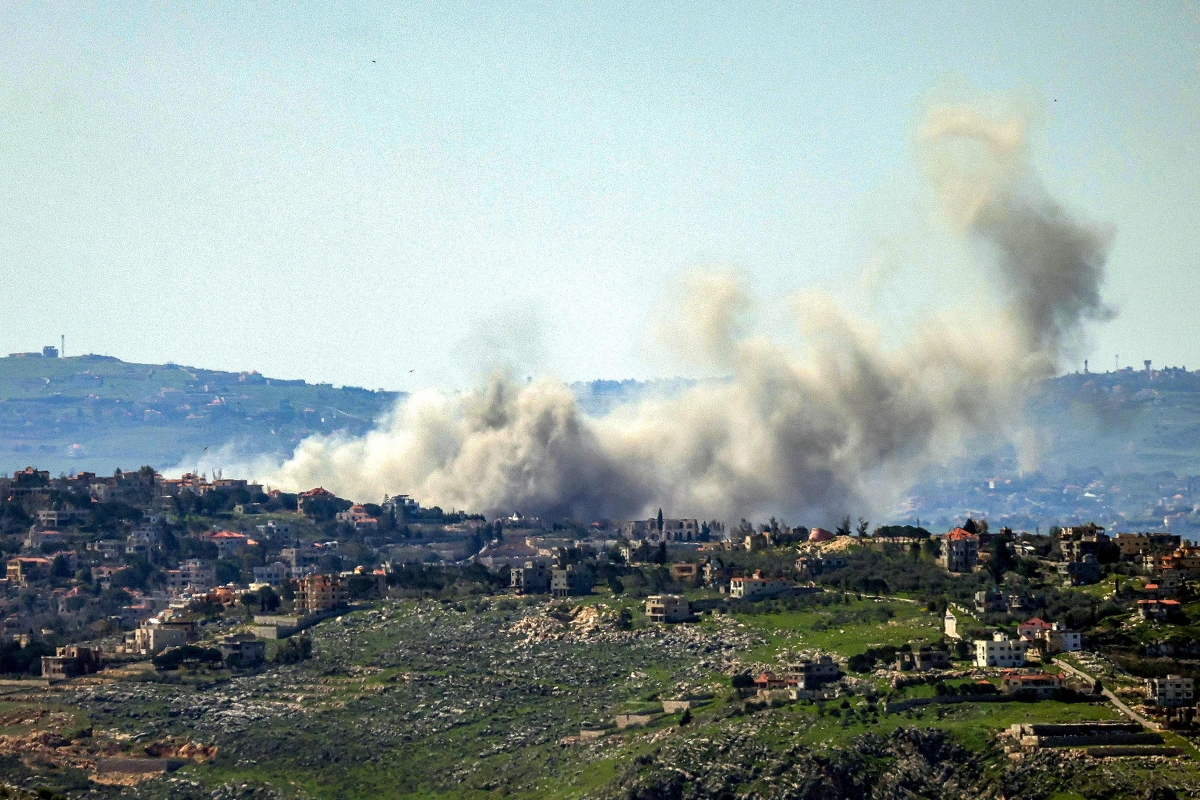
President Joseph Aoun launched an initiative to halt Israeli attacks and disarm Hezbollah, but it faces opposition from Israel and the United States.
Translated by Alqyas from Al-Rai — Original source
In recent hours, the contours of an old-yet-new race have emerged between the increasingly volatile arena in Lebanon, which is heating up at an accelerating pace, and the tortoise-like diplomacy navigating a thorny path toward a framework for a final resolution. This resolution remains stuck between Israel’s objective of ensuring it brings an “end” to Hezbollah and the party’s insistence that no discussion can begin before halting the primary confrontation with Iran and implementing the ramifications of the ceasefire agreement (November 27, 2024), according to Hezbollah’s interpretation. This interpretation has, over the past 15 months, sustained the “battle between wars,” characterized by a race to determine which side moves first: withdrawing weapons or withdrawing from the occupied points in southern Lebanon and their extensions.
The emergence of the Lebanese state as the engine of the diplomatic track, through the Four Points initiative launched by President Joseph Aoun on Monday during a virtual meeting organized by European Council President António Costa and European Commission President Ursula von der Leyen, attended by several regional leaders, represents a significant turning point. This is especially true given what it reflects: the political leadership’s awareness of the risks associated with leaving the country as prey to a fire consuming it for the sake of the Iranian regime’s calculations, amid fears of drawing in more fuses through Syria, given indications of attempts to lure it into the “most violent earthquake line” in the region via the Lebanese fault line.
Aoun’s initiative contained a set of contradictions in its content as well as in its governing framework, which carried an unprecedented attack on “Hezbollah.” This reflected a rupture between the official Lebanese state and the party, whose military wing has been declared illegal and banned since March 2, under a government order requiring it to surrender its weapons, albeit under the umbrella of a plan devised by the Lebanese Army.
The initiative stipulated “establishing a complete truce with a halt to all Israeli land, air, and naval attacks on Lebanon,” “expediting the provision of necessary logistical support to the Lebanese armed forces,” and “requiring these forces to immediately take control of the areas of recent tension, confiscate all weapons from them, and disarm Hezbollah, along with its arms caches and warehouses, based on available information and data.” It further stated that “simultaneously, Lebanon and Israel will begin direct negotiations under international sponsorship to reach the implementation of details regarding all the aforementioned.”
The presentation of the initiative was based on a highly advanced position by Aoun, who considered that Hezbollah’s launch of missiles on northern Israel on the morning of March 2 “was an ambush set for Lebanon and its armed forces, and a provocation to draw the Israeli army into penetrating the country.” He asserted that “those who launched the missiles wanted the fall of the Lebanese state for the sake of the Iranian regime’s calculations, and we have thwarted this so far.” He added that one of the objectives of what occurred was “for the armed group itself, under a populist campaign under a dubious banner, to highlight the state’s inability to protect its people, thereby returning to its misleading slogans claiming that its weapons, which are outside state control and outside Lebanese consensus, are legitimate and necessary.”
Despite the importance of this most severe attack by the President of the Republic on “Hezbollah” and its “deep” objectives of provoking Israel today as it did yesterday, which appears to cut the last “threads” between the state and the party, it was not possible to foresee the “impact” of Aoun’s initiative on the course of the war:
- First, in light of indications that Israel believes it still has the objective of expanding the buffer zone in southern Lebanon, and perhaps penetrating the Bekaa Valley to carry out special operations against ballistic missile and drone facilities before sitting at a negotiating table where it will hold the upper hand based on battlefield results. This comes amid signals in Israeli and American media that the military campaign against Hezbollah carries an expiration date extending beyond the war with Iran, which could be reinforced by President Donald Trump at some point under the banner that strategic objectives have been achieved, thereby eliminating Israel’s “need” for measures to ensure the “eradication” of what it considers an existential threat posed by the party, once and for all.
- Second, because in Washington there is a climate of reluctance to accept anything issued by official Lebanon, given more than a year of experience with an opportunity that the United States believes was granted to the state to fulfill its commitments under the November 27 agreement, as well as its obligations under resolutions starting from August 5 last year, regarding the withdrawal of Hezbollah’s weapons. Lebanon’s performance has been characterized by hesitation and fear of civil war, which makes it not attach real weight to any negotiation initiative, as long as Hezbollah refuses to hand over its weapons and the Lebanese Army opposes any confrontation with it, preferring the implementation of a ban on its military wing within a framework of “coordination” that entails “waiting” for the “prohibited” entity to agree to dismantle itself.
- Third, because Aoun’s initiative, which came according to an “A, B, C, D” sequence, prompted scrutiny over whether its items were in the context of prioritizing from 1 to 4, meaning that Israel stops the war first completely, and the army is armed by friendly countries second, so that it can then proceed to disarm Hezbollah. Or whether the phrase “simultaneously, Lebanon and Israel begin direct negotiations under international sponsorship to reach the implementation of details of all the above” means there is a single basket. It is worth noting that political circles stopped at the use of the Lebanese President’s expression “disarmament” and his emphasis on “the clear decision with no return, which mandates banning any military or security activity by Hezbollah. This is what we want to implement clearly and decisively.”
At a time when the visit of the US Ambassador in Beirut, Michel Issa, to Parliament Speaker Nabih Berri emerged, appearing as an attempt to gauge his stance and where Hezbollah stands regarding Aoun’s initiative, a set of signals intersected indicating that the diplomatic path remains distant, the most prominent of which:
- Was its treatment by Hezbollah through an evening statement by the head of its parliamentary bloc, Muhammad Raad, who declared, “Lebanon today is not faced with a choice between war and peace as some repeat and claim, but rather it is faced with a choice between war and surrender to the humiliating conditions that the enemy wants to impose on the government, which knows this and seeks it, and on the entire country and its people. And we in the resistance have no option before us all but to rely on God and defend our existence, whatever the costs.”
He added, “Our goal is clear and specific: to expel the enemy from our occupied land, stop its aggression and violations by air, sea, and land, free the prisoners and return them to their families, stop targeting our people and security, and not obstruct the return of families to their villages, and rebuild their towns and homes.” He accused the government of responding to “the old Israeli demand and dream that mandates disarming the resistance,” in order to justify its glaring inability to repel Israeli aggression after the November 27 agreement.
- It was revealed that the call between French President Emmanuel Macron, who is acting as a lever for the diplomatic process at the request and with the approval of Lebanon, and Benjamin Netanyahu on Monday was stormy, before Israeli Ambassador to France Joshua Zarca announced that “the Lebanese government is still unable to fulfill its commitments and fears the country sliding into civil war, and we see no indications that the Lebanese Army is proceeding with disarming Hezbollah,” adding that he had no information regarding an Israeli decision to negotiate with the Beirut government to end the war.
- Axios reported, citing sources, that Israel rejected a Lebanese proposal for direct negotiations following the resumption of the war in Lebanon with Hezbollah. The Lebanese government had proposed holding direct negotiations at the ministerial level in Cyprus, facilitated by the Trump administration, with the aim of ending the war and reaching a peace agreement. It noted that the American and Israeli responses were cold and marked by deep skepticism.
According to Axios, the Lebanese government contacted the US Ambassador to Turkey, Tom Barrack, last week, who replied, “Enough nonsense. Without disarming Hezbollah, there is no point in discussing.”
The report added that the Lebanese government feels deeply frustrated over the Trump administration’s largely ignoring it, noting that there is no interest from the Trump administration in engaging with Lebanon. A former US official stated, “No one in Washington is answering their calls.”
- Channel 12 Israeli reported, citing American and Israeli sources, that the Israeli government completely rejected the initiative, considering that “the time has passed” and that “the current focus is on dismantling Hezbollah’s capabilities.”
Meanwhile, amid continued Israeli destructive raids in the south that extended to Sidon, and reminders to residents of Beirut’s southern suburbs to stay out (“and he who warns is excused”), as well as continued incursions along the border via the 91st and 36th Brigades, in response to Hezbollah launching missiles targeting the Tel Aviv area and reaching distances of approximately 150 kilometers, the Operations Department of the Syrian Arab Army announced that “artillery shells fell on Syrian territory near the town of Sarqaya west of Damascus, launched from Lebanese territory.”
It indicated that “Hezbollah” was “the one who fired the shells toward Syrian Arab Army points near Sarqaya,” noting the arrival of reinforcements for the group “at the Syrian-Lebanese border,” and that it is “monitoring and assessing the situation,” adding that “contact is being maintained with the Lebanese Army, and appropriate options are being studied to take necessary action.”
