Oil Touches $120 as European Gas Futures Surge 30 Percent
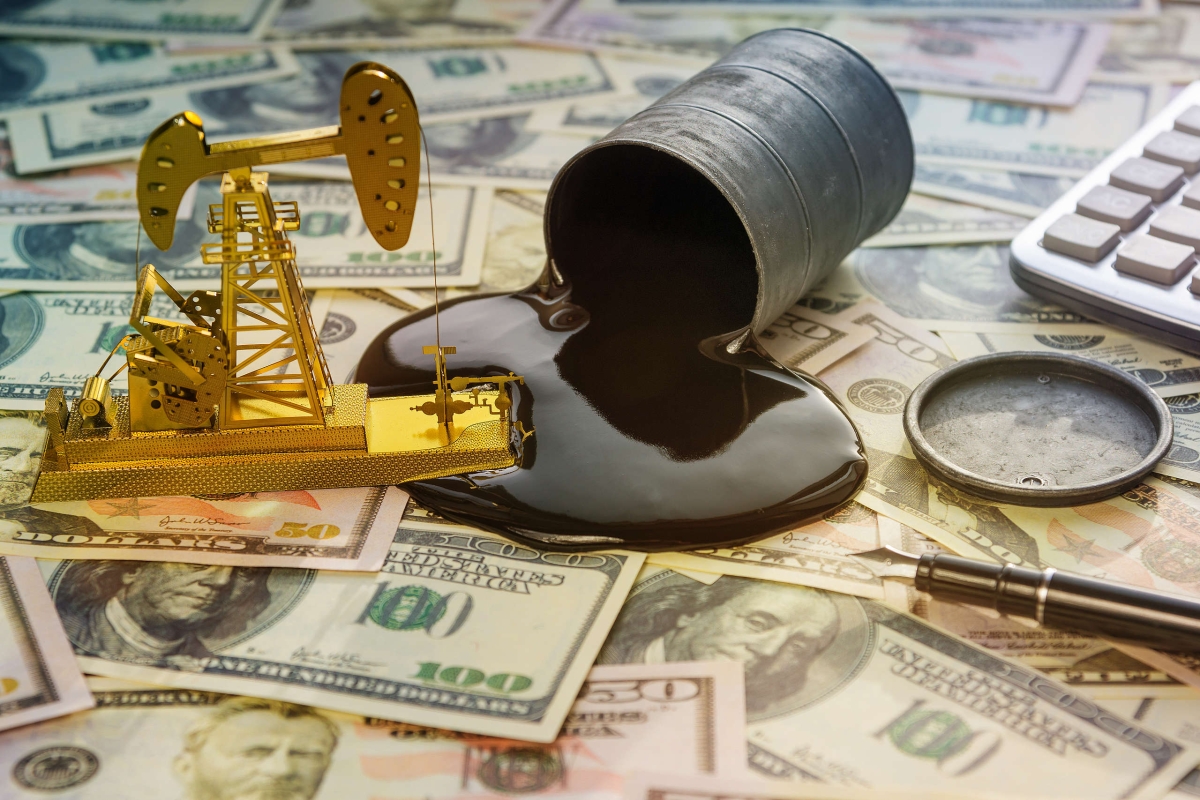
Oil and gas prices rise due to military escalation in the Middle East
Translated by Alqyas from Al-Rai — Original source
The military escalation in the Middle East has caused widespread disruption in global energy markets, pushing oil prices up by 30 percent on the ninth day of the war to historic levels exceeding $115 per barrel, amid fears of supply disruptions through the Strait of Hormuz. West Texas Intermediate crude rose to $118.21 per barrel, while Brent crude surged 27.5 percent to $118.22 before retreating to $105.
Bahrain’s major energy company, BAPCO Energies, declared force majeure on operations affected by the war, while Aramco reported a production cut at two fields.
The unprecedented price surge has alarmed world leaders. In response, President Donald Trump stated on Truth Social that “oil prices in the short term will drop quickly once the Iranian nuclear threat is eliminated, and it is a very small price to pay for the security and safety of the United States and the world.”
U.S. Energy Secretary Chris Wright said global energy supplies are sufficient and that the rise in oil prices reflects a fear premium that will not last. In an interview with CNN, he emphasized that the war would only cause temporary disruptions in markets and maritime navigation, with the duration lasting at most weeks, not months.
As the war in the Middle East continues, destabilizing energy markets and disrupting seaborne supply shipments, natural gas prices in Europe surged, with benchmark futures jumping by up to 30 percent, recording their largest weekly gains since the energy crisis. U.S. natural gas futures also rose to their highest level in a month.
Energy buyers in Asia, seeking to secure supplies as the Middle East war enters its second week, are outbidding competitors to attract fuel shipments originally destined for other regions.
Global stock markets fell sharply amid the ongoing war, prompting investors to flock to the U.S. dollar as a safe haven.
The benchmark Asian stock index dropped by 5.6 percent, its largest decline since April. Japan’s benchmark Nikkei 225 fell by more than 7 percent, while other Asian markets also declined. South Korea’s KOSPI index dropped 7.4 percent to 516.83 points, and stocks in Australia and New Zealand fell by more than 3 percent.
Hong Kong’s Hang Seng index lost 3.1 percent, Shanghai’s Composite Index fell 1.7 percent, and futures for the S&P 500 and Dow Jones Industrial Average dropped by more than 2 percent.
Gold prices fell sharply, influenced by the rising dollar and inflation concerns amid higher oil prices. Gold dropped by 3 percent to around $5,015 per ounce, marking its first weekly decline in over a month. Silver fell 1.7 percent to $83.11, platinum declined 2.2 percent, and palladium lost 0.8 percent.
As oil markets face the prospect of tighter production constraints, the U.S. dollar rose against most major currencies as a safe haven, with the Bloomberg Dollar Spot Index increasing by up to 0.7 percent.
The escalating crisis in the Middle East has fundamentally altered expectations for global central banks, as a massive supply shock has forced a difficult trade-off between supporting growth and combating inflation. Markets now expect the European Central Bank to raise interest rates twice this year, up from earlier forecasts of a single 25-basis-point hike, while the sharp rise in oil and gas prices has fueled further concerns about inflationary pressures in the eurozone.
In the UK, data suggest a 50 percent probability that the Bank of England will raise interest rates, according to Bloomberg, marking a sharp reversal from pre-war expectations of two rate cuts this year. For central banks in emerging Asian economies, cutting interest rates has become a risky bet, not only due to additional price pressures stemming from higher fuel costs, but also because of the risk of triggering capital outflows amid deteriorating trade terms with the United States.
