Can the US-Israeli coalition establish a new system in Iran?
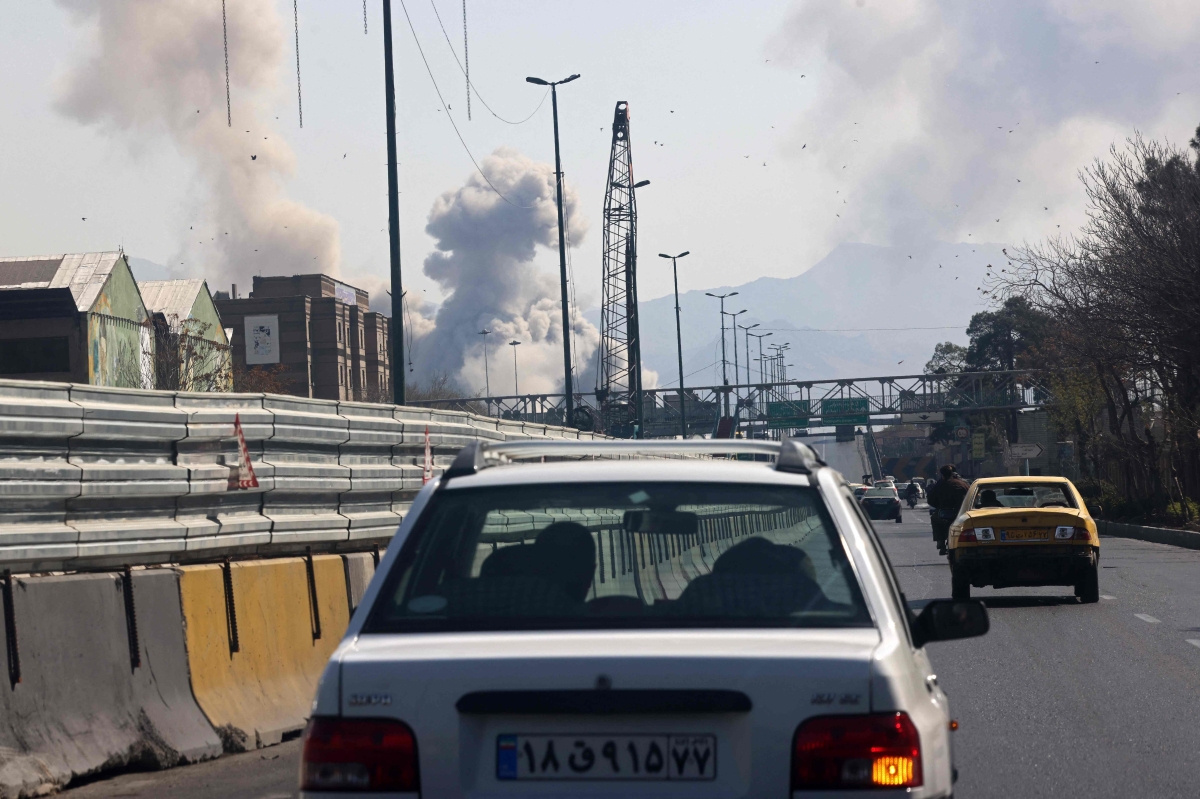
The war against Iran raises fears of widespread chaos and global economic collapse
Translated by Alqyas from Al-Rai — Original source
The United States and Israel are waging a comprehensive war against Iran following the assassination of Supreme Leader Ayatollah Ali Khamenei and senior commanders of the Islamic Revolutionary Guard Corps. As air raid sirens blare across Israeli cities and oil tankers ignite in the Strait of Hormuz, Israeli experts and analysts are struggling to decipher the mystery of the coming days and how to topple a deeply entrenched theocratic regime. Will global energy markets be scorched by the fire of this confrontation?
Amid the thick fog of war, analysts agree that the opening strike was stunning, but they sharply disagree on whether this military tactical success can be translated into strategic change in Tehran.
A review of most articles and analyses published in Israeli newspapers, along with assessments on official Israeli channels, reveals expectations ranging from cautious optimism about seizing a decisive “Napoleonic moment” to bitter academic warnings about repeating the disasters of the past in Iraq and Afghanistan.
In the newspaper Ma’ariv, analyst Oded Eiran placed the critical moment under the microscope, explaining that the intense aerial bombardment targeting the “authoritarian systems of the Islamic Revolutionary Guard” is not an end in itself, but a means to create a “critical mass” of strikes.
He warned that missing this uniqueness, when widespread chaos erupts, would constitute a strategic disaster, citing Napoleon, who said, “In war, there is only one successful moment – the genius exploits it.”
According to Eiran, the absence of a clear, pre-trained plan by Western armies to take charge during the transitional phase could allow pro-Guard forces to regain control, turning a potential victory into a long, unwanted war of attrition.
In contrast, the scene in the newspaper Haaretz appears darker. In an article by Ofer Aderet, a group of historians and Iranian affairs academics raise the highest warning flag. Professor Meir Litvak, head of the Iran Studies Center at Tel Aviv University, stated, “Bombs alone do not topple regimes. We have no prior experience in this regard; we need internal fractures.”
Professor Benny Miller from the University of Haifa pointed out that the historical record of such operations is “not very good,” citing the disaster of the 2003 Iraq invasion, which led to the rise of Iranian influence itself.
Miller added, “Perhaps the intentions were good... but it did not work,” warning that the chaos following the collapse might open the “gates of hell” and lead to civil war, recalling that a dictator sometimes holds the state in an iron grip that prevents disintegration.
Deep down, war calculations intertwine with domestic political calculations in both Washington and Tel Aviv. Amos Gilad, head of the Institute for Policy and Strategy (IPS), noted that analysts point out that President Donald Trump launched the operation “without broad popular support (only 27 percent according to the latest poll), and without congressional approval.”
Analysts further emphasize that Trump fears being drawn into a long-term campaign before the midterm elections in November next year, and that rising oil prices hitting American consumers might push him to seek a quick end to the campaign, within just four to five weeks.
As for Israel, internal divisions are strongly surfacing. Writer Yossi Klein, in an article titled “When Will You Understand That This Is Not Our War?” in Haaretz, added, “Even war does not strip a swindler of his deceit, nor does it turn the corrupt Netanyahu into a good person.” He questioned, “Who should we believe? Certainly not the parliamentary oversight body in a state whose parliament is castrated.”
This dissenting voice, though marginal in wartime, reflects the fragility of the home front and the lack of trust that could undermine resilience in a protracted conflict.
In a related development, Gideon Levy launched a scathing attack in Haaretz on the prevailing media discourse, describing it as “stupidity and ignorance” in times of war. He questions how the media have turned into a “choir” glorifying war without substantive debate, adding, “When did you decide that wartime is a time for stupidity?”
Perhaps the hottest arena outside the battlefield is the Strait of Hormuz, the narrow waterway through which one-fifth of global oil supplies pass. In a detailed analysis in Israel Hayom, Dudi Kogan describes the catastrophe that would befall the global economy if Iran carried out its old-new threat and closed the strait.
Laron explains that what is at stake is not merely a temporary crisis, but a sudden withdrawal of 20 percent of the market at once—an event that has not occurred even during the major oil crises of the 20th century. He warns of a domino effect: “The choke point is closed, ships cannot exit, there is no point in continuing production... within a week or two we will enter a situation of physical shortage.” He stresses that there is no alternative, noting that while it was possible to bypass the Bab el-Mandeb strait via Africa, closing Hormuz is “turning off the tap... the oxygen tap for the global economy.”
Maritime analyst Tomer Raanan adds that oil prices have already surged, warning that breaking the $100-per-barrel threshold would be a “yelling event,” reaching $150 in a “disaster scenario.”
Analysts agree that Iran is experiencing its weakest moment since the Islamic Revolution 47 years ago, and the axis of partners it built is beginning to unravel.
Nevertheless, the biggest question remains: Will the US-Israeli coalition seize the “Napoleonic moment” discussed by Tira, or will history repeat itself with a disastrous failure, as Miller and Ram warn? Between Trump’s desire for a quick victory before the elections, economic concerns, and the Israeli opposition’s insistence that the war is a “personal adventure,” the fate of the region hangs on the militaries’ ability to control the moments of chaos that will follow military strikes.
Only the coming days will reveal whether “Roar of the Lion” marks the beginning of a new order in the region, or merely another chapter in a long saga of destruction and instability.
