New Nationality Law: Safeguarding the National Fabric and Preserving Human Rights
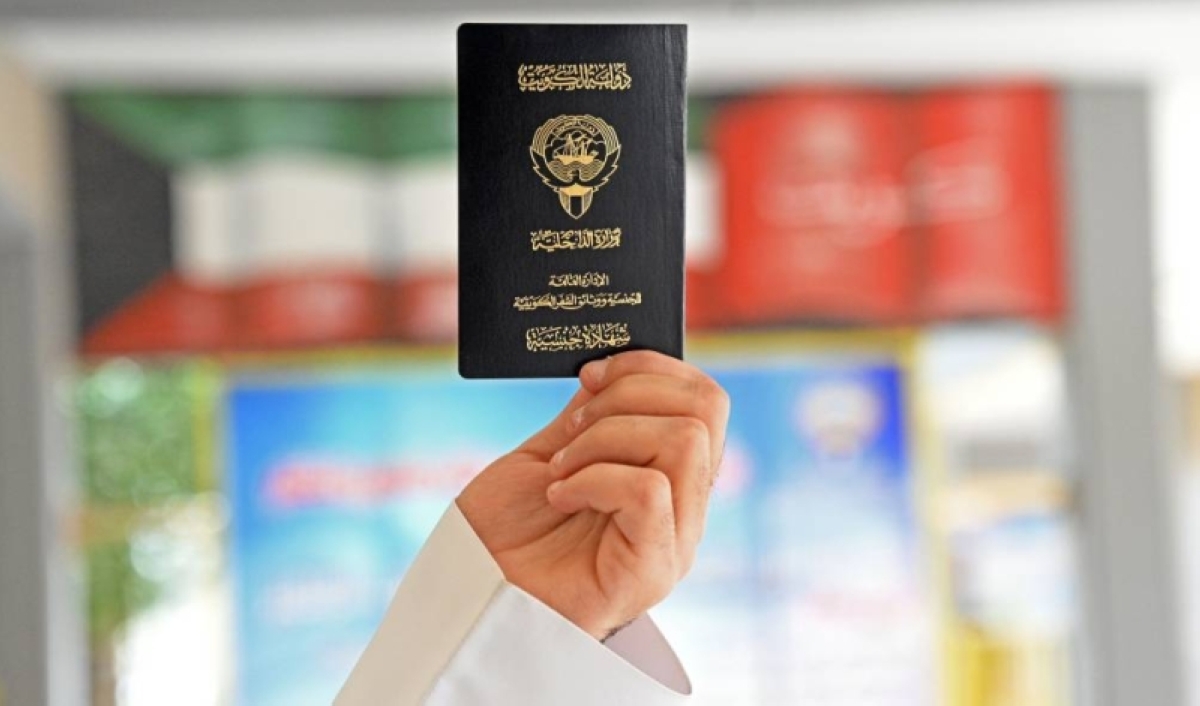
The Cabinet has approved a nationality law that preserves identity and supports urban development
Translated by Alqyas from Al-Rai — Original source
- The draft decree aims to preserve national identity, strengthen belonging, and safeguard legal sovereignty.
- Five tasks for the Urban Planning Policies Committee and the Urban Master Plan:
1. Formulating general policy regarding the utilization of public lands.
2. Determining executive priorities for projects and urban plans.
3. Deciding on proposals for utilizing public lands for development projects.
4. Deciding on proposals to establish regulatory entities.
5. Proposing regulatory bylaws and utilization fees.
The Council of Ministers approved a draft decree-law amending certain provisions of Amir’s Decree-Law No. 15 of 1959 on Kuwaiti Nationality. This move stems from the importance of regulating nationality as one of the state’s sovereign pillars, and from the commitment to preserving the country’s national identity, enhancing national belonging, and maintaining legal sovereignty in all nationality-related matters.
The draft decree-law aims to update the legislative framework governing Kuwaiti nationality, thereby achieving a balance between protecting the national fabric and considering humanitarian and social factors, while ensuring the state exercises its sovereign powers to grant, lose, withdraw, or revoke nationality within clear boundaries and robust legal regulations.
During its weekly meeting last Tuesday at Bayan Palace, chaired by His Highness the Prime Minister, Sheikh Ahmad Abdullah Al-Ahmad Al-Sabah, the Council reviewed a visual presentation by the Minister of State for Municipal Affairs and Minister of State for Housing, Abdul Latif Al-Mashari, regarding the establishment of the Urban Planning Policies Committee and the Urban Master Plan for the State of Kuwait. The committee aims to support the national economy through the optimal utilization of land and to bolster government decisions on development projects.
Al-Mashari clarified that the committee’s tasks include formulating the state’s general policy on the utilization of public lands by activating existing tools, such as the master plan, guidance, and coordination among relevant authorities regarding legislation and decisions governing land use. Other tasks include determining executive priorities for projects and urban plans, deciding on proposals for utilizing public lands for development projects, ruling on proposals to establish related regulatory entities, and proposing regulatory bylaws and utilization fees.
He noted a proposal that the Urban Planning Policies Committee and the Urban Master Plan include, within the Council of Ministers, the following ministers: the Minister of Finance, the Minister of State for Municipal Affairs and Minister of State for Housing, the Minister of Electricity, Water, and Renewable Energy, the Minister of Commerce and Industry, the Minister of Public Works, the Minister of State for Development and Sustainability, and the Minister of State for Economic Affairs and Investment. Additionally, representatives from the Ministry of Oil and the Ministry of Defense will be included.
Driven by the government’s commitment to enhancing its objectives and unifying its vision to achieve state restructuring by merging and abolishing certain government entities, as well as monitoring the implementation of development projects in the country, the Council of Ministers has tasked Minister of State for Economic Affairs and Investment, Abdulaziz Al-Marzouq, in coordination with the relevant ministers and the General Secretariat of the Council of Ministers, to prepare a comprehensive action plan. This plan will ensure the follow-up of government entities’ efforts in this regard, financial reforms, the establishment of integrity rules and governance principles, and the development of digital government services. These measures aim to ensure the swift completion of such projects, with the Minister submitting a monthly report to the Council of Ministers detailing the executive status of this plan.
The Cabinet reviewed the recommendations contained in the minutes of the meeting of the Ministerial Committee for Legal Affairs regarding draft decrees-laws for several agreements and memoranda of understanding between the State of Kuwait and sister and friendly countries, as well as international organizations. The Cabinet approved these documents and decided to submit them to His Highness the Amir.
The Cabinet also reviewed the minutes of the meeting of the Ministerial Committee for Public Services, which included several items, most notably a report by the Green Urban Development Initiatives Committee on initiatives and donations provided by certain individuals, oil and private companies, and consumer cooperative societies. These initiatives pertain to ornamental plantings along major highways and streets, the installation of a walking path equipped with fitness devices in some residential areas, and the painting of bridges on major highways and pedestrian bridges, with the aim of enhancing the country’s aesthetic appeal.
The Cabinet approved these initiatives and donations, expressing its gratitude and appreciation to the individuals, oil and private companies, and consumer cooperative societies for their generous contributions, which support the State’s efforts to develop ornamental plantings and highlight the country’s aesthetic features. It commended the tangible efforts made by the Governor of Al-Ahmadi, who chairs the Green Urban Development Initiatives Committee, Sheikh Hamoud Jaber Al-Ahmad Al-Sabah, and the committee members, in fostering a spirit of initiative and social responsibility, and encouraging institutions and individuals to contribute to beautifying Kuwait and showcasing its civilized character.
