Trump Leans Toward 'Limited Initial Strike'... Tehran Warns
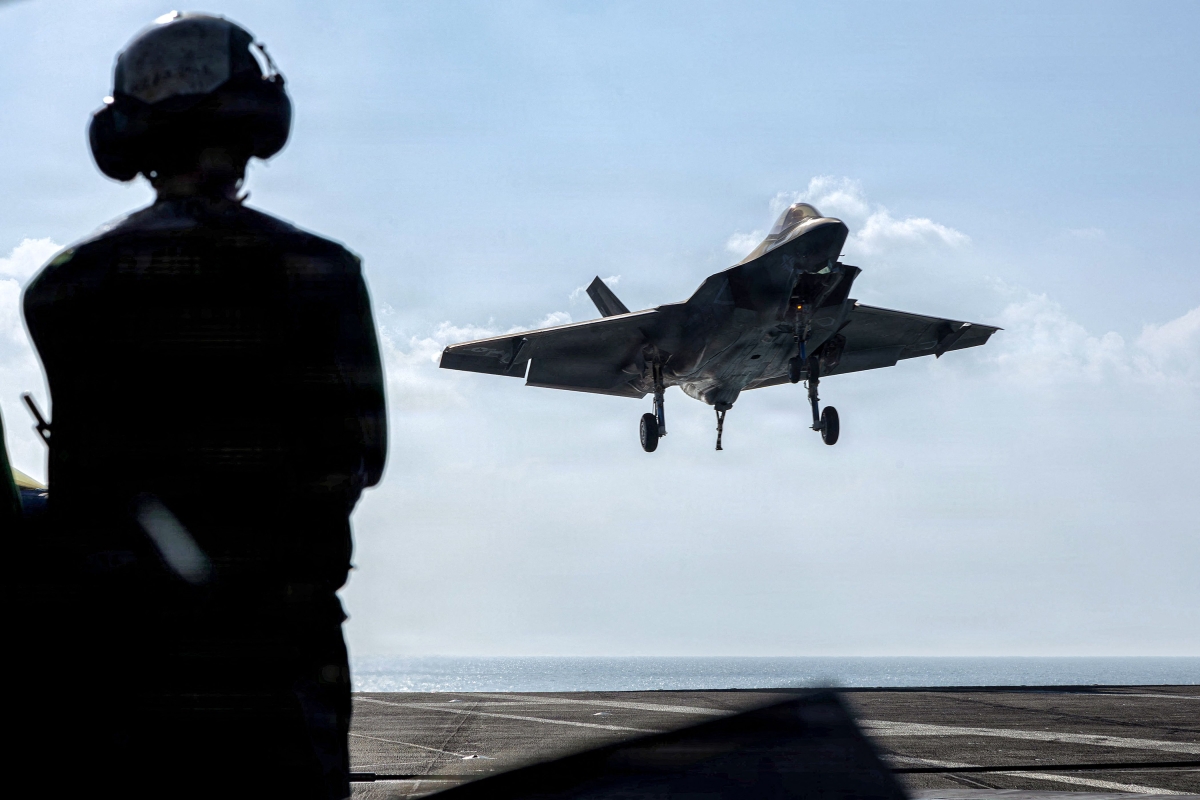
Trump is considering a limited air strike to push Iran to abandon its nuclear program, while Tehran warns that any attack would be considered an act of aggression.
Translated by Alqyas from Al-Rai — Original source
President Donald Trump informed his advisers that if diplomatic efforts or a limited initial U.S. strike fail to compel Iran to abandon its nuclear program, he will consider launching a broader attack in the coming months that could target the removal of the country’s leaders, according to people familiar with internal administration discussions who spoke with The New York Times.
The United States has deployed forces in the Middle East to intensify pressure on Iran and push it toward reaching an agreement in negotiations resuming on Thursday. Meanwhile, Iran has warned that it would regard any U.S. attack, even a limited one, as an act of aggression warranting a response.
In Washington, advisers confirmed that no final decisions have been made yet, but the president is inclined to carry out an initial strike in the coming days aimed at demonstrating to Iran’s leaders that they must prepare to agree to give up the ability to build a nuclear weapon.
Trump told his advisers that if those steps fail to persuade Tehran to meet his demands, he will keep open the possibility of launching a military attack later this year, one aimed at helping to overthrow Supreme Leader Ayatollah Ali Khamenei.
Doubts persist, even within the administration, about whether this goal can be achieved through air strikes alone. Behind the scenes, a new proposal from both sides is being considered as a potential way to avoid military conflict: a highly limited nuclear enrichment program that Iran could implement exclusively for research and medical purposes.
It remains unclear whether either side would agree, but the last-minute proposal comes as two U.S. aircraft carrier groups, along with dozens of fighter jets, bombers, and refueling tankers, are now positioned within range to strike Iran.
Trump discussed plans for strikes on Iran in the White House Situation Room last Wednesday. The meeting included Vice President J.D. Vance, Secretary of State Marco Rubio, Chairman of the Joint Chiefs of Staff General Dan Caine, Central Intelligence Agency Director John Ratcliffe, and White House Chief of Staff Susie Wiles.
During the meeting, the president pressed Caine and Ratcliffe to share their views on the broader strategy, though neither typically advocates for a specific political stance. Caine discussed what the military could do operationally, while Ratcliffe preferred to outline the current situation on the ground and the potential outcomes of proposed operations.
During last month’s operational discussions regarding the arrest of Venezuelan President Nicolas Maduro, Caine told Trump that the likelihood of success was high. However, the general was unable to offer similar assurances in the Iran discussions, largely because the objective there is far more difficult.
Vance, who has long called for greater restraint in foreign military action, did not oppose a strike but pressed Caine and Ratcliffe to present their views on the options under consideration, urging a broader discussion of the risks and complexities involved in executing a strike.
Earlier, the United States had considered options that included deploying special operations forces on the ground to carry out raids to destroy Iranian nuclear or missile facilities, including deeply buried production and enrichment sites beyond the range of conventional U.S. munitions.
However, any such operation would be extremely dangerous, requiring special operations forces to remain on the ground for a much longer period than in the Maduro operation. Several U.S. officials said that plans for a commando-style operation have currently been set aside.
Officials in the army, navy, and air force have also raised concerns about the impact of a prolonged war, or even merely remaining on standby for one, on the readiness of warships, Patriot missile systems, and transport and surveillance aircraft.
Even before the Iranians presented what appeared to be their final offer, both sides seemed to be hardening their positions. US Special Envoy Steve Witkoff told Fox News that the “clear directive” he received from Donald Trump and Jared Kushner was that the only acceptable outcome for any agreement would be Tehran’s move to “zero enrichment” of nuclear materials.
For his part, Iranian Foreign Minister Abbas Araghchi insisted on his country’s right to enrich uranium. He said, “As a sovereign nation, we have every right to decide for ourselves” in this regard.
However, in an interview with the US CBS network, he added, “I believe we still have a good chance of reaching a diplomatic solution that benefits everyone,” noting that negotiators were “working on elements of an agreement and a draft text” following two rounds of talks this month.
He stressed that “any country that responds with force to aggression, based on its inherent right to legitimate self-defense, is doing what we will do.”
He also denied reports of a temporary deal with the Americans, stating that such reports were “baseless,” and affirmed that Tehran was continuing on the diplomatic track, adding that “the goal of negotiations should not be to impose demands on the other side.”
An Iranian official had hinted on Sunday that Tehran had made new concessions regarding its nuclear program in an effort to reach an agreement, provided that the deal included the lifting of economic sanctions and recognition of its right to “enrich uranium” for peaceful purposes, according to Reuters.
Spokesman Ebrahim Raisi said on the X platform that “the talks scheduled for next Thursday will be a test for Trump, and will determine whether US soldiers will go to hell or return to America.”
