Shaping a Human-Centric Future for Artificial Intelligence - AI Impact Summit 2026
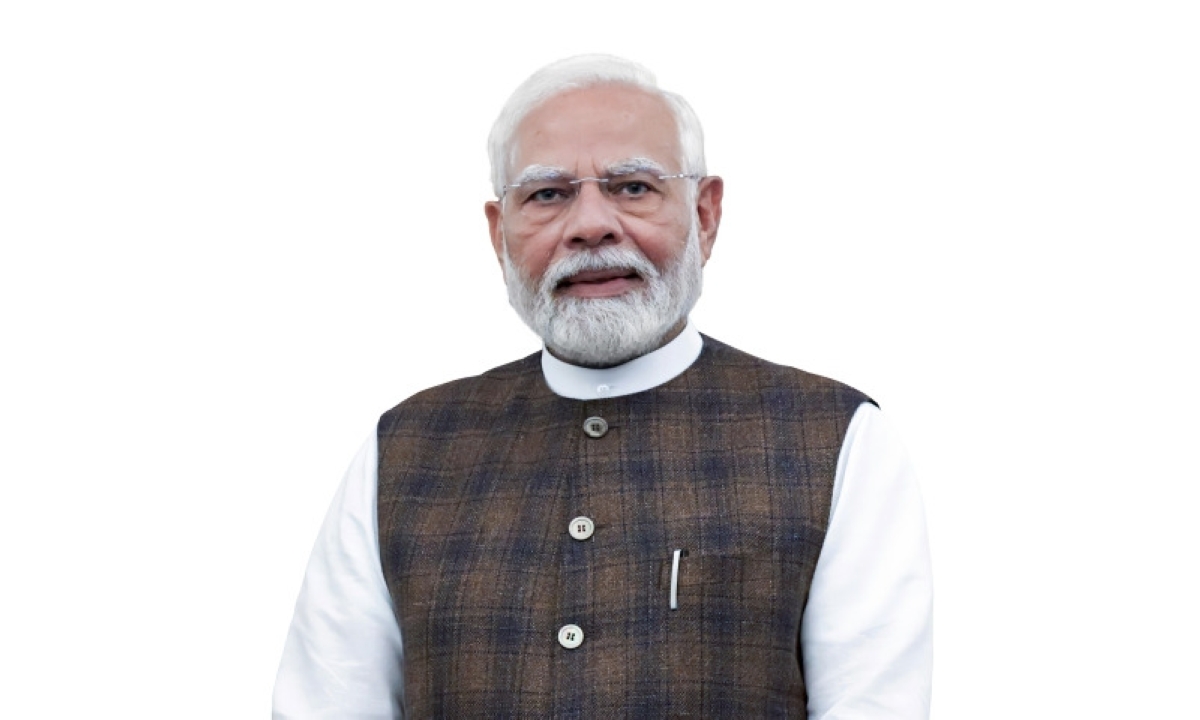
India highlights a human-centric AI vision at the 2026 Summit.
Translated by Alqyas from Al-Rai — Original source
In a pivotal moment in human history, the world gathered at the 2026 AI Impact Summit in New Delhi. For us in India, it was a moment of immense pride and joy to welcome heads of state and government, delegates, and innovators from around the globe.
India brings momentum and vitality to everything it undertakes, and this summit was no exception. Representatives from more than 100 countries convened, and innovators showcased the latest AI products and services. Thousands of young people were seen in the exhibition halls, asking questions and envisioning possibilities. Their curiosity made this the largest and most democratic AI summit in the world. I see this moment as highly significant for India’s development trajectory, as a genuine mass movement has taken off toward AI innovation and adoption.
Human history has witnessed numerous technological transformations that altered the course of civilization, and AI ranks among the most important of these, alongside great discoveries such as fire, writing, electricity, and the internet. However, with AI, changes that once took decades can now occur within weeks, affecting the entire planet.
AI makes machines intelligent, but it simultaneously amplifies human intent. It is essential to make AI human-centric rather than machine-centric. At this summit, we placed human well-being at the core of the global dialogue on AI, guided by the principle of “well-being for all, happiness for all.”
I have always believed that technology should serve people, not the other way around. Whether through digital payments via the Unified Payments Interface (UPI) or the COVID-19 vaccine, we ensured that public digital infrastructure reached everyone, without exception. I sensed the same spirit at the summit and in the work of our innovators in areas such as agriculture, security, assisting persons with disabilities, and providing tools for multilingual communities.
There are already examples of AI’s enabling potential in India. Recently, India’s Amul dairy cooperative launched “Sarlaben,” an AI-powered digital assistant that provides real-time guidance to 3.6 million dairy farmers, mostly women, on livestock health and productivity in their native languages. Similarly, the AI-based platform “Bharat Vistar” provides multilingual inputs to farmers, enabling them to access information on everything from weather to market prices.
Humans must not be reduced to mere data points or raw material for machines. Instead, AI should become a tool for global good, opening new horizons for progress in the Global South. To translate this vision into reality, India has introduced the “Manav” framework for human-centric AI governance.
The “Manav” project, meaning “Human,” offers principles that embed AI within 21st-century human values.
Trust is the foundation upon which the future of AI rests. As content from generative systems floods the world, democratic societies face risks from deepfakes and misinformation. Just as food products carry nutritional labels, digital content should carry verification labels. I urge the international community to collaborate on establishing common standards for watermarks and source verification. India has already taken a step in this direction by legally requiring clear labeling of AI-generated content.
The well-being of our children is a matter of profound concern to us. We must build artificial intelligence systems with safeguards that encourage responsible, family-guided participation, reflecting the same care we devote to education systems worldwide.
Technology reaches its full potential when it is shared, rather than hoarded as a strategic asset. Open platforms can help millions of young people contribute to making technology safer and more human-centric. This collective intelligence is humanity’s greatest strength. AI must evolve into a global public good.
We are entering an era in which humans and intelligent systems collaborate in creativity, work, and development. Entirely new professions will emerge. When the Internet began, no one could have imagined its vast potential. It ultimately created a tremendous number of new opportunities, and AI will do the same.
I am confident that our empowered youth will be the true driving force of the AI era. We encourage skill acquisition, reskilling, and lifelong learning by managing some of the world’s largest and most diverse training programs.
India has one of the world’s largest youth demographics, as well as exceptional technical talent. Thanks to our energy capabilities and policy clarity, we are uniquely positioned to harness the full potential of AI. At this summit, I was proud to see Indian companies launching locally developed AI models and applications, reflecting the technological depth of our young, innovative society.
To strengthen the growth of our AI ecosystem, we are building robust infrastructure. Under India’s AI Mission, we have deployed thousands of graphics processing units (GPUs) and are preparing to deploy more in the near future. By providing access to world-class computing power at highly affordable prices, even the smallest startups can become global players. Moreover, we have established a national AI repository, enabling universal access to datasets and AI models. From semiconductors and data infrastructure to promising startups and applied research, we are focusing on the entire value chain.
India’s diversity, democracy, and demographic dynamism provide the ideal environment for inclusive innovation. Solutions that succeed in India can serve humanity everywhere. Therefore, we invite the world: design and develop in India. Deliver to the world. Deliver to humanity.
