First Deputy: Freedom today is regulated, unlike the past... which was chaos
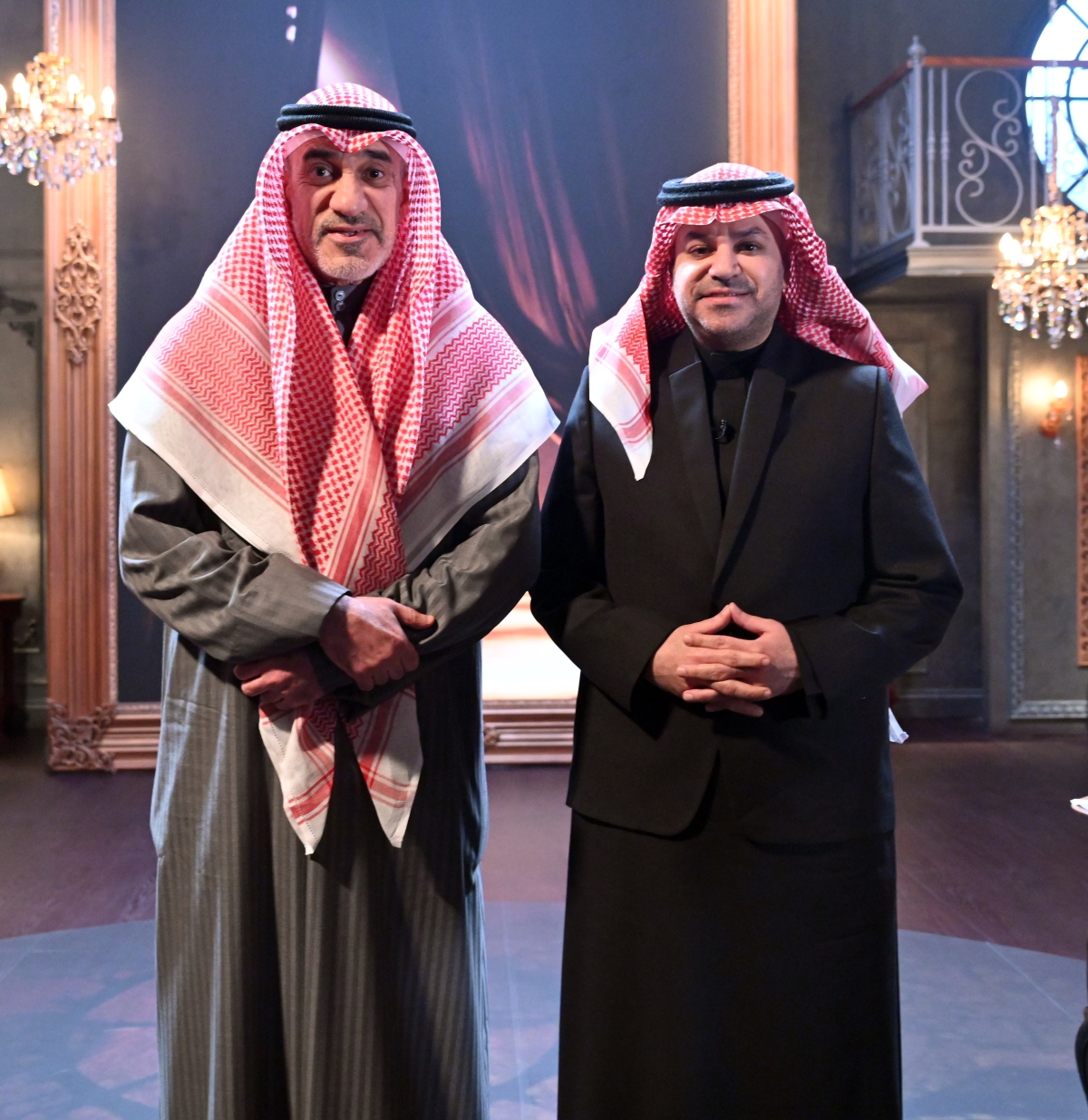
The First Deputy clarifies that freedom exists but is organized, emphasizing the fight against corruption and respect for boundaries, while outlining developments in Kuwaiti and Gulf prisons and laws
Translated by Alqyas from Al-Rai — Original source
The First Deputy Speaker, during an appearance on the program “Masrah al-Hayat,” responded to Al-Rai and the ROD platform to a question about the perception that the ceiling of criticism has lowered in Kuwait, despite the country having long been a model for press freedom with a broader margin than other nations. He said: “To be honest with you, freedom exists in Kuwait today, but it is regulated. When we first had freedom, there was chaos and behaviors that did not exist before. All countries in the world criticized Kuwait. There is freedom, with respect.”
He added: “Freedom exists today. Tell me, is there any newspaper that has been placed under censorship to prevent journalists from writing what they want? No. But people have begun to realize the chaos and indifference that existed before. Let’s just say things are now orderly, no more and no less.”
Al-Yousef stressed that “public opinion has been directed toward respecting people. You cannot insult everyone indiscriminately. You cannot insult countries with which we have relations—relations I would not necessarily call friendship, but brotherly ties and others. We will not allow anyone to cross the prescribed limits today, just as we ask neighboring countries—or any country—that their citizens do not target Kuwait. Likewise, we will not allow our citizens to target countries with which we have relations. We are working to understand each other, but we must respect one another.”
He continued: “We were raised with good morals. Perhaps I am older than you. In the 1960s, this was not what you experienced after the invasion, or let’s say in the 1990s, the 2000s, and the early 2020s. This is not regulated, disciplined, or representative of the Kuwaiti people. This forgery of citizenship, and the citizenship granted without justification, led to this chaos and lack of respect. Kuwaitis are raised with high morals and do not allow anyone to exceed the boundaries of permissible speech. But this forgery of citizenship and the granting of citizenship without justification led to the situation we were in. Thank God, that period has now ended.”
In response to a question about whether the changes and decisions underway in Kuwait might generate opposition, and whether there is concern about the growth of Kuwaiti opposition abroad, Al-Yousef said: “From my observation over the past two years, the opposition abroad does not exceed five or six individuals. Why do five or six people live abroad? They did not live abroad and become alienated unless they had problems and legal cases in Kuwait.” He added: “The second group consists of those residing illegally. Kuwaitis abroad do not exceed five or six individuals.” He went on: “The Prophet, peace be upon him, did not approve of everyone. Do you expect a person to live today without making mistakes? Do you expect him to live while everyone is satisfied with him? That is impossible. I am telling you that we are striving, and if we make mistakes, we acknowledge them and correct them.”
Al-Yousef clarified that “opposition has existed in Kuwait for a long time and exists in all Gulf countries. Bahrain has opponents, Saudi Arabia has opponents, the UAE has opponents, Qatar has opponents, and Oman has opponents. I meet regularly with interior ministers, and we all have opponents abroad. But do I pay attention to one percent or less of a country’s population to label them as opposition? I prefer to focus on the people living in Kuwait who are more important to me than those living abroad who have problems. Believe me, if they did not have problems, they would not live outside Kuwait.”
- May God prolong His Highness’s life. He said: “First, I will apply the law to my children, and then I will apply it to the people.”
- I have clear instructions: there is no door that remains open... There is no door through which you can achieve results with fugitives and those who remain at large.
Regarding the money laundering and celebrity file he discussed last year, and the existence of a “Ritz” but in a special sense, Al-Yousef said: “I believe all of Kuwait feels the clear anti-corruption drive, yet we still have our own ‘Ritz’! We do not have a Ritz hotel building inside Kuwait, but we have a central prison that houses many celebrities, and a large number of them have been summoned... We are currently opening their files, and our Financial Investigations Unit is operational—it is one of the best units working in Kuwait to uncover money laundering... If I tell you that we are discovering three, four, or five cases of money laundering per week, I am not exaggerating, and the amounts are substantial. A large portion of them are already in prison... So when you speak of twenty, thirty, forty, or even a hundred million in money laundering operations, they are all in prison—some are detained, and others have been sentenced.”
He added, “Corruption exists in Kuwait, including bribes given to government employees. Today, before the broadcast of this episode concludes, there will be two major corruption cases in Kuwait that are already in our possession. These cases are of concern to His Highness the Emir and are also a personal concern of mine. Unfortunately, we have discovered cases of bribery and misconduct involving employees of the state. However, we are currently in the investigative phase, but the crime is firmly established against them, by God’s grace.”
He pointed out that “since the reform machine began, corrupt individuals who know they are corrupt have fled Kuwait. I am not talking about one, two, or three people who have fled Kuwait; these are the ones leading such groups.” He continued, “They implicated people, bribed them, and ruined their reputations, and they are now living abroad. But we will not remain silent. We are filing cases against them and will request their inclusion in the Interpol Red Notice. God, exalted be He, delays but does not neglect. They are coming, coming. Everyone knows who they are. The law will be applied. I said it before, and I will say it again: His Highness, may God prolong his life, said, ‘First, apply it to my sons. First, apply it to my sons, then apply it to the people.’ This means the door is now open to summon the most prominent individuals. There is no person above the law in Kuwait today.”
He praised the efforts of the Interior Ministry officials, saying, “Honestly, I went to His Highness and told him, ‘One of the greats said, “There is no one greater than Kuwait.”’ This is what has encouraged all the officials of the Ministry of Interior. I am unable to adequately thank these individuals who have borne the burden for me. I have clear instructions: there is no door that remains open, and there is no door through which you can achieve results with fugitives and those at large.” He added, “I have men of integrity who only needed encouragement and support, and they are receiving support from the highest authority in the country, His Highness the Emir. This encourages all of us. You see us working 24 hours a day, racing against time to cleanse Kuwait of these elements.”
In response to a question about “reducing” life imprisonment and giving inmates a glimmer of hope for returning to society, Al-Yousef said, “If you permit me, do not say that I reduced it. I did not reduce it, nor do I have the authority to reduce anything. I regularly visit prisons; I go at least once a month and live among them.”
He added, “I will tell you, some may be unjustly treated, but being unjustly treated does not mean they did not commit a crime. However, some entered prison at the age of 16 due to youthful recklessness, which led to their sentencing. But does a person who was 16 years old today, now aged 42 or 43, possess the same mindset? After living with them, seeing them, and meeting them, I began to inquire about sentencing in Gulf countries or in the Arab countries I have visited. I found that there is no such thing as life imprisonment—meaning imprisonment until death—except in Kuwait. Of course, I have researched this matter on multiple occasions.”
He noted that when he visits Arab and Gulf countries, he requests to visit prisons, an unusual request that sometimes surprises his hosts. In this context, he revealed his visit to a prison in Saudi Arabia, saying, “You are honored to meet me, and you are from the beloved Kingdom. I visited Abu Naif, the Minister of Interior (His Royal Highness Prince Abdulaziz bin Saud bin Naif Al Saud), who invited me to dinner. We finished dinner at 9:30 PM. He asked me, ‘Where are you going?’ I told him, ‘By God, if you permit me, I want to visit a prison.’ At 10:00 PM, the delegation with me was not going, so I said, ‘Shall we visit a prison at 10:00?’”
He continued, “I saw it, and I say this without pride: I do not expect any country in the world to have a prison like the one I saw in Riyadh, Saudi Arabia. If it were not for my surprise, Abu Naif—may God prolong his life—would not have allowed me to go. I told him, ‘You have staged a play with these prisoners, but you cannot stage a play for me.’ I saw something that would honor any country where such treatment exists and where the prison conditions are like that.”
Al-Yousef added that what he saw in Saudi Arabia “made me return and look at the prison here in Kuwait. There are people who cannot walk, and others who cannot see. Some individuals were imprisoned at age 16 and are now 40. I went to His Highness and told him, ‘Fahad, go see these Gulf countries.’ I saw the Gulf countries and the Arab countries, and I consulted the legal advisor expert, Dr. Adel Al-Tabtabaee, at His Highness’s office. He supported me in my intention to visit His Highness.”
He continued, “May God prolong his life. He is perhaps one of the most compassionate hearts toward the people of Kuwait, whether residents or Kuwaiti citizens. When I told him about those who had served 20 years and had good conduct, he said, ‘Go see them.’”
Al-Yousef commented on claims that the new traffic law was merely a “revenue collection” scheme, saying, “My personal opinion today is that Americans visited Kuwait and were struck by the traffic flow and people’s compliance with the law.” He added, “We increased the number of cameras and tightened penalties. I told you then, and I tell you now: I expected the revenue from traffic violations to triple, but I was surprised to find it lower than the year before the law was implemented—perhaps 50 percent of the pre-implementation figure. This means one thing: people complied with the law, and it was implemented 100 percent. Today, there is no person in Kuwait who is not subject to the traffic law.”
Al-Alayani responded, “God protect you. You are a partner in success with us, and our episode is still resonating. Thank you once again for accepting the invitation, despite my knowledge of your many commitments, which are greater than before. Thank you from the bottom of my heart.”
Al-Yousef replied, “God bless you. But I hope God grants me success in this episode, and that we continue the journey we started during the reign of my master, His Highness, and achieve the aspirations and hopes that His Highness and the Kuwaiti people seek.”
Sheikh Meshal Ahmed Al-Mubarak Al-Sabah, grandson of Sheikh Fahad Al-Yousef, participated in the final part of the episode. Al-Alayani seized the opportunity to reveal the young Sheikh’s ambitions. He asked Sheikh Meshal what he wanted to become when he grew up, and he answered that he wanted to become a police officer. When asked about his favorite football team, he replied, “Al-Salmiya.”
Al-Yousef commented on his grandson’s participation, saying, “It was not in the plan (for him to join me during the episode’s filming), but because his mother was traveling, he came to me.”
