How Israel 'Redefined the Rules of the Game' in the Middle East: From 'Small State' Strategy to the 'From the Nile to the Euphrates' Dream
Israel is reshaping the Middle East through a policy of terror and economic dominance, dismantling neighboring regimes and enhancing influence via trade corridors.
Translated by Alqyas from Al-Rai — Original source
- The “quiet for quiet” concept has completely collapsed.
- The Israeli vision ranges from weakening adversaries to achieving indirect control over their destinies.
- Israeli and American assessments converge on the view that Iran represents the greatest challenge… shifting from containment to regime change.
- Yalchin: If we succeed in destroying Iran’s nuclear program and toppling the regime, the Middle East will witness a dramatic geopolitical transformation unlike any seen since the fall of the Ottoman Empire.
- The new Israeli model: An economic empire that imposes its terms without the need for direct military occupation of regional states.
- Israel recognizes it is a “small state” with limited resources, so it leverages American influence to achieve its grand objectives.
In a highly complex strategic landscape, Israeli and American expert assessments intersect to form a clear picture of the vision held by Israel’s security and political establishment for the coming phase. While Professor Avraham Shlomi outlines the contours of a “small state” strategy focused on survival and caution amid a turbulent neighborhood, Amos Harel, writing in Haaretz, highlights the frantic military preparations for a decisive confrontation with Iran.
However, reading the overall picture, Israeli ambitions cannot be reduced to a mere defensive strategy for survival; rather, they constitute a project of hegemony and influence expansion aimed at redrawing the regional map according to an Israeli vision that ranges from weakening and neutralizing adversaries to achieving indirect control over their affairs.
As Shlomi, a senior researcher at the Jerusalem Institute for Strategy and Security and head of the Strategy, Diplomacy, and Security Department at the Shalem Center, points out, Israel is aware of its small size. In an article published on the N12 website on February 18, 2026, he stated: “Any comprehensive strategy must take into account the political objectives of a small state in proportion to its available resources, and avoid acquiring too much without gaining enough.”
Yet, at the same time, Shlomi provides a practical justification for the shift toward a more aggressive policy toward its Palestinian neighbors, then Jordanians, Egyptians, and Arabs in general. He stated, “There is no longer room for a policy of containment,” emphasizing that “containment in our region is interpreted as weakness.”
He added that the shift toward a security concept focused on “preemptive and preventive strikes” is an absolute necessity, because “fear remains the prevailing currency in the Middle East.”
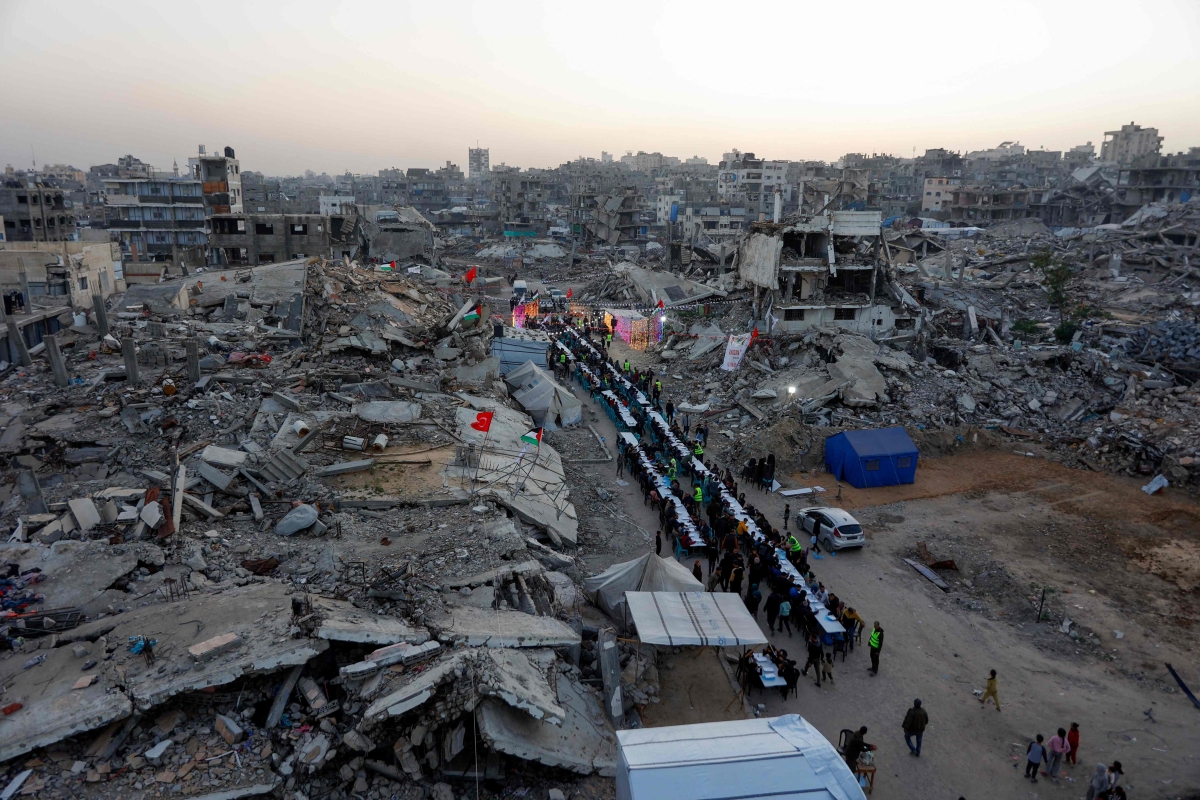
Shlomi revealed the psychological dimension of the Israeli strategy, noting that “Israel’s survival depends, among other things, on keeping neighboring regimes weak, on instilling fear in its enemies regarding its military power and its destructive consequences—sowing terror in the hearts of Arabs—and on the fear of the devastation that could befall them if they considered striking Israel, as we have seen in Gaza.”
This theoretical argument finds resonance in the analysis of Professor Chuck Freilich, an expert on Israeli national security at Harvard University, who wrote in an article in Foreign Affairs magazine (February 2026) titled “The New Deterrence: How Israel Has Redefined the Rules of the Game.”
Freilich stated: “What we are witnessing is not merely a tactical change, but a comprehensive strategic shift in Israeli doctrine. Israel is no longer content to respond to threats; it works to dismantle threat infrastructures before they take shape. This is the essence of the expanded preemptive strike doctrine adopted by Benjamin Netanyahu’s government.”
He added, “In the past, Israel struck specific targets to prevent the development of nuclear or missile capabilities. Today, the discussion is about striking the systems that support these capabilities, meaning targeting the sponsoring state itself to force it to change its behavior or push it toward collapse.”
This analysis places Onbar’s statements regarding the “weakening of the Shia axis” in a more radical context: not weakening, but dismantling.
Major General (Reserve) Amos Yadlin, former head of Military Intelligence (Aman), adds another dimension in an interview with the “Wineet” website (February 17, 2026), relating to lessons learned from the Gaza war.
He states, “After October 7, we realized that the high cost of containment is an existential disaster. The concept of quiet for quiet has completely collapsed. Now, we are building a larger army, capable of fighting on multiple fronts simultaneously, and, most importantly, an army with a mandate to launch preemptive wars that end by changing the equations, not just by restoring temporary deterrence.”
He emphasizes that “defense spending will see unprecedented increases, even if the price is a lower standard of living. National security requires sacrifices, and the Israeli public has realized this after witnessing the scale of the catastrophe that nearly befell us.”
Israeli and American visions agree that Iran represents the greatest challenge, but they differ in characterizing the objective. While Onbar speaks of “weakening the Shia axis” and Israel’s success in doing so, he warns that Iran “survived the war and is returning to Syria,” pointing to the limited effectiveness of military and economic pressure in achieving “regime change.”
However, what Amos Harel conveys in Haaretz (February 18, 2026) about the Netanyahu government reveals ambitions that go beyond weakening. He clarifies that “the Netanyahu government does not want this (nuclear) agreement and believes it will help the regime in Tehran survive, while a unique opportunity has arisen to overthrow it after 47 years.”
This Israeli vision is supported by influential figures in Washington. In a report issued by the Foundation for Defense of Democracies (FDD) on February 15, 2026, senior researcher Richard Goldberg wrote: “The bet now is not on preventing Iran from acquiring the bomb, but on exploiting Iran’s internal weakness to end the regime. The recent protests revealed unprecedented fragility in the system, and a targeted military strike could be the straw that breaks the camel’s back.”
He adds, “The ideal scenario is to deliver a decisive blow to nuclear facilities, coinciding with support for internal protests, leading to the collapse of the regime from within. This is not a dream; it is an action plan.”
From the Israeli side, Yadlin adds an important strategic dimension: “The current opportunity is unique because Iran is surrounded by a ring of fire. Lebanon is devastated, Syria is paralyzed, Hamas is destroyed in Gaza, and the Houthis are facing American strikes. Iran is alone now, and this is the right time to end the nuclear project permanently.”
He asserts, “If we succeed in destroying the nuclear program and toppling the regime, the Middle East will witness a dramatic geopolitical transformation unlike any we have seen since the fall of the Ottoman Empire.”
In an article in The Washington Post (February 18, 2026), analyst David Ignatius notes that “the Trump administration is divided between its desire to avoid a new war in the Middle East and the President’s belief that a strong strike now may prevent a larger war in the future.”
He adds, “The realist camp in the Pentagon, led by Defense Secretary Hegseth, warns that destroying Iran could create a dangerous vacuum filled by chaos or China. Meanwhile, the hardline camp, led by the National Security Advisor, sees Iran as the head of the octopus and believes it must be cut off now.”
This American division further complicates Israeli calculations. In an interview with Israel’s “Kan” channel (February 17, 2026), Netanyahu said, “We are coordinating with America, but ultimately we will do what is necessary for our security. If we feel that negotiations with Iran pose an existential threat, we will not hesitate to act alone.”
This statement reflects the desire to exploit the American presence, while remaining prepared to act independently if necessary.
In his view of the region, Anbar does not see a radical transformation in the Middle East; rather, he believes that “Israeli successes have not changed the region,” and that “loss of legitimacy” remains a persistent issue. However, his strategy is based on managing this reality through a combination of “force” and “incentives.”
He states that “Israel’s survival depends on keeping neighboring systems weak... On the other hand, the optimistic policy aimed at calming the adversary’s fears and winning their friendship includes contradictory elements.”
This apparent contradiction is resolved by the logic of dominance. Weakening Arab systems (Syria, Lebanon, and Iraq) renders them incapable of confronting Israel. He emphasizes the Palestinian Authority’s preoccupation with its internal problems and its indirect dependence on Israel.
Prominent political analyst Nahum Barnea, writing in the newspaper *Yedioth Ahronoth* on February 16, 2026, offers a deeper perspective. Barnea writes: “The Abraham Accords were not merely normalization; they were a redefinition of the relationship between Israel and the Arab world. For the first time, Arab states are cooperating openly with Israel not despite the Palestinian conflict, but because of shared interests in confronting Iran. This is a seismic shift in the region.” He adds: “Saudi Arabia is the grand prize. Normalization with Riyadh would mean the political end of the Arab-Israeli conflict, shifting the confrontation from Arab-Israeli to Israeli-Iranian, with the Arabs on Israel’s side.”
Mordechai Kedar, a researcher at Bar-Ilan University and a specialist in Arab affairs, presents a provocative vision in an article in the *Begin-Sadat* magazine (February 2026) on how Israel deals with neighboring Arab states.
He writes: “Syria is a clear example. After Assad’s fall, Israel did not occupy Syria, but it destroyed its strategic military capabilities and expanded the defensive depth zone in the Golan. This is the model: dismantle any threatening capability, and leave local entities to manage their own affairs under Israeli surveillance.”
Kedar points out that “Israel prefers weak states to strong ones, and controlled chaos to hostile centralized systems. The Free Syrian Army, the Kurds, the Druze—all these entities can be dealt with separately, ensuring their loyalty or at least their neutrality, rather than confronting a strong centralized state with an ideological army.”
From Washington, a report by the Center for Strategic and International Studies (CSIS) on February 14, 2026, by researcher John Altman, adds an important economic dimension. He states that “Israel’s vision for the region is not limited to security; it extends to an integrated economy. The India-Middle East-Europe Economic Corridor (IMEC), frozen after the events of October, is now being revived with vigor. This project will make Israel a logistical hub connecting Asia to Europe via its ports. This is the other side of dominance: control over trade and energy routes.”
He adds: “When Israel becomes a global economic center, controls vital corridors, and enjoys a military alliance with the world’s strongest power, surrounding Arab states will have no choice but to integrate into this system, on Israeli terms. This is the new model: an economic empire that imposes its conditions without the need for direct military occupation.”
None of these ambitions can be realized without American cover. Anbar provides a crucial analysis when he states: “The fundamental principle of contemporary Israeli strategy should be that there is no alternative to the United States... States often derive their strength from their allies.”
He adds that the recent US military activity in the region “compels Israel to continue pursuing maximum strategic coordination with the United States.”
This coordination is clearly reflected in the scenario outlined by Herzl, where “the Israeli military is intensifying its readiness to defend against any retaliatory Iranian attack and to join US operations if necessary.”
He points out that “the aircraft carrier Ford will soon arrive in the region, completing the deployment of a relatively large naval force carrying hundreds of combat aircraft, along with strategic bombers capable of striking Iran from long distances.”
Anbar draws attention to a long-term challenge in the relationship with America. He says, “The relationship with the United States has benefited the Jewish state, but not the world. Polarization in American society and demographic shifts pose a significant challenge that Israel must consider seriously and address continuously through innovative approaches. Of course, we should not align ourselves with only one side in US politics.”
This warning reflects Israeli concerns about the erosion of traditional support for Israel within American circles, particularly among younger and progressive demographics.
Kedar states that “the slogan ‘From the Nile to the Euphrates’ is misunderstood by the West as an expansionist slogan. But in deep Israeli strategic thought, it is a security slogan. It means that Israel cannot tolerate the presence of a hostile force anywhere in the area stretching from the Nile to the Euphrates. This is the strategic depth required by a small state. Control does not mean occupation; it means ensuring that the entire region is either allied, neutral, or weak. A hostile regional power cannot be allowed to emerge in this space.”
On February 16, 2026, Axios published a report by Barak Ravid, quoting a senior Israeli official who said, “Israel’s natural security borders are the Nile in the west and the Euphrates in the east. Not because we want to occupy these lands, but because any hostile force positioned in this space poses an existential threat to us. History has taught us that invading armies came to us from the east and the west. Therefore, we must be able to strike any threat before it reaches our borders.”
The Israeli vision taking shape today is a dangerous mix of confidence following the painful blows dealt to the Iranian axis, and a sense of a rare historical opportunity to permanently change the rules of the game. But, as Anbar himself warns, it may be a gamble. Relying on “terror” as a primary currency, ignoring demographic and social shifts within Israel and American society, and underestimating the capacity of political Islam to regenerate are all factors that could turn the dream of control “from the Nile to the Euphrates” into a new strategic nightmare, reproducing the same vortex of violence the region has known for decades.
The bigger question remains: Is the region heading toward a new regional system led by Israel, or toward a new vortex of violence that reproduces the tragedies of the past? Only time will provide the answer, but one does not need much imagination to see that the region stands at a historical crossroads, and the choices made by Israel, Iran, and the United States in the coming weeks will shape the contours of the Middle East for years to come.
