Axios: Trump Approaches 'Total War' Option
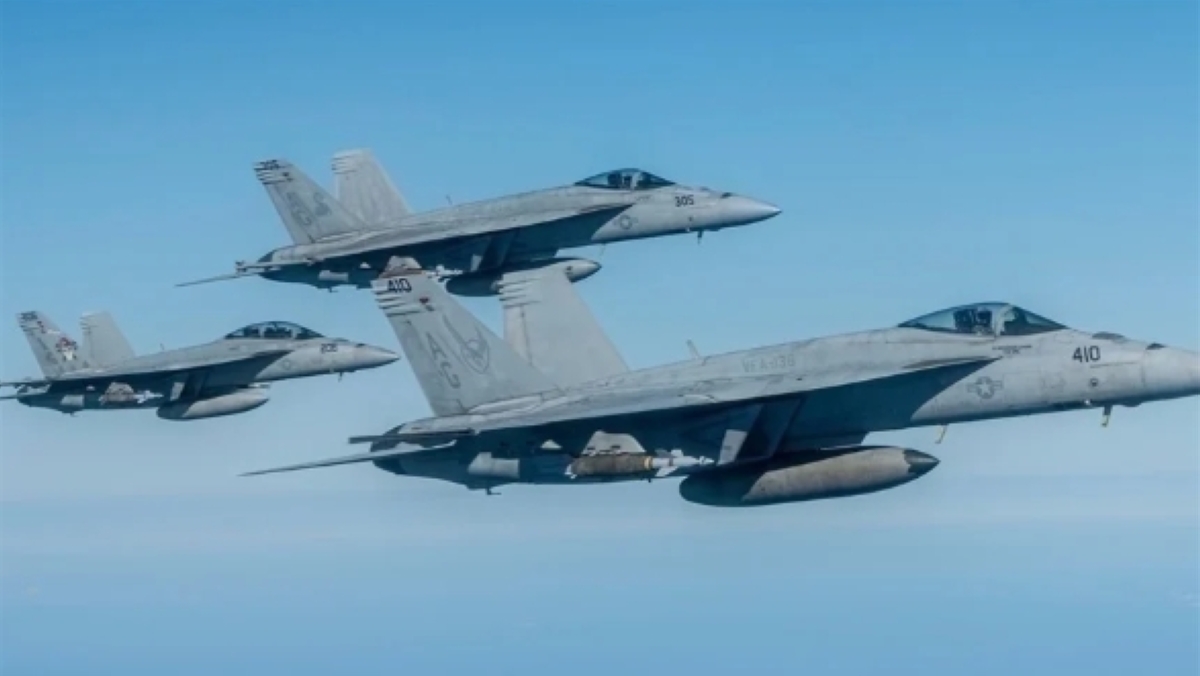
Trump estimates the likelihood of a total war against Iran at 90%.
Translated by Alqyas from Al-Rai — Original source
- Vance: Iran remains unwilling to accept some of Trump’s “red lines”
- Israel prepares for a war scenario within days
- Tehran is ready to suspend enrichment in exchange for lifting sanctions
Talk of a US military operation against Iran “in the very near future” has resurfaced, despite Washington and Tehran describing the second round of negotiations in Geneva on Tuesday as “positive.”
Axios cited one of Donald Trump’s advisors, stating that “the president is beginning to lose patience,” and noting that while some of his inner circle warn him against sliding into a military confrontation, he estimates a 90 percent probability of a military operation against Iran being carried out in the coming weeks.
According to Axios sources, assessments indicate that “any US military operation against Iran would be large-scale and last for weeks, making it closer to a full-scale war, unlike the limited operation conducted last month in Venezuela.”
It added that “the operation is likely to be a joint US-Israeli campaign, broader and more threatening to the existence of the Iranian regime than the 12-day war led by Israel last June, before Washington joined in targeting Iran’s underground nuclear facilities.”
Observers believe that “the outbreak of such a war would have a profound impact on the overall balance of power in the region, and would carry significant repercussions for the remaining three years of Trump’s term. This comes at a time when Congress and public opinion are preoccupied with other issues, amid a lack of broad public debate on what could be the most dangerous US military intervention in the Middle East in years.”
Axios sources confirmed that “the scale of military buildup has raised expectations regarding the nature of any potential operation in case an agreement fails, as diplomatic success prospects appear limited.”
In this context, Trump’s advisors Jared Kushner and Steve Witkoff held a three-hour meeting in Geneva with Iranian Foreign Minister Abbas Araghchi. Despite both sides announcing “progress,” significant gaps remain, with US officials expressing “pessimism about the possibility of bridging them.”
US Vice President J.D. Vance stated that the talks saw “positive aspects,” but noted that Trump had set “red lines” that Tehran has not yet shown willingness to address, emphasizing that “Trump may conclude that the diplomatic track has exhausted its purposes if no tangible progress is achieved.”
US Energy Secretary Chris Wright, speaking in Paris, also stressed that his country would prevent Iran from acquiring a nuclear weapon “one way or another.”
Amid military buildups, the US has strengthened its military presence in the Middle East to include two aircraft carriers, approximately 12 warships, hundreds of fighter jets, and multiple air defense systems, with additional reinforcements en route to the region.
More than 150 military cargo flights have been conducted to transport weapons and ammunition, along with the deployment of 50 new fighters in the past 24 hours.
Close associates of the US administration confirmed that “deploying this volume of military capabilities is not a symbolic step, making it difficult for Trump to back down without significant Iranian concessions.”
The Israeli government, which is pushing for a harsh scenario targeting regime change as well as nuclear and missile programs, is preparing for a war scenario within days, according to Israeli officials.
Iranian sources, three officials close to the talks, revealed that Tehran expressed readiness to suspend uranium enrichment for a period ranging from three to five years—a duration covering Trump’s presidency—before joining a regional consortium for civilian enrichment.
They noted that Tehran would reduce its uranium stockpile within its borders in the presence of international inspectors, in exchange for the United States lifting financial and banking sanctions, as well as the embargo on its oil exports, according to the New York Times.
The officials, who requested anonymity, added that Iran had also hinted at offering financial incentives and opportunities for investment and trade with the United States, including in the oil and energy sectors.
On Tuesday night, Iranian President Masoud Pezeshkian stated that his country “is not seeking a nuclear weapon at all, but it will not abandon its peaceful nuclear industry.”
Meanwhile, Iran is conducting joint military exercises today with its ally Russia in the Gulf of Oman.
Iranian Navy Commander Hassan Makhsoodloo said that the “joint naval exercises” would take place in the Gulf of Oman and the northern Indian Ocean, with the aim of enhancing maritime security in the region and strengthening relations between the two navies.
