Advisor Al-Duaij: Shocking figures demand strict enforcement of the new drugs law
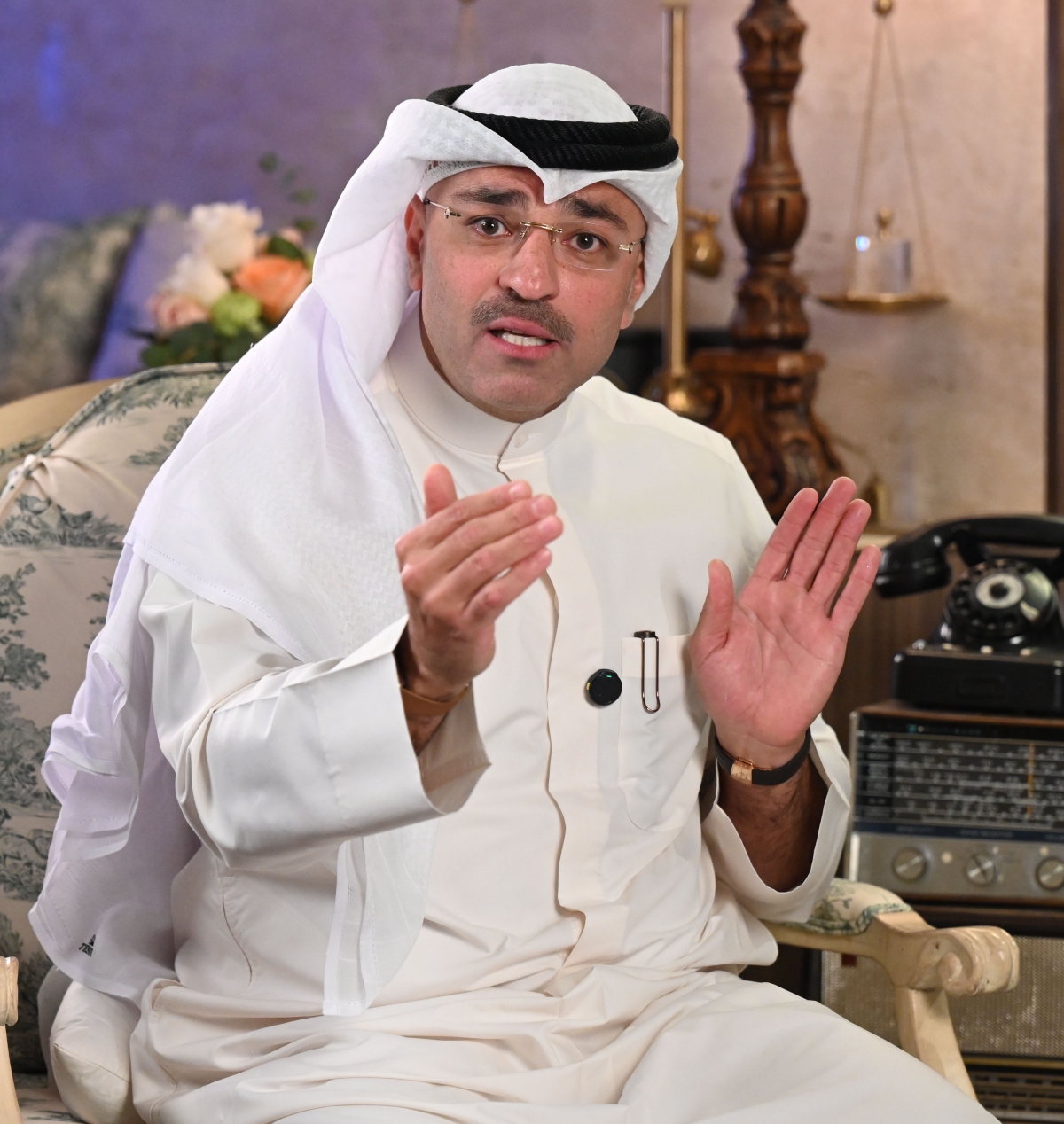
Advisor Al-Duaij confirmed that the Gulf market attracts drug traffickers due to price differences, and warned of rising addiction and a lack of treatment centers.
Translated by Alqyas from Al-Rai — Original source
- $57 billion earned by the drug trade from manufacturing narcotics in one year
- Electronic bracelets reduce recidivism to under 22 percent
- The Gulf market is a target for drug traffickers... Price differentials double risks and profits
- No matter how stringent the law, it will remain ink on paper if efforts are not coordinated
Mohammed Al-Duwaikh, advisor to the Court of Appeal and head of the committee drafting the new narcotics law, stated that the new law combating narcotics and psychotropic substances is a comprehensive legislation comprising 84 articles, which cannot be easily summarized or fully covered in a brief overview. He emphasized that it is “100 percent Kuwaiti national legislation,” as all crime descriptions within it are derived from the reality of existing judicial files, rather than being theoretical assumptions or imported texts from other experiences.
Al-Duwaikh, who served in the judiciary and prosecution for over 30 years, handled numerous cases that enhanced his legal and judicial expertise, leading to his appointment as head of the committee to draft this law.
In an interview as part of a “Special Meeting” with Editor-in-Chief Waleed Al-Jassim on Al-Rai TV and platforms, Al-Duwaikh stressed that the law, no matter how stringent it may be, will remain ink on paper if efforts are not coordinated. He warned that statistics indicate the existence of approximately half a million users or addicts, and that the absence of integrated government effort and the delay in establishing specialized treatment centers mean that “we have done nothing” in confronting what he described as a disaster.
Al-Duwaikh stated that it was a stroke of luck that after graduating from Kuwait University in 2000, “my professional career began in the Public Prosecution, where I progressed through several administrative positions, including Deputy Head of the Capital Prosecution and Head of the Criminal Execution Prosecution. In 2013, I moved to the judiciary, where I was appointed as a judge at the Court of First Instance and presided over the Felonies Division for three years, before returning to the Public Prosecution at the request of the Attorney General to serve as Deputy Attorney General for seven years.” He noted that the Public Prosecution is an honorable adversary committed to the principle that uncovering the truth is the foundation of justice.
Regarding the introduction of “alternative penalties” in Kuwait, he said that in 2015, serious consideration was given to adopting an alternative penalties system in Kuwait, following the trend of many countries, most notably the electronic bracelet system as an alternative to traditional imprisonment.
He clarified that, by a decision of the Attorney General, a convicted individual with no prior record can be released and subjected to monitoring via an electronic bracelet for the duration of the sentence. Hundreds of prisoners have benefited from this system. Results showed that the recidivism rate under the alternative penalties system did not exceed 22 percent, considering the electronic bracelet one of the most successful tools for correcting offender behavior and reducing recidivism rates.
Regarding the secret behind the success of the electronic bracelet penalty, Al-Duwaikh explained that the core of the idea lies in keeping the convicted person within their natural environment, away from the prison atmosphere, while simultaneously achieving the equation of punishment. The bracelet defines the person’s range of movement, and their movements are monitored electronically; any breach of the permitted range triggers an immediate alert. With good conduct and discipline, the range of movement can be gradually expanded according to their behavior.
He pointed out that the bracelet comes in different sizes and is attached to the foot; any attempt to tamper with it triggers an immediate alert to the administration. Furthermore, the device operates on a battery that must be recharged before it runs out. The individual is notified of the need to recharge, and if this is neglected, authorities contact them, as a dead battery means the transmission stops.
He noted that this project was presented to His Highness Sheikh Sabah Al-Ahmad, may God have mercy on him, and he approved it.
He also pointed to the inclusion of community sanctions within the new system, noting that they are still relatively new and their results have not yet been fully clarified. As for the recidivism rate under the electronic bracelet system, it stands globally at around 22 percent, with the speaker expressing his belief that the rate in Kuwait is lower than that figure.
Al-Duwaish stated that previously, the opinion of the judicial authority was sought in the National Assembly merely as a formality, after the bill had already been generally prepared by the government or the parliament, with judicial observations added later. Today, however, judges participate from the outset in drafting certain legislation, drawing on their practical experience. A criminal judge, through daily exposure to cases and the drafting of judgments, is aware of flaws and procedural loopholes that others may overlook, and knows what needs to be regulated or closed.
He noted that this is a positive step credited to Minister of Justice and Advisor Nasser Al-Sumait, who relies on working teams headed by judges. He expressed confidence that they will perform well in preparing higher-quality legislation that meets the society’s needs in the coming stage.
In response to a question regarding whether there is a globally unified production system managed by a single entity, fragmented cluster systems, or even governments behind these activities, Al-Duwaish said that, with the exception of the Syrian case under Bashar al-Assad, which has its own特殊性 (specific characteristics), this does not involve governments directly managing such activities.
He explained that when tracing global drug production lines and their impact on Gulf countries, the source begins in South America, where Colombia, Bolivia, and Peru account for about 99 percent of cocaine production within the Andes mountain range. In North America, methamphetamine, or “shabu,” is manufactured in Mexico; it is criminalized in Kuwait. Previously, trafficking in certain psychotropic substances did not carry the death penalty, but the new law has amended this, while consumption itself is considered a criminal offense. In Europe, there is limited manufacturing in the Netherlands and Belgium. In Africa, some terrorist groups use the region as transit routes for smuggling. As for the Middle East, Syria under Bashar al-Assad is exceptional, as the state directly engaged in production, generating revenues estimated at around 57 billion dollars in a single year—a huge figure reflecting the scale of the activity.
He clarified that a large portion of the Captagon and hashish destined for Gulf countries comes through these routes, via networks active in Syria and Lebanon.
Regarding why Gulf countries are targeted by drug traffickers, Al-Duwaish said the decisive factor is the price differential. The price of a gram of certain simple substances, such as “crystal,” ranges globally between 15 and 20 dollars, whereas in Gulf countries it reaches between 65 and 100 dollars, indicating a very high profit margin.
Al-Duwaish stressed that it is not possible to claim the existence of accurate Kuwaiti or Gulf statistics on this matter, but there are indicators that can be relied upon to arrive at a figure closer to reality, albeit a shocking one. The United Nations annually issues a report tracking the number of users—not addicts—worldwide. According to the 2025 bulletin, the number of registered users globally reached approximately 320 million people, based on incidents and documented data. The report indicates that about 30 percent of these users are classified as addicts, meaning approximately 150 million addicts, a figure that remains relatively stable in international reports.
He added: “By rough calculations, this means that about 6 percent of the world’s population uses drugs. If this percentage were applied to the population of any Gulf country, we would obtain a preliminary estimate. However, some argue that the 6 percent figure may be conservative, and that the actual number could be closer to 10 to 15 percent.”
He continued: “For example, if we assume that 10 percent of Kuwait’s total population uses drugs, and that 40 percent of these users are addicts, we arrive at an estimate of approximately 250,000 addicts and 250,000 users. These are rough figures based on statistical projections derived from United Nations reports, not official local statistics, but they provide an indicator that can be applied—using the same methodology—to any other country.”
Al-Duwaikh said: “The cost of drug use in Kuwait is 40 dinars per gram of heroin and 20 dinars per gram of methamphetamine. Let’s move beyond that and talk about the period between marijuana and meth use. Your average monthly expenditure on meth is 600 dinars. This is just the cost of use. Not everyone has 600 dinars. Where do you pay your rent, your car, your food, and other expenses? This is where dealers’ offers come into play. They tell you, ‘Your first month is free,’ or ‘Two months free.’ Sometimes, the dealer targets a specific individual. The most common targets are people from stable, well-off families. For such a person, it’s a teacher’s strike [a windfall]. He says, ‘Bring me so-and-so, and I’ll give you three months free.’ As soon as he gets him hooked on addiction, he offers free months. This is why this story, and addiction in general, starts through the peer group.”
Al-Duwaikh, the advisor, said: “Two years ago, an incident occurred… A man crashed his car on the highway. He called a tow truck to lift his vehicle. He was inside the car, a drug user, and in a psychotic state. He had a knife in the car. He got out and slaughtered the tow truck driver, saying, ‘I killed him because he is my enemy, and he had been wanting to kill me for a long time.’”
Al-Duwaikh pointed out that “drug substances over the past seven years are different from those that existed previously.” He said: “Previously, the drugs were clean… Now, they mix in headlight glass, which they call Bangladeshi meth or Royal meth. Those are their terms. What happens to someone who uses meth? If they inhale it, blood comes out of their nose. To ensure the quality is clean, he says, ‘If blood comes out of my nose and I feel a double sensation, it’s clean Royal Bangladeshi meth.’ He doesn’t know that this meth is mixed with neon bulb glass. Meth is like broken glass; when inhaled, it causes internal injuries. When the person is wounded and the substance comes into direct contact with the veins, the effect is multiplied. He is deluded into thinking it is an original, high-quality product.” He added that the same applies to marijuana cigarettes. “Seven years ago, marijuana in Kuwait was known by its brown color. Now, the marijuana found across the Gulf is all dark. What do they put in it? They add khat and opium to increase addiction. By the third cigarette, he becomes addicted.”
Advisor Al-Duaij emphasized that the phase of psychosis and hallucinations is inevitable and will affect anyone who uses drugs or psychoactive substances. In this context, he said, “They all share a single delusion: ‘I am in control of myself.’ This is incorrect. All users, especially those consuming stimulants such as Captagon, chemicals, and ‘Space,’ believe they are completely in control and experience illusions of strength and mastery.” He recounted the case of an individual who was driving and colliding with cars. When questioned, he claimed, “I see the entire street is stationary, and there is space between the cars for me to pass through.” He was bewildered as to why the cars were stopped, insisting he had an appointment with someone waiting for him. In reality, the cars were moving and traffic was heavy, but the addict did not perceive this. He decided to drive through the vehicles, asserting, “I am fully in control; nothing can harm me.” However, he was unaware that he had hit 40 or 50 cars. He would deny responsibility, saying, “I didn’t hit anyone; you are framing me. I did nothing.” This is the psychosis phase, during which a person feels as though there are insects crawling on their body.
Al-Duaij added, “Medical studies regarding the psychosis phase refer to it as ‘the cancer of psychiatry’ due to its difficulty of treatment. I have read reports indicating that some individuals recover after rehabilitation, but others do not return to 100 percent normalcy. Even if they enter psychiatric facilities and receive treatment, a portion of their personality remains unclear or altered due to the psychosis they experienced. It is considered the most dangerous psychiatric condition humans can encounter.”
Al-Duaij pointed out that cases of exploiting good faith are numerous. “One individual exploited his wife. They were traveling to Thailand and placed drugs (in pills) in her luggage while they were traveling together. When they opened the bag, they found the pills in his wife’s suitcase.” He stressed that travelers must not carry any items that do not belong to them, and that possessing psychoactive substances requires an approved medical prescription and supporting reports.
One case revealed by Advisor Al-Duaij, illustrating the difficulties associated with delirium and loss of perception, involved an addict who sold everything in his home to obtain money for drugs. He would engage in fights with his mother and beat her when she intervened. On one occasion, she was asleep and sensed him approaching. “He pulled out her earlobe piercing,” but the mother, fearing he would beat her, refrained from objecting and shifted to the other side as if turning over in her sleep. However, the addicted son “violently ripped the piercing from her other ear, tearing her ear, in order to sell it and get money.” Al-Duaij added that the son “was in a psychotic phase; he did not perceive that he had torn it. Instead, he deluded himself into believing he had removed it smoothly, preserved his mother’s sleep, and left.”
Advisor Al-Duwaikh affirmed that addiction is a disease, and the addict is a sick person whose condition is not under his own control. Treatment is long but possible and available, and solutions are at hand. “There are tools and mechanisms, but they require some patience. The more you rush into treatment, the higher your chances of recovery.” He warned that “ideal or ‘normal’ families believe they are immune, but in reality, they are Target Number One for drug dealers. Where is the problem? I do not take precautions against this targeting, considering myself an ideal family, and when I hear about drugs, I think they are in the land of the mythical bird, something far removed from me. But this family does not realize that drug dealers have their eyes on them.”
Regarding overdose deaths, he said, “It may be a pure and clean dose. For instance, a user accustomed to taking a gram of adulterated heroin mixed with other substances might be sold pure heroin by a dealer, leading to an overdose death. This is a matter with two sides.” He added that in one case, an addict made his brother an addict as well, because the brother constantly advised him to quit. “To get rid of him, the addict introduced drugs to him until he became addicted. An addict will never let you go. Addiction is contagious, like coronavirus, but even more dangerous. As long as you are in his company, it will infect you.”
In Kuwait, the world’s youngest addict is 12 years old... due to his uncle.
Advisor Al-Duwaikh stated, “In Kuwait, the world’s youngest addict is 12 years old. A case was registered against him around 2010. His uncle made him addicted out of revenge against his father.” He added, “The child’s father treated the mother poorly and beat her. She took her son and lived with her father. The maternal uncle also treated the uncle poorly, so he took revenge by luring the 12-year-old boy until he became addicted. The boy said, ‘I love drugs more than my father, my mother, and my entire family.’”
Al-Duwaikh asked, “Do you know what the Eid joy is for an addict? It is meeting another addict. The addict’s joy comes when he enters a treatment center and realizes you are an active user. He asks, ‘What substances are you taking now? What’s new with you? Who are you dealing with? Give me his phone number.’ Thus, this is a source of joy for him. This is why it is important for me to engage with the first category. The second reason, which is more prevalent, is the dealer’s interaction with the addict. A drug dealer is different from a normal merchant. A normal merchant seeks to expand his market and increase his customer base. In contrast, a drug dealer does not want to expand his reach; he wants to keep the number of customers fixed and loyal to him. The more customers he has, the higher the risk of being arrested. When I deal with 10 users, it relieves me from dealing with 100, even if the profit is higher, because the risk is greater. When I deal with 10 loyal users, it greatly benefits me. The dealer always ensures you do not get treated and wants you to remain with him continuously. So, what does the dealer do? He tells you, ‘Bring me every new customer, and I will give you a full month’s supply for free. I will cover your consumption.’ Is this offer worthwhile or not? For the addict, it is extremely worthwhile.”
275 million dinars in market value of seized drugs in one year.
Al-Duwaish stated: “We must grasp something of paramount importance. Today, the drug and psychoactive substance trade ranks as the second or third largest globally, generating profits in the trillions, not merely billions. Could anyone seriously believe that this illicit trade operates without indirect marketing? If I were trading any legitimate commodity, I would market it through my own methods; is it plausible that the vast revenues generated here come without any marketing effort? We do not possess conclusive evidence, but we have indicators that allow us to assess whether such marketing is taking place. When we discuss capital flows, for instance, Kuwaiti authorities’ seizures over the 2023–2024 period—spanning roughly two years—amounted to 275 million Kuwaiti dinars in the market value of confiscated drugs. This figure represents only what was seized; undoubtedly, the unseized volume is far greater. According to global statistics cited by the United Nations, seizures account for only 10 percent worldwide, meaning that 90 percent of illicit drugs evade detection and enter the market. This implies that we are dealing with exceptionally sophisticated actors.”
