Elon Musk Warns of Power Infrastructure Collapse
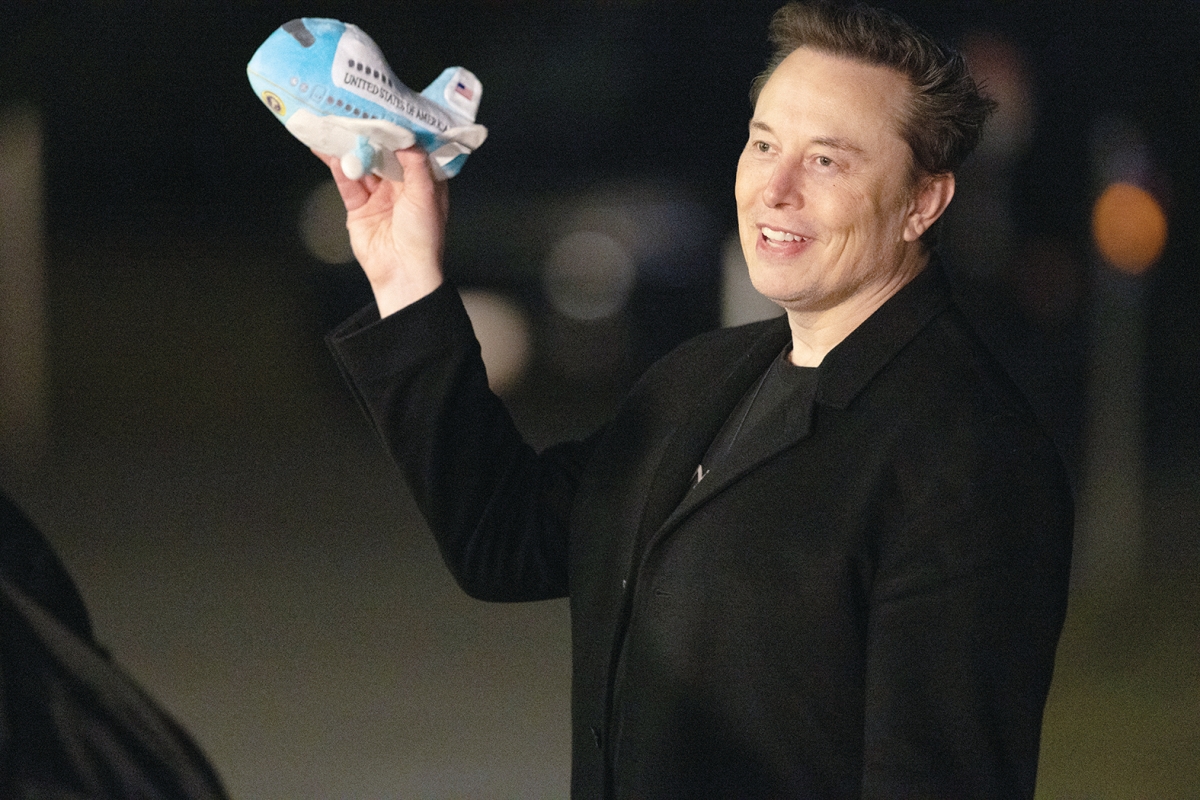
Musk warns of power infrastructure collapse due to AI energy consumption
Translated by Alqyas from Al-Rai — Original source
US billionaire Elon Musk issued a startling warning to the world that the energy infrastructure could collapse in less than three years, due to the immense pressure exerted by the rapid expansion of artificial intelligence systems on terrestrial power grids.
During an extensive interview with the “Cheeky Point” podcast hosted by John Collison, Musk provided a candid assessment of the risks facing technological infrastructure.
He stated, “Within 30 to 36 months, we will lose our power... Remember my words... You cannot grow much larger than that here.”
The owner of the X platform also clarified that AI’s energy consumption exceeds the capacity of current grids to adapt, potentially leading to widespread power outages that threaten the continuity of essential digital services.
Regarding his view on how to overcome this threat, Musk revealed an unprecedented plan aimed at transferring a critical portion of computing capabilities into space.
Explaining further, he added, “The sun is always present in space, so we can generate inexhaustible energy to power these systems, free from Earth’s constraints.”
Musk’s idea sparked widespread debate within scientific circles, with some experts warning of the risks of congestion in low Earth orbit and the increased likelihood of satellite collisions, which could lead to growing space debris and complicate future space missions.
Reports from the European Space Agency (ESA) described this scenario as potentially “turning near-Earth space into a hazardous environment,” calling for strict international standards before implementing projects of such scale.
In a related development, recent data from the International Energy Agency indicates that global electricity consumption by AI data centers reached 480 terawatt-hours in 2025, a 35 percent increase compared to the previous year. Projections suggest this figure could double by 2028 if current growth continues without improvements in energy efficiency.
According to “Al Arabiya Net,” experts such as Dr. Leandra Chu from the Massachusetts Institute of Technology (MIT) believe that “Musk’s warnings are not exaggerated, but rather a reflection of a real gap between the pace of technological innovation and the infrastructure’s capacity to absorb it,” urging urgent investments in small nuclear power and high-efficiency solar panels as alternative solutions.
