Minister of Electricity: Energy transition... a national priority
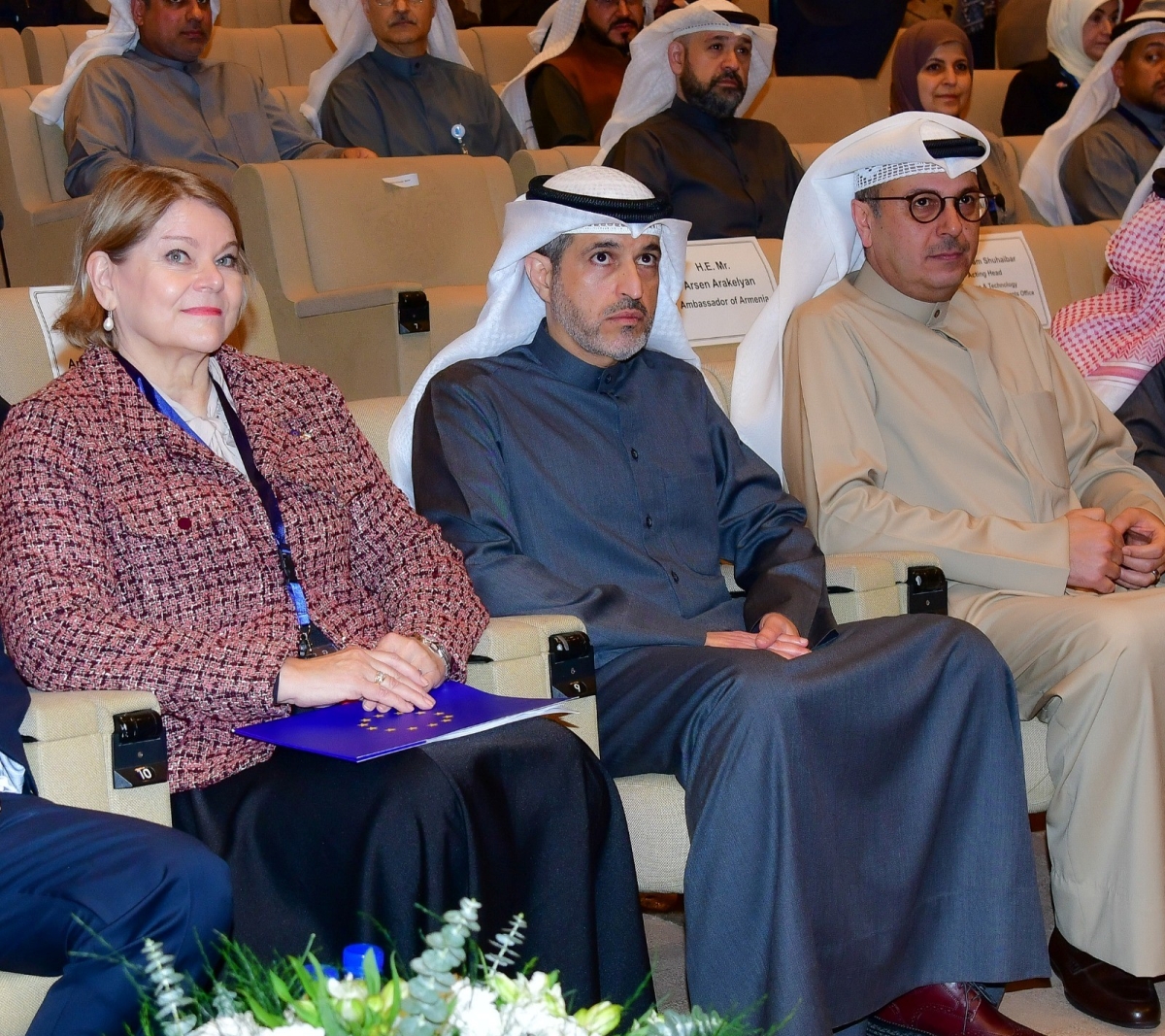
The Minister of Electricity affirmed that energy transition is a national priority in line with Vision 2035.
Translated by Alqyas from Al-Rai — Original source
- We are committed to a realistic, gradual transition that aligns with our responsibilities as a major energy-producing state.
- Al-Humaidan: Our energy system must be grounded in technical foundations amid rising electricity demand.
- Kuytstenin: Kuwait has promising opportunities to adapt European energy experiences to suit its priorities.
- Al-Rum: Coordination between the Institute and the Ministry of Electricity, Water, and Renewable Energy to ensure strategies are based on solid technical foundations.
Minister of Electricity, Water, and Renewable Energy, Dr. Sabah Al-Makhzoum, stated that “the transition in the energy sector represents a national priority within Kuwait’s Vision 2035, and is managed through a strategic approach led by the Supreme Energy Committee to achieve a balance between energy security, environmental sustainability, and economic growth.”
This was said during his speech at the opening of the Kuwait-EU Green Transition Forum on Sunday at the Research Institute. The minister noted that “partnership with the European Union facilitates the exchange of expertise in regulatory reforms, energy transition planning, and innovation, thereby supporting Kuwait’s national agenda.” He expressed Kuwait’s hope for practical outcomes that will enhance a secure and sustainable energy future based on cooperation and constructive partnerships.
He added that “Kuwait recognizes the global shift today toward cleaner and more efficient energy systems, while ensuring that this transition is realistic, gradual, and aligned with our responsibilities as a major energy-producing state. Our goal is to enhance resilience, increase efficiency, and secure long-term value for the state and its people.”
In his remarks, Al-Humaidan pointed out that “Kuwait’s energy system is at a stage where ambitions and policies must be grounded in robust technical foundations, with decisions based on data, system analysis, and an understanding of the local operational reality. This is particularly important given the growing demand for electricity, the complexity of the energy system, and long-term transition objectives, which necessitate adopting an applied scientific approach that mitigates implementation risks and enhances planning efficiency.”
He affirmed “the Institute’s full commitment to supporting the country’s energy transition journey, working closely with national and international partners to translate ambitions into practical measures based on sound technical foundations.”
For her part, the European Union Ambassador to Kuwait, Ann Kuytstenin, stated that “the EU-Kuwait Green Transition Forum reflects the depth of the long-standing partnership between the two sides, which this year celebrates 40 years of diplomatic relations.” She emphasized that “cooperation in clean energy and sustainability is a central pillar of this relationship.”
Kuytstenin noted that “the European experience in green transition has proven that expanding renewable energy, improving energy efficiency, and innovating in green technologies can simultaneously boost economic growth and energy security.” She highlighted that “Kuwait has promising opportunities to adapt these experiences to align with its national priorities, particularly in solar energy, energy storage, and green hydrogen.”
On her part, Dr. Fath al-Rum, Acting Executive Director of the Energy and Building Research Center at the Institute, stated that “the Institute works in close coordination with the Ministry of Electricity, Water, and Renewable Energy, under the umbrella of the Supreme Energy Committee, to ensure that national strategies, regulations, and programs are based on sound technical foundations and realistic performance assumptions.”
She added that “the Institute chairs the technical team for energy efficiency established by the Supreme Energy Committee and leads the technical energy efficiency team, which includes key stakeholders in the energy sector.”
