Hezbollah opens fire on Lebanese president's envoy to the 'Mechanism'
An attack by Hezbollah on former ambassador Simon Karam highlights tensions with the Lebanese government over responsibilities regarding the Mechanism.
Translated by Alqyas from Al-Rai — Original source
Lebanon has not been spared from the game of “contradictory signals” that has intensified in recent hours on the Iran front, amid difficulty in assessing the direction the region will take and when, particularly given the link between war-game scenarios for military and non-military possibilities with the established target bank for the region and its geopolitical transformations with international extensions.
As the region remained in a state of great uncertainty regarding what would happen, especially with leaks suggesting that any attack on Iran was not on the table two weeks ago and perhaps not for two months, these leaks were met with readings that did not dismiss the possibility that such an atmosphere might involve an attempt to regain the “element of surprise” in any strike, after the previous “alarm” had allowed for an additional “scan” of Tehran’s defensive capabilities and positions. The level of grayness enveloping the Lebanese reality, which has slipped into the eye of the region’s storms since “Al-Aqsa Flood” and deepened its exposure to what is feared to be the most dangerous hurricane that could strike the Middle East, has not been lessened, especially with Hezbollah’s confirmation that it is not neutral in any aggression against Tehran.
While the language of “white weapons” and diplomacy raced across the region’s “gunpowder barrel,” without it being clear whether any war had been suspended to crystallize a “negotiation window” or whether understanding on the nuclear issue alone, as Tehran suggests, was sufficient and capable of defusing the big explosion, the scene of “development and rehabilitation” that emerged from Kiryat Shmona, about two kilometers from the border with Lebanon, was not incidental, as Israel continued its preparations for confrontation in the region and with Hezbollah.
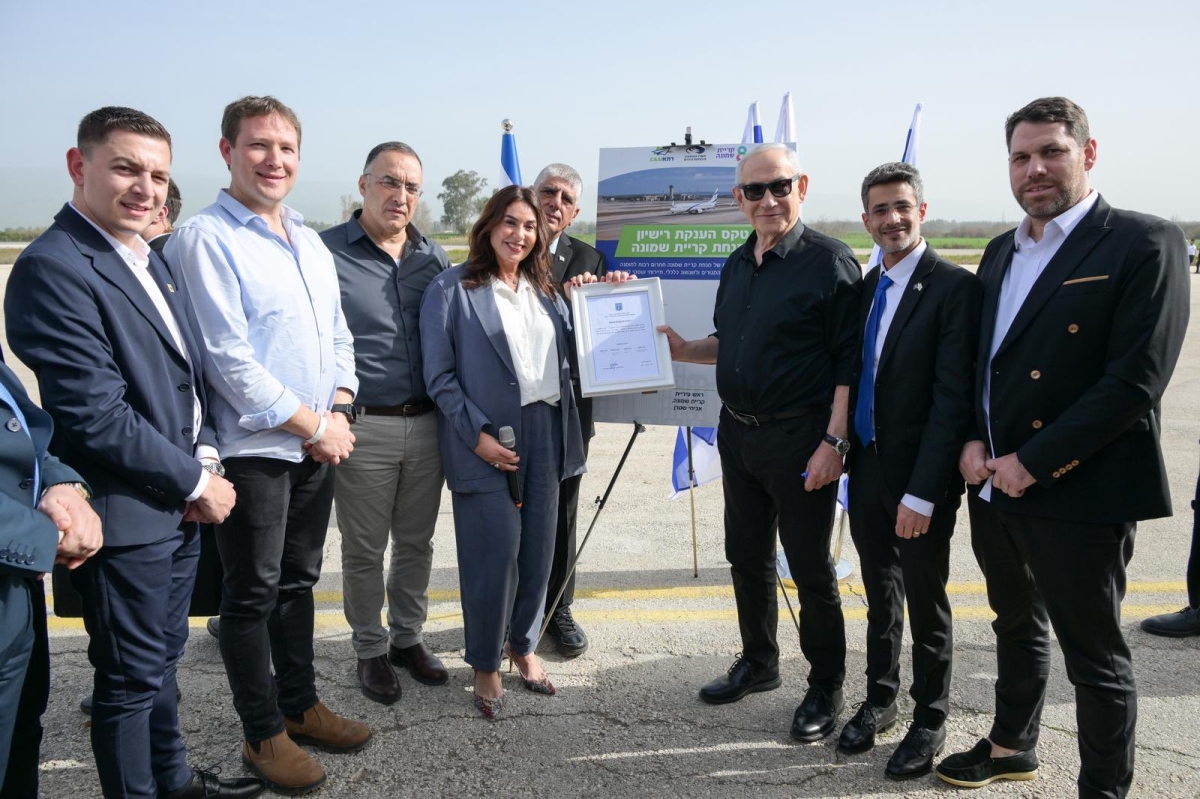
It was not ordinary for Benjamin Netanyahu to appear today, Sunday, from Kiryat Shmona, where he chaired an extraordinary government session during which he announced an urgent plan to rehabilitate and develop the northern region (including the cities of Kiryat Shmona, Shlomi, and Metula), affirming his government’s commitment to ensuring the security of residents in border areas as part of “efforts to enhance economic, demographic, and security growth in the north, and to make the region a thriving heart of the Galilee.”
It seemed difficult to speculate on the background of this move, whether it reflected reassurance from Tel Aviv regarding the restored “deterrence power” that paves the way for launching the development process and that the probability of war in the region has decreased, or whether it was part of “deception” and sending a signal opposite to the intended path, and thus that “rehabilitation” in the northern settlements requires passing through a final labor first, amid notable remarks by Netanyahu, who was quoted as saying that “the government is committed not only to developing the north, but also to ensuring the security of the population, there is no room for containment or concessions, we are working to confront every threat in real time and continuously – and we will continue to do so.”
The Israeli government session coincided with intensified aerial sorties over Lebanon and the southern Litani River, alongside continued attacks north of the river, where a strike on the town of Aaba in the Nabatieh district resulted in one death and six injuries, including a six-year-old girl, a girl, and a boy, both under eighteen.
While a drone struck a bulldozer in the town of Qanarit in the Sidon district with five missiles as it was clearing rubble from the previous strike on the town on January 21, the Israeli military announced that it had attacked “Hezbollah engineering vehicles while they were being used to rehabilitate terrorist infrastructure in southern Lebanon.” It later stated in a post on X that “over the past few months, forces from the 769th Brigade (in southern Lebanon) have been destroying terrorist infrastructure used by Hezbollah, including an anti-tank missile storage facility and weapons depots,” adding that a “building in the village of Khiam, which had been used by Hezbollah elements during the war to launch anti-tank missiles toward Israeli territory,” had also been destroyed.
Threats against several hospitals in the south, including Salah Ghandour Hospital in Bint Jbeil, carried similar weight. Israeli leaflets dropped on residents claimed that these facilities were being used by “Hezbollah” and warned residents to “stop efforts to rebuild terrorist infrastructure.” The Lebanese Ministry of Health condemned these threats, describing them as a serious attack and a blatant violation of international laws and charters, particularly international humanitarian law, which guarantees the full protection of hospitals, health facilities, and medical teams at all times.
This daily escalation coincided with further indications of the high risks surrounding Lebanon, linked to the fate of Hezbollah’s weapons arsenal and the difficult process of its withdrawal. Beirut is struggling to manage this process in a balanced manner that avoids plunging the country into the simmering regional volcano or igniting an internal conflict. These risks are bound to increase if the region erupts, given Hezbollah’s threat to enlist Iran’s support, which would mean “burning the boats” regarding the remaining part of its military arsenal, which is feared will become the target of Israeli strikes.
In this context, Al Arabiya and Al Hadath reported that sources familiar with US-Israeli communications stated that Tel Aviv would “launch a wide-ranging bombing campaign against Hezbollah’s infrastructure and personnel at the moment it begins striking Israel, similar to what happened in 2024.”
One source confirmed that “Israeli aircraft are airborne and have a ready list of targets. They are currently bound by a ceasefire agreement, but any Hezbollah attacks on Israel would provide them with the justification to return to war and direct more strikes against the group.”
Although the report indicated that the target list does not include Lebanese state infrastructure, it noted that “nothing is certain on this matter.” It quoted Lebanese activists in the US capital as saying that “the Lebanese state faces several problems in its dealings with the United States, the first being the delay in the Lebanese Army presenting its plan to the Lebanese government for the phase north of the Litani River. The second problem is the American conviction that Hezbollah is still receiving smuggled money and weapons.”
A spokesperson for Al Arabiya/Al Hadath, who had access to official US reports, stated that matters were only slightly better than before, but “Hezbollah has 250 land crossings with Syria, which it uses for smuggling, because Lebanon and Syria have been unable to control these borders.” He also pointed to some smuggling through Lebanon’s southern ports and coastlines.
According to the same report, Israeli officials repeatedly conveyed to Washington over the past weeks that smuggling continues. They also indicated that Hezbollah has managed to recruit new groups of fighters and has compensated for the human losses it suffered during the 2024 war, although these figures remain unconfirmed.
These developments underscore the precision of the visit launched by Lebanese Army Commander General Rodolphe Oueidat to the United States, where he will begin meetings with numerous American officials in Washington tomorrow. He arrives without having in hand the plan he is expected to present to the Council of Ministers upon his return regarding the second phase of arms containment north of the Litani River (between the Litani and the Awali rivers). This plan has become the benchmark for any actual international support for the army (at the Paris conference tentatively scheduled for March 5) and for financing Lebanon’s recovery. Meanwhile, observers are tracking what he will convey to those he meets regarding the “next step” in dismantling Hezbollah’s arsenal, as well as the possibility of the Trump administration exerting pressure on Tel Aviv to fulfill its commitments under the ceasefire agreement (November 27, 2024), which “saved” the monitoring mechanism, whose meetings—military ones at least—will resume on the 25th.
At the same time, attention is focused on the visit launched by President Joseph Aoun to Spain, where he will meet King Felipe VI and Prime Minister Pedro Sánchez on Monday. Aoun will ask Madrid to “work within the European Union to push for decisive measures against Israel to compel it to implement the provisions of the ceasefire agreement and fully comply with Resolution 1701.” Meanwhile, Hezbollah has once again targeted the “mechanism,” specifically its “civilian” wing, established in early December, with Lebanon represented by former Ambassador Simon Karam as head of the delegation.
Hezbollah, through its deputy Ibrahim Qusayr, attacked Ambassador Karam, who is considered President Aoun’s “presidential envoy.” This development reflected the continued tension in relations with the President of the Republic following his firm stance on insisting on arms containment north of the Litani, his criticism of the party, and his call for it to “exercise restraint,” culminating in Sheikh Naim Qassem’s declaration that we are “not neutral in any aggression against Iran.”
The attack by Qusayr was also treated as an expression of Hezbollah’s view regarding the mechanism and its geographical scope, which is confined to south of the Litani, and thus its lack of validity north of the river.
In a statement responding to remarks attributed to Ambassador Karam, Qusayr said that the “slip of the Lebanese authority into the trap of appointing a civilian diplomat as head of the Lebanese delegation to the Mechanism committee was a second sin no less serious than the sin of the decision to contain arms amid the continued Zionist occupation of Lebanese lands and its daily attacks on sovereignty, the people, and the homeland.”
He added, “Some Lebanese newspapers reported a new proposal being prepared by Ambassador Karam, which involves linking steps the enemy takes to facilitate movement in Lebanon during the second phase of arms containment, along with other remarks attributed to him that reveal his role in negotiating with the Zionist enemy at the expense of Lebanon’s resisting sons. In light of these statements, we affirm that the Mechanism committee’s mandate is purely technical, aiming to implement the commitments of the parties to the November 27 agreement regarding its specific provisions, which are confined solely to the area south of the Litani. Any expansion of these improvised proposals that facilitate Israeli enemy intervention in matters not covered by the agreement outside the south of the river constitutes an overreach of the committee’s and its members’ mandated authority, and is also firmly rejected and condemned.”
