Israel Warns: Linking Hezbollah's Fate to Iran is a Strategic Error
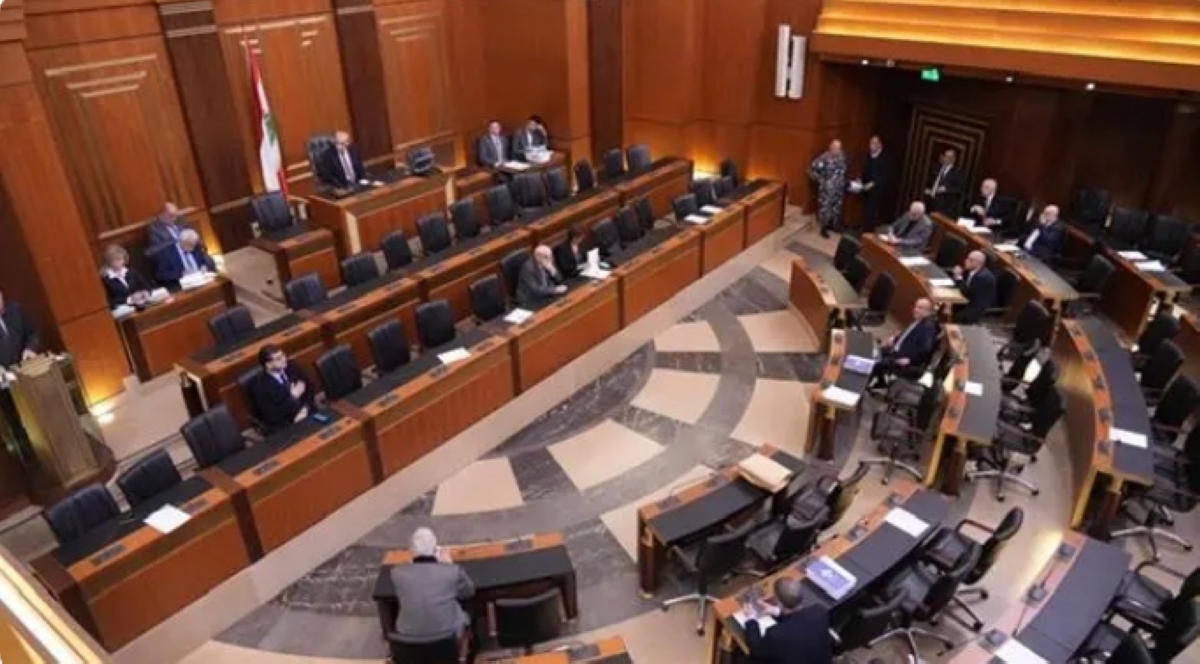
Lebanon's time bomb threatens to explode due to Hezbollah's closeness to Iran.
Translated by Alqyas from Al-Rai — Original source
As marathon discussions on the 2026 budget bill concluded in parliament on Thursday, the "Lebanese clock" was reset to the "ticking time bomb" that places the entire region on the brink of a major explosion. This threat is linked to Lebanon, specifically through Hezbollah, which has warned that it is not "neutral" in the event of any American and Israeli aggression against Iran.
While the dust from heated parliamentary debates settled, revealing deep fissures between Hezbollah and the majority of other political forces regarding the concept and pillars of state-building, and between official Lebanon’s efforts to prevent the country from sliding into a "major war" and steer it toward recovery, and the party’s insistence on retaining its weapons and prioritizing its regional expansion over national interests, Israel continued to accumulate an "indictment dossier." There are fears this is part of an effort to cement a "unity of fronts" in any confrontation that might erupt in the region, turning the small nation into a "fire playground." This would parallel, even if only preemptively, any failure by Hezbollah to follow through on its threat to "support Iran."
In this context, reports from an Israeli military source have intensified concerns in Beirut that the statements of Hezbollah Secretary-General Sheikh Naim Qassem, which appeared to signal a "unity of destiny and path" with Iran, would provide Israel with a pretext to pursue its military option against the party. This poses the greatest danger to both the party and Lebanon, placing them on the "fault line" of a potential regional earthquake, especially after Hezbollah’s announcements dismantled a narrative it had established itself following the ceasefire agreement (November 27, 2024). That narrative claimed the party was in a defensive posture that it had not even "activated" throughout the past months, despite Tel Aviv’s use of an "iron fist" against it.
The source spoke of a "major event" related to Hezbollah liaison elements in villages in southern Lebanon. Speaking via Al-Ahad channel, he indicated that the party "is working to rebuild various systems within these villages and is attempting to repair itself under the guise of assisting the residents of southern Lebanon."
He revealed that "Hezbollah is preparing for a future military confrontation and attempting to build infrastructure to restore its combat capabilities, but we will not allow its threat to return to our borders." He added that "there are secret activities by the party along the confrontation line, as it attempts to maintain its weapons as long as the (Lebanese) army does not impose its control."
He added: "We are aware of clashes between Hezbollah and the Amal Movement (led by President Nabih Berri) in the Sidon area in southern Lebanon. The Movement is not subjected to attacks because it does not conduct military activities. Meanwhile, Hezbollah is attempting to rebuild itself, while Amal is not doing so."
He noted that "Hezbollah insists on retaining its weapons, and this is the problem." He added: "We are continuously weakening it, and its missile capabilities have been severely damaged, but they have not ended."
The military source considered that "Naim Qassem’s choice last week to link his fate with Iran was a strategic error," pointing out that "the Lebanese government is attempting to dismantle Hezbollah, but its effectiveness is weak." He concluded: "We will not allow Hezbollah to possess weapons within Lebanon."
These developments have deepened fears that the margin for neutrality of the "Land of Cedars" regarding what may await the region is very narrow. This remains the case despite bets on the plan the Lebanese Army will implement to complete the withdrawal of weapons north of the Litani River (specifically between the Litani and Awali rivers). This plan will determine the outcomes of the Paris conference supporting armed forces, scheduled for March 5, which is effectively racing against the "implementation month" of this plan. It will also not overshadow the visit of Army Commander General Rodolphe Haykal to Washington from February 3 to 5.
It was no coincidence that Hezbollah, during three consecutive days of budget debate sessions—marked by clashes around the parliament amid protests by veterans and state employees who for the first time reached “Star Square,” the council’s headquarters—insisted on rejecting any move to withdraw its weapons north of the Litani River, following Lebanon’s announcement that it had completed its mission south of the river. This stance was articulated by Nawaf Moussawi, Hezbollah’s official spokesperson on resources and borders, who emphasized that “the Lebanese army does not control the area south of the Litani, and claims that the first phase of the ceasefire has ended contradict reality, given the continued Israeli occupation of points along the border and ongoing attacks, as well as the failure of residents to return.”
Deputy Ali Fayyad reinforced Hezbollah’s position, arguing that “the stance that incites the army to clash with the resistance and openly bets on the Israeli role in disarming it pushes toward internal confrontation and empowers the enemy.” He subtly criticized the official stance expressed by President Joseph Aoun and Prime Minister Najib Mikati, stating that “the more Israel escalates, the more the state responds with a lax strategy that abandons core principles and suggests it is prepared to go further.”
He added: “On the national and sectarian levels, we are worried and angry, and we want to translate that into a determination to share power and engage in dialogue. Despite the daily assassinations we face, there are those who attack us domestically, with the ministers of justice and foreign affairs and the governor of the central bank systematically suffocating our environment, which could ignite fires and lead to civil war.”
Deputy Ashraf Rifi responded to Fayyad’s remarks, saying, “Are you alone in the country, or is the country pluralistic? Do not threaten us with civil war; if he fights, we fight too.”
Jordanian Army Commander Lieutenant General Youssef al-Hunaiti assured President Joseph Aoun of Amman’s continued support for the Lebanese army in terms of equipment and training, under the direction of King Abdullah II, “to enable it to carry out its required tasks, within the framework of the fraternal relations between the two countries.”
