Amendment to the Military Service Law
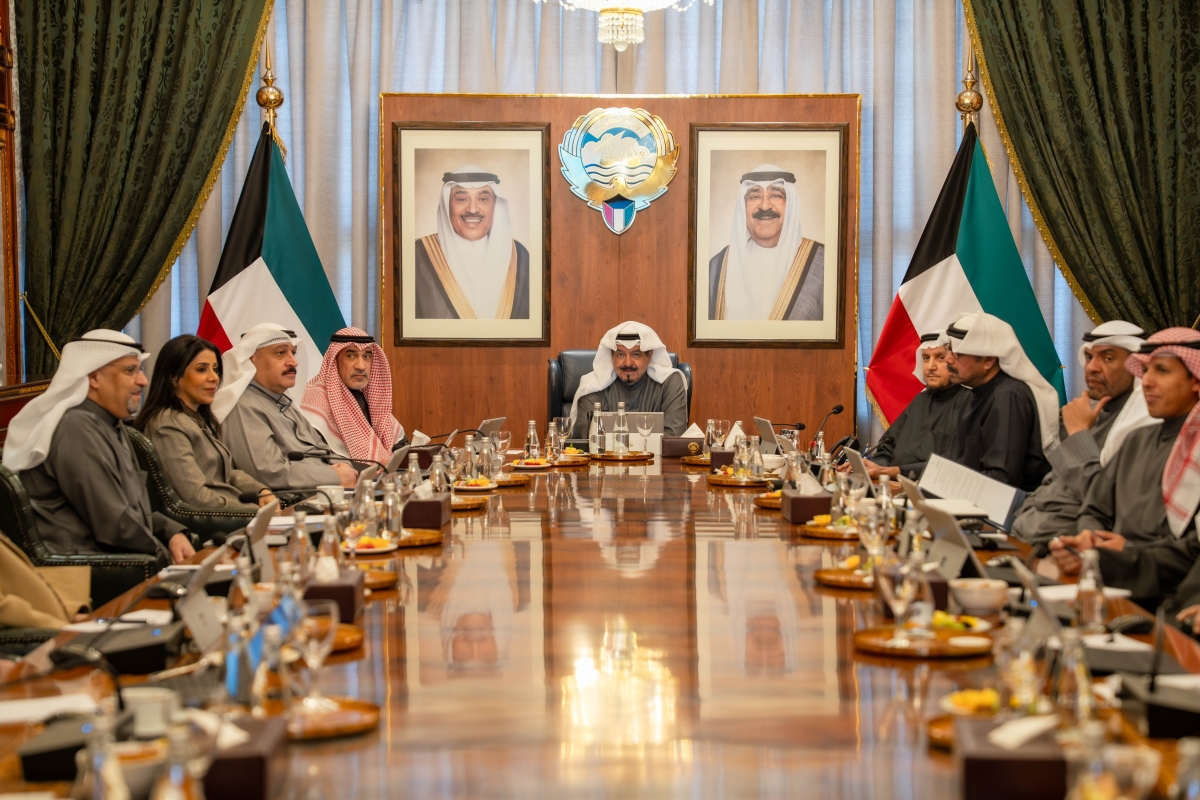
The Council of Ministers approved the Counter-Terrorism Law and Martyrs' Commemoration Law, alongside defense cooperation with Italy and the development of Gulf educational cooperation.
Translated by Alqyas from Al-Rai — Original source
- Affiliation of the Martyrs and Their Families’ Honoring Office with the Ministry of Defense, and allocation of its financial appropriations in the ministry’s budget.
- Counter-Terrorism Law:
- Safeguarding state security and societal integrity, and combating terrorist financing by drying up its sources.
- Advanced legal mechanisms and deterrent penalties, in compliance with international standards.
- Achieving the necessary balance between the requirements of protecting national security and preserving rights and freedoms.
- The Ministry of Interior, Ministry of Justice, Public Prosecution, and the Office of Fatwa and Legislation participated in drafting the law in coordination with seven specialized entities.
This came during the weekly cabinet meeting held at Bayan Palace today, Tuesday, under the chairmanship of His Highness Sheikh Ahmad Abdullah Al-Ahmad Al-Sabah, Prime Minister.
The Council of Ministers also approved the draft decree-law on combating terrorist crimes, which serves as a continuation of the national plan to modernize the legislative system. It aims to protect state security and societal integrity from the dangers of terrorism and to combat its financing by drying up its sources, through establishing advanced legal mechanisms and imposing deterrent penalties, thereby enhancing the state’s capacity to confront this dangerous type of crime.
In drafting the decree-law, due regard was given to adherence to international standards and relevant conventions on counter-terrorism, while achieving the necessary balance between the requirements of protecting national security and safeguarding constitutionally guaranteed fundamental rights and freedoms. Several ministries and government and judicial entities participated in preparing the draft, namely the Ministry of Interior, Ministry of Justice, Public Prosecution, and the Office of Fatwa and Legislation, in coordination with a number of specialized entities whose opinions were sought: the Supreme Council of the Judiciary, Ministry of Defense, Ministry of Foreign Affairs, Ministry of Islamic Affairs, National Cybersecurity Center, Ministry of Health, and Ministry of Social Affairs.
The aforementioned draft decree-law contains 31 articles distributed across five chapters: General Provisions, Crimes of Terrorist Acts, Preventive Provisions, the National Counter-Terrorism Committee, and finally, Special Procedural Provisions.
In this context, the Council of Ministers emphasized that the draft decree-law on combating terrorist crimes aligns with the State of Kuwait’s approach to enhancing its security and stability and developing its legislative system in line with emerging security challenges.
The Council of Ministers also approved the draft decree-law on regulating the honoring of martyrs. Article 1 thereof stipulates that the Martyrs and Their Families’ Honoring Office shall be affiliated with the Ministry of Defense, and the necessary financial appropriations for this office shall be allocated in the Ministry of Defense’s budget.
In a related development, the Council of Ministers reviewed several agenda items and approved them, while deciding to refer some to the relevant ministerial committees for study and preparation of reports to complete the procedures for their implementation.
Minister of Defense Sheikh Abdullah Ali Al-Salim Al-Sabah briefed the Council of Ministers on the outcomes of his visit to the Italian capital, Rome, and his meeting with Guido Crosetto, Italy’s Minister of Defense. The discussions covered Kuwait-Italy relations, prospects for cooperation in the military and defense sectors, and ways to strengthen the strategic defense partnership between the two friendly countries.
The Minister of Defense noted that during the visit, a military cooperation agreement was signed to enhance coordination and exchange of expertise in various military fields, and to develop the joint operational system between the Kuwaiti and Italian armed forces.
Education Minister Jalal Al-Tabatabai briefed the Council of Ministers on the outcomes of his visit to Riyadh in the sister Kingdom of Saudi Arabia, where he participated in a dialogue session discussing the prospects for developing Gulf educational cooperation. During the session, the minister delivered a speech calling for a transition from exchanging expertise to integrating educational policies in light of rapid educational transformations.
The Education Minister also attended the Golden Jubilee ceremony of the Arab Educational Office for Gulf Countries, which witnessed the signing of several agreements between the Arab Educational Office for Gulf Countries and various international organizations, namely the Organisation for Economic Co-operation and Development (OECD), the International Association for the Evaluation of Educational Achievement (IEA), the International Institute for Educational Planning (IIEP), and the International Bureau of Education (IBE).
The Council of Ministers also mourned the martyrdom of Colonel Saud Nasar Al-Khamseen, may God have mercy on him, a member of the General Administration of Correctional Institutions at the Ministry of Interior, who passed away as a result of injuries sustained while performing his duties. The Council expressed its sincere condolences and heartfelt sympathy to the deceased’s family, praying to Almighty God to envelop the departed in His boundless mercy, grant him a place among the martyrs, and grant his loved ones patience and solace.
