Trump's 'Peace Council'... From Rebuilding Gaza to Restoring Reliable and Legitimate Governance Worldwide
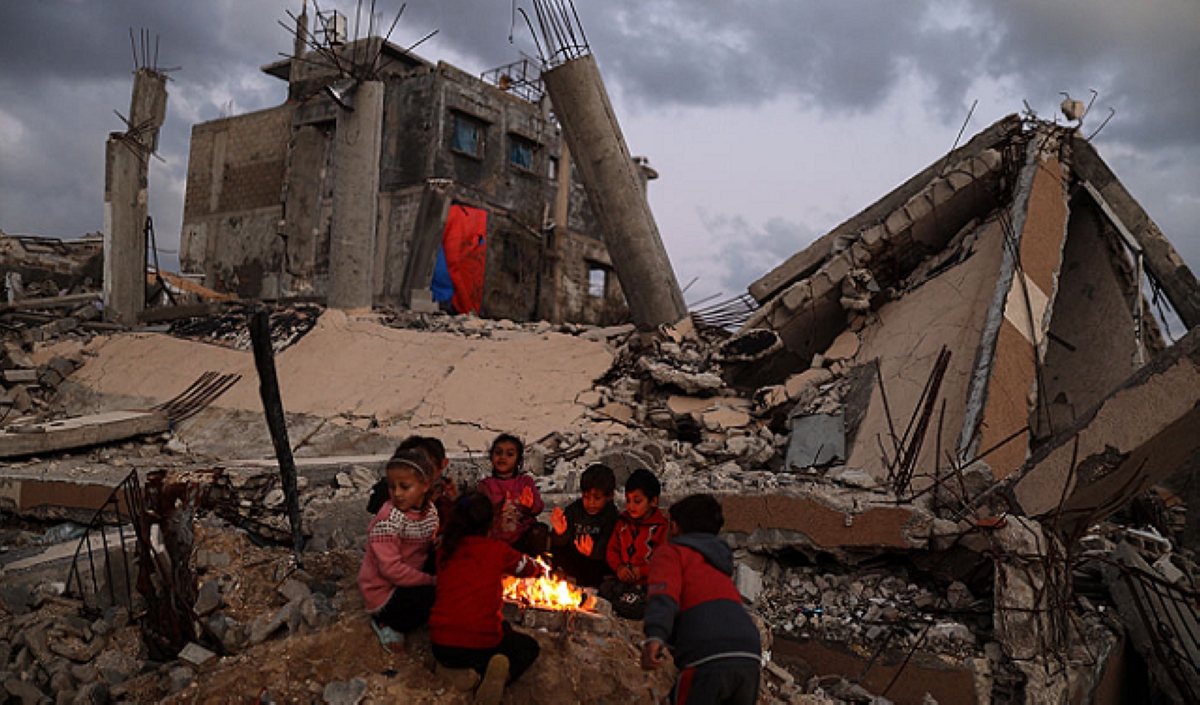
Trump establishes a peace council that threatens the UN and invites Putin and Netanyahu, while France and Canada refuse to join.
Translated by Alqyas from Al-Rai — Original source
- Russia and Belarus invited to the Council... and the European Union may boycott it over Greenland
- France “does not intend to accept” Trump’s invitation... and Canada will not pay
The “Peace Council” proposed by Donald Trump aims to “enhance stability” in the world, according to a charter obtained by AFP, while the newspaper Haaretz reported that the US president, who will be its first president and the only one authorized to invite other leaders to join, has begun transforming the Council into an entity competing with the United Nations.
The Council was initially established to oversee the reconstruction of Gaza, but its charter does not explicitly mention the Palestinian territory; instead, it assigns it a broader goal of contributing to the resolution of armed conflicts around the world.
The preamble of the eight-page charter, obtained by AFP and sent to countries invited to participate in the Council, states that “the Peace Council is an international organization aimed at enhancing stability, restoring reliable and legitimate governance, and ensuring lasting peace in areas affected by or threatened by conflict.”
The charter criticizes “approaches and institutions that have repeatedly failed,” a clear reference to the United Nations, and calls for the “courage” to “separate from them.” It also emphasizes the “need for a more flexible and effective international peace organization.”
Trump will be the first president of the “Peace Council,” with very broad powers, as he will be the only one authorized to “invite” other leaders to join, and he can revoke their participation unless a “two-thirds majority of member states” uses a veto right. He also has the right to review all votes.
The charter added that “each member state has a term of up to three years from the date the charter enters into force, renewable by the president.”
This three-year term does not apply to member states that contribute more than one billion dollars in cash to the Peace Council during the first year following the charter’s entry into force.
Trump has long been one of the UN’s harshest critics. He attacked the organization, describing it as “far from realizing its full potential,” during the last General Assembly meeting in New York in September.
On January 7, he signed an executive order mandating the withdrawal of the United States from 66 international organizations that “no longer serve US interests,” according to the White House. About 30 of the organizations targeted by Washington are linked to the United Nations.
Meanwhile, as the US president continued his call for world leaders to join the Council (around 60 so far), including Russian President Vladimir Putin and Belarusian President Alexander Lukashenko, informed diplomats predicted that Trump’s announcement would face strong opposition from European Union countries, particularly because his threats regarding control of Greenland were “more than the Union could tolerate.”
In this context, sources close to President Emmanuel Macron stated that France, at this stage, “does not intend to accept” the invitation to join the “Peace Council,” noting that it “raises fundamental questions, especially regarding respect for the principles and structure of the United Nations, which cannot be questioned under any circumstances.” Meanwhile, Canada confirmed that it “will not pay” Trump in exchange for a seat.
Israeli Prime Minister Benjamin Netanyahu also received an invitation to join the Council, according to informed sources, while the army warned that Trump’s plan to oversee the governance and reconstruction of the Gaza Strip after the war strengthens the power of Hamas in Gaza and fails to address Israel’s security needs, according to Haaretz.
