Sale of 'Campbell's Soup Can' painting exceeds $9 million
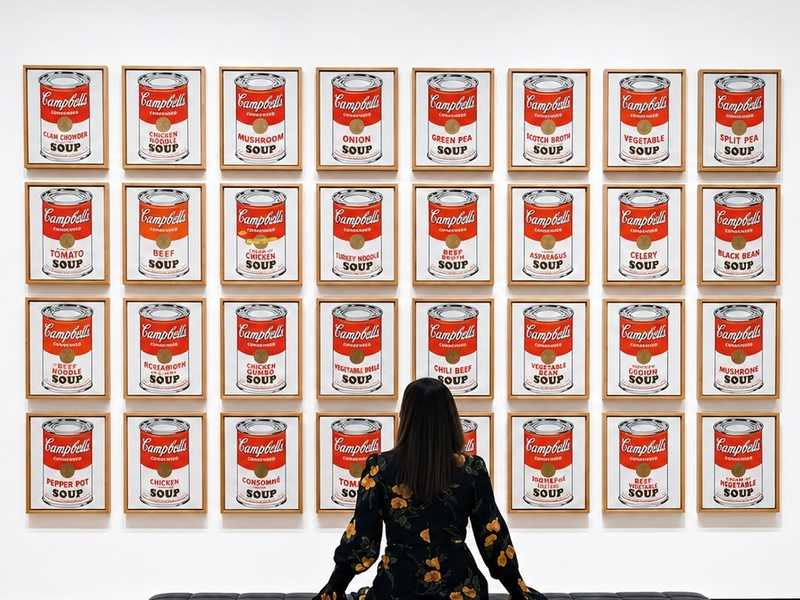
An artwork by artist Andy Warhol titled Campbell's Soup Can was sold at Christie's auction house in New York for $9.26 million, surpassing previous estimates.
Translated by Alqyas from Al-Qabas — Original source
One of Andy Warhol’s 1962 “Campbell’s Soup Cans” paintings sold for more than $9 million at a Christie’s auction held at Rockefeller Center in New York City. The work, titled “Campbell’s Soup Can – Turkey Noodle,” is part of Warhol’s series depicting the iconic Campbell’s Soup brand, with each canvas portraying a different soup variety. Christie’s reported that the painting fetched $9.26 million, exceeding pre-sale estimates of $6 million to $8 million, after bidding opened at $4 million. The auction house noted that the Campbell’s Soup Cans series is one of the earliest and most prominent examples of Pop Art, marking a crucial stage in Warhol’s artistic development; the works were first exhibited in July 1962. Through this series, Warhol brought Pop Art into the public spotlight, and it quickly became one of the defining artistic movements of the post-World War II era.
Unlike his later works, Warhol hand-painted the Turkey Noodle Soup Can image, using elements cut from the original Campbell’s Soup can design taken from official company print materials. He then affixed these cutouts onto a transparent tobacco-specific paper, projected the image onto the canvas using light, and traced it. After painting the can, Warhol hand-lettered the soup variety name on the canvas surface and used a stamp to apply the golden fleur-de-lis decorative motifs found along the bottom edge of the can.
Warhol originally gifted the painting to his friend, photographer Edward Wallowitch. It later entered the collection of Eliana and Michael Sonabend and was subsequently loaned to the Baltimore Museum of Art, where it remained for an extended period.
Andy Warhol emigrated with his parents from Czechoslovakia as a child. He became renowned for transforming everyday objects into artworks imbued with significance, value, and meaning, utilizing advertisements, flyers, and gift wrap to create patterns that reflected the essence of modern consumer culture in the United States. Warhol was also known for adopting a new painting technique from that period onward: he used a projector to enlarge photographic images onto canvases hung on walls, then painted directly over them without first sketching outlines in pencil, resulting in works that resembled paintings more than graphic designs.
