Fitch: Data centres push the Gulf to expand electricity networks
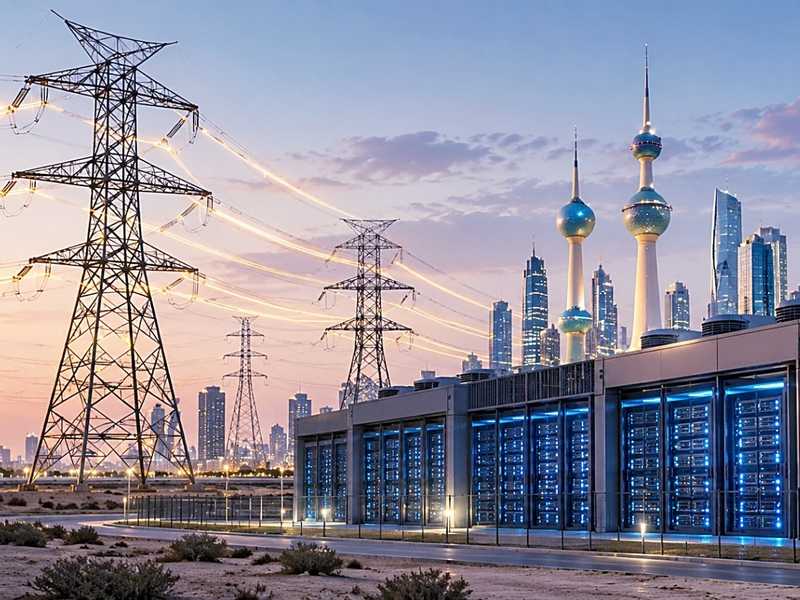
Fitch predicted growth in electricity demand in the Gulf by about 5% in 2027, with spending focused on expanding networks in Saudi Arabia and the UAE to accommodate new data centres.
Translated by Alqyas from Al-Qabas — Original source
Fitch Ratings has forecast that electricity demand in Gulf Cooperation Council (GCC) countries will grow by approximately 5% in 2027, driven by the recovery of economic activity and a gradual increase in data center consumption. According to a report published by MEED, Fitch anticipates a cumulative 15% increase in capital expenditure by utility companies in the region. Spending in Saudi Arabia and the United Arab Emirates will focus on expanding electricity transmission and distribution networks to keep pace with population growth and rising consumption, as well as integrating renewable energy projects into decarbonization plans.
In its report issued on November 18, the agency maintained a neutral outlook on the utility sector in the Gulf and Africa. It believes that a lower base effect in 2026 will support electricity consumption growth next year, alongside improving economic conditions and the gradual commissioning of data center projects. Fitch highlighted the first phase of the UAE’s “Stargate” project with a capacity of 200 megawatts, Microsoft’s expansion in partnership with Khazanah with a similar capacity, as well as cloud computing zones being developed by Amazon Web Services and Microsoft in Saudi Arabia.
However, the agency warned that war risks and difficulties in securing electronic chips and electrical transformers could delay the implementation of these projects, likely resulting in actual electricity consumption growth proceeding at a slower pace than suggested by developers’ announced timelines. In Saudi Arabia, Fitch expects real GDP growth to accelerate to 6.6% in 2027, following an anticipated slowdown to 0.6% in 2026, compared to 4.6% in 2025. It estimates that the Kingdom’s electricity consumption growth will range between 3% and 5% in 2026, after rising by 7.9% in the previous year.
Fitch notes that Gulf utility companies have flexibility in timing a significant portion of their investment spending, as network projects are linked to the progress of government plans in other sectors and data center commissioning schedules. In Oman, most spending is tied to existing commitments, notably the North-South power interconnection project, connecting new customers, and battery energy storage projects.
Tariffs support profits: Fitch expects most sector revenues to remain regulated, with a very limited share of sales at market prices. According to the report, Saudi Arabia will raise electricity tariffs for consumers in the industrial and residential sectors by 15% to 17% starting in 2027. The agency believes this increase will support utility profits alongside rising capital expenditure and continued government support within the sector’s regulatory framework.
At the level of the GCC and Africa combined, Fitch projected that utility company revenue growth will slow to 6.6% in 2027, down from 11.4% in 2026, with the average EBITDA margin stabilizing at 47.1%. For the region’s seven largest utility companies, it forecast average profit growth to rise to 10% in 2027, from 9.2% in 2026.
Debt costs remain high: While the largest utility companies can still borrow from international debt markets, their debt costs have exceeded 5%, increasing the burden of financing new networks. In October, TAQA issued five-and-a-half-year bonds with a yield of 5.875%, and ten-year bonds with a yield of 6.125%. Despite tight financing conditions, the future credit outlook for GCC utility companies remains stable, supported by their strong ties to their government owners. In Oman, credit conditions for most utility companies have improved to the extent that their standalone creditworthiness has become the primary factor in determining their ratings.
Fitch has identified two scenarios that could lead it to downgrade its outlook for the utilities sector in the Gulf and Africa from “neutral” to “negative”: severe physical damage to Gulf utilities infrastructure, or regulatory changes that undermine companies’ ability to generate returns on their investments. The agency currently rules out the occurrence of severe damage, based on the geographic distribution of sector facilities and its experience during 2026.