Apple adds Face ID feature to iPhone Duo with iOS 27.3 update
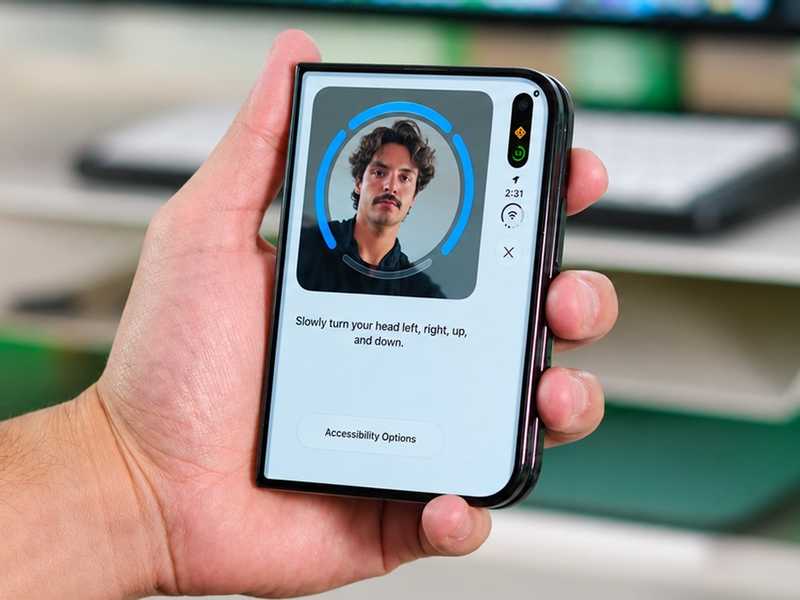
Apple adds Face Unlock feature to iPhone Duo via iOS 27.3 update as a temporary alternative to Face ID
Translated by Alqyas from Al-Qabas — Original source
Apple has responded to one of the most prominent criticisms of its new foldable phone, the “iPhone Duo,” which centered on its reliance on the Touch ID fingerprint sensor instead of Face ID, the primary authentication method in most recent iPhone models. With the Monday release of the iOS 27.3 developer beta, Apple added a new feature called “Face Unlock,” allowing iPhone Duo users to unlock the device using the front-facing camera without waiting for a future update that would include hardware modifications. However, according to a report published by TechCrunch, this new feature does not constitute Apple’s known Face ID technology; it relies solely on the front-facing camera, resulting in a lower security level than the traditional facial recognition system.
The absence of Face ID on the iPhone Duo is linked to the constraints imposed by the phone’s slim, foldable design, which does not provide sufficient internal space to accommodate the TrueDepth sensor array required for three-dimensional facial recognition. A previous Bloomberg report indicated that Apple is working to address this issue in a future version of the device.
Currently, the iPhone Duo relies on Touch ID for unlocking, identity verification, and making payments via Apple Pay. The new “Face Unlock” feature allows users to quickly unlock the phone using the front-facing camera, but it does not operate entirely independently: users must have previously verified their identity using a fingerprint or passcode. Apple clarifies that using Apple Pay and passwords will still require authentication via Touch ID, and users will need to re-verify their identity with their fingerprint after 45 minutes of inactivity. This step aims to make the device more convenient for users accustomed to unlocking their iPhones simply by looking at them, rather than having to use their fingerprint each time.
